Canonical tags and AI-crawlers: what you must know as a technical lead
Why canonical tags are now also essential for AI-crawlers
Canonical tags now also determine which page version AI-engines use as source material.
Canonical tags are not a new concept. But their function is changing fundamentally now that AI-crawlers from OpenAI, Anthropic and Google are indexing your site. Where canonical tags traditionally solved duplicate content for search engines, they now also determine which page version AI-engines use as source material.
Suppose: your webshop has product pages accessible via multiple URLs. Without properly implemented canonicals, AI-crawlers interpret each variant as a separate source. The result? Your authority gets fragmented across dozens of URLs, and AI-engines cite your competitor instead of you.
The shift from traditional SEO to Generative Engine Optimization (GEO) makes technical hygiene more urgent than ever. Canonical tags form a crucial first line of defense in this.
How AI-crawlers interpret canonical tags
AI-crawlers work fundamentally differently than Googlebot. Traditional crawlers follow the canonical signal to determine which page appears in search results. AI-crawlers use the same signals to decide which content they store as a citable source in their training data or retrieval systems.
This difference has three direct consequences:
- Fragmentation of authority. If GPTBot or ClaudeBot indexes multiple URL variants, your domain authority gets dispersed. One strong canonical prevents this.
- Inconsistent answers. AI-engines can extract conflicting information from different page versions. This damages your brand reputation in AI-generated answers.
- Wasted crawl budget. AI-crawlers have limited crawl budget per domain. Every duplicate URL they visit comes at the expense of pages that should be cited.
Your site's technical setup thus directly determines your AI visibility. Without correct canonicals, you lose control over how AI reports about your brand.
The four most common canonical mistakes with AI-crawlers
In practice, we see the same implementation errors repeatedly. Below are the four that have the biggest impact on your GEO Readiness Score.
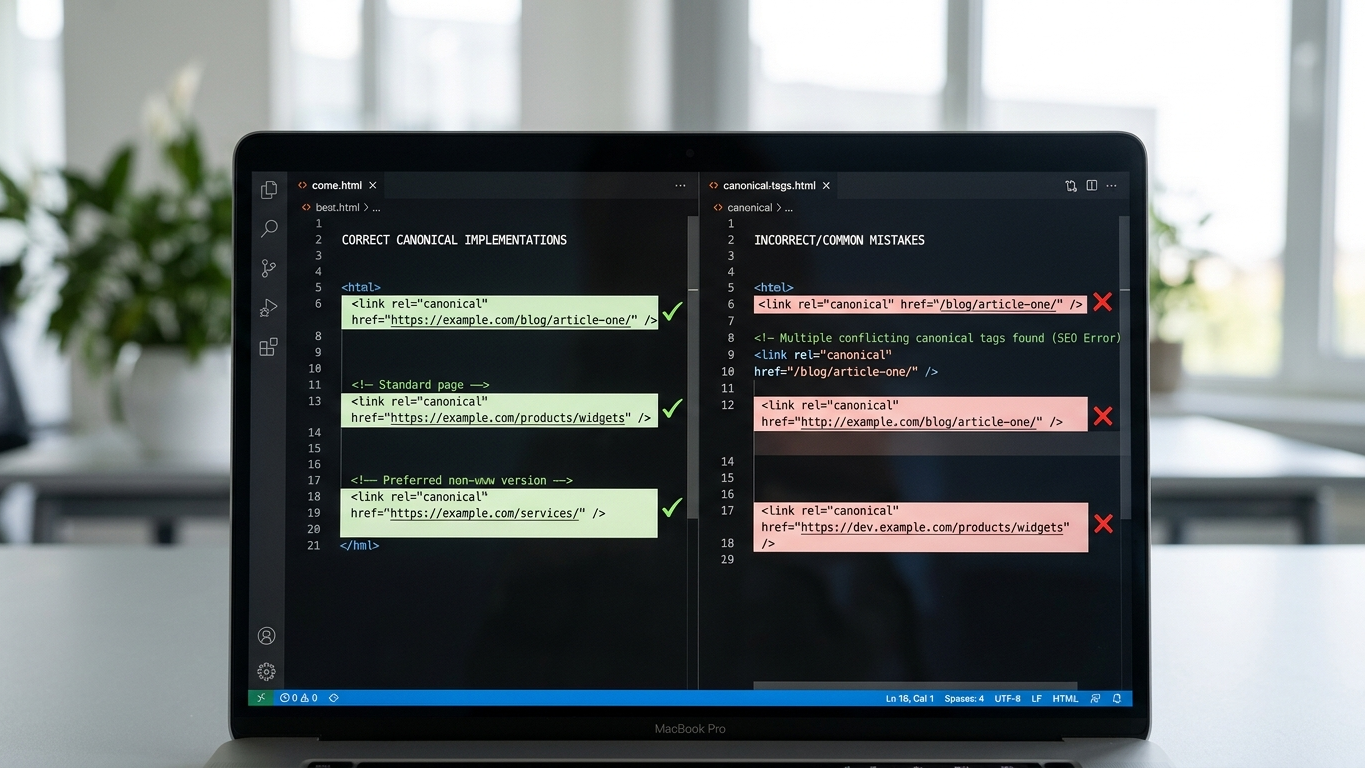
1. Self-referencing canonicals missing
Every page must contain a canonical tag that points to itself. Without this signal, AI-crawlers consider the page as potentially duplicate content. Implement on every page:
<link rel="canonical" href="https://yourdomain.nl/page/" />2. Canonical points to a non-indexable page
A canonical that points to a page with a noindex tag or a page blocked in your robots.txt creates a conflicting signal. AI-crawlers ignore both instructions in that case. Always validate that the canonical URL is actually accessible and indexable.
3. HTTP and HTTPS variants mixed up
If your canonical points to the HTTP version while your site runs on HTTPS, AI-crawlers interpret this as two separate sources. Ensure that canonical tags consistently use the HTTPS protocol.
4. Parameters in canonical URLs
URLs with session IDs, tracking parameters or filter options must always have a canonical that points to the clean URL. AI-crawlers are particularly sensitive to parameter pollution.
| Error | Impact on AI visibility | Priority |
|---|---|---|
| Missing self-referencing canonical | Fragmentation of domain authority | Critical |
| Canonical to noindex page | Complete exclusion from AI sources | Critical |
| HTTP/HTTPS mismatch | Double indexing by AI-crawlers | High |
| Parameters in canonical URL | Pollution of crawl budget | Medium |
Canonical tags in combination with llms.txt and robots.txt
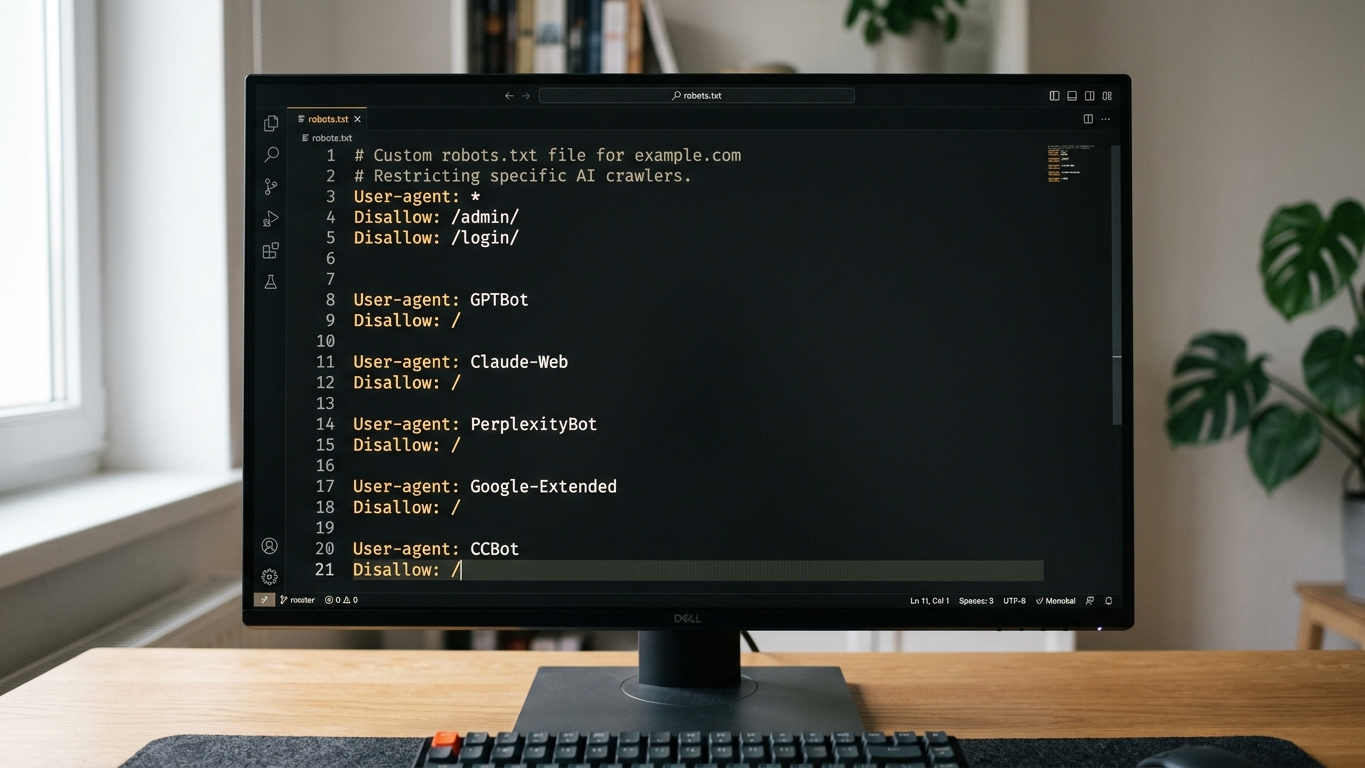
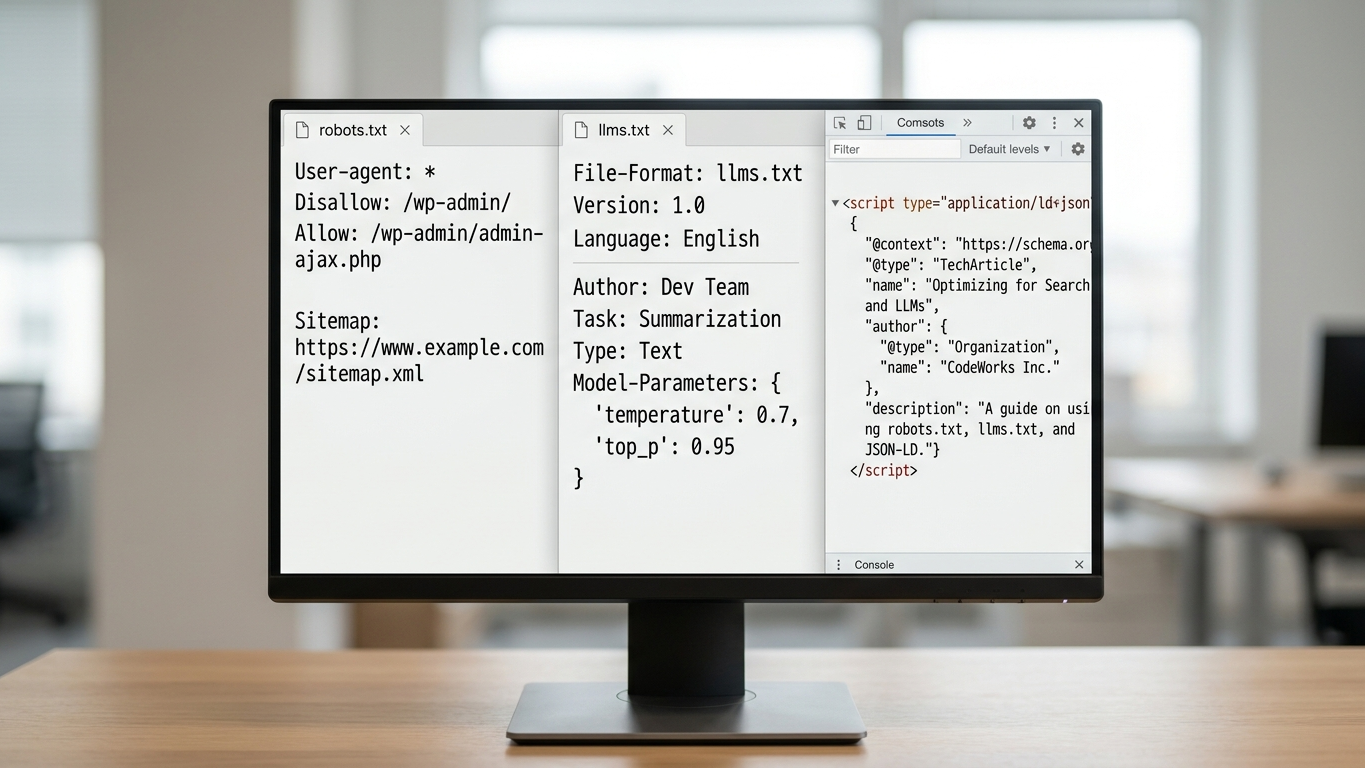
Canonical tags, llms.txt and robots.txt must be aligned to prevent inconsistencies and conflicting signals to AI-crawlers.
Canonical tags do not function in isolation. They form part of a broader technical framework that determines whether and how AI-crawlers process your content.
Your llms.txt file tells AI-engines which pages they may consult as a primary source. Your robots.txt determines which crawlers have access at all. Canonical tags then indicate which URL version is preferred.
These three elements must be aligned:
- Pages you include in llms.txt must have a correct canonical.
- Pages you block for AI-crawlers in robots.txt must not serve as a canonical target.
- The canonical URL must match the URL you mention in your llms.txt.
Inconsistencies between these files cause AI-crawlers to receive conflicting signals. The result is that they completely ignore your content.
How to validate your canonical implementation for AI
Manually checking canonical tags on hundreds of pages is not scalable. You need automated validation that specifically checks how AI-crawlers interpret your site.
Steps for effective validation:
- Crawl your site from an AI-bot perspective. Check whether canonical tags are correctly rendered after JavaScript execution. Many frameworks load canonical tags dynamically, which causes problems for AI-crawlers with limited rendering capacity.
- Compare your canonical URLs with your llms.txt and robots.txt. Look for conflicts and inconsistencies.
- Monitor your GEO Readiness Score. This gives you a quantitative picture of how well your technical setup scores on platforms like ChatGPT, Perplexity, Google AI Overviews and Claude.
With a GrowthScope audit you can perform this validation immediately. No account, no API-keys, no setup. Enter your domain and receive a report within 10 minutes that tells you exactly where your canonical implementation falls short.
Action plan: canonical tags as part of your technical GEO sprint
Integrate canonical validation as a fixed check in your development workflow. This is not a one-time exercise, but an ongoing part of your technical quality assurance.
Concrete steps to get started today:
- Run a Quickscan to measure your current technical GEO status.
- Include canonical validation as a Technical Health KPI in your monthly sprints.
- Align your canonical tags with your llms.txt and robots.txt configuration.
- Plan quarterly trend tracking to monitor whether AI-crawlers actually use your desired page versions as a source.
Your technical infrastructure determines whether AI-engines mention your brand or ignore it. Canonical tags are no detail in this. They are the foundation. Start your audit today and discover within minutes where your opportunities lie.