The perfectly structured long-form post for LLM citation
Why your long-form content isn't being cited by AI
You invest weeks in in-depth articles. Your SEO scores are excellent. Yet ChatGPT mentions your competitor when a prospect asks an industry question. The problem isn't the quality of your content, but its structure.
Large Language Models read differently than humans. They scan your text for citable fragments, clear definitions, and logical hierarchies. Without that structure, you're invisible, no matter how valuable your expertise is.
The solution? Build your long-form posts like an information library that AI can search effortlessly.
In this tutorial, you'll learn step-by-step how to structure a long-form post that's maximally citable for LLMs like ChatGPT, Claude, Perplexity, and Google AI Overviews.
What makes content citable for an LLM?
Before you start writing, you need to understand how AI engines select sources. An LLM chooses a fragment based on three criteria:
- Clarity: Does the text contain a clear, defined answer to a specific question?
- Authority: Is the source supported by structure, context, and credible signals?
- Fragmentability: Can the model extract a standalone piece of text that's understandable on its own?
This means your long-form post must not only read well for humans, but also be modularly structured. Each section must be able to function independently as an answer. Want to dive deeper into the fundamentals? First read our comprehensive introduction on Generative Engine Optimization and why it determines your online visibility.
Step 1: build your heading structure as a question-answer architecture
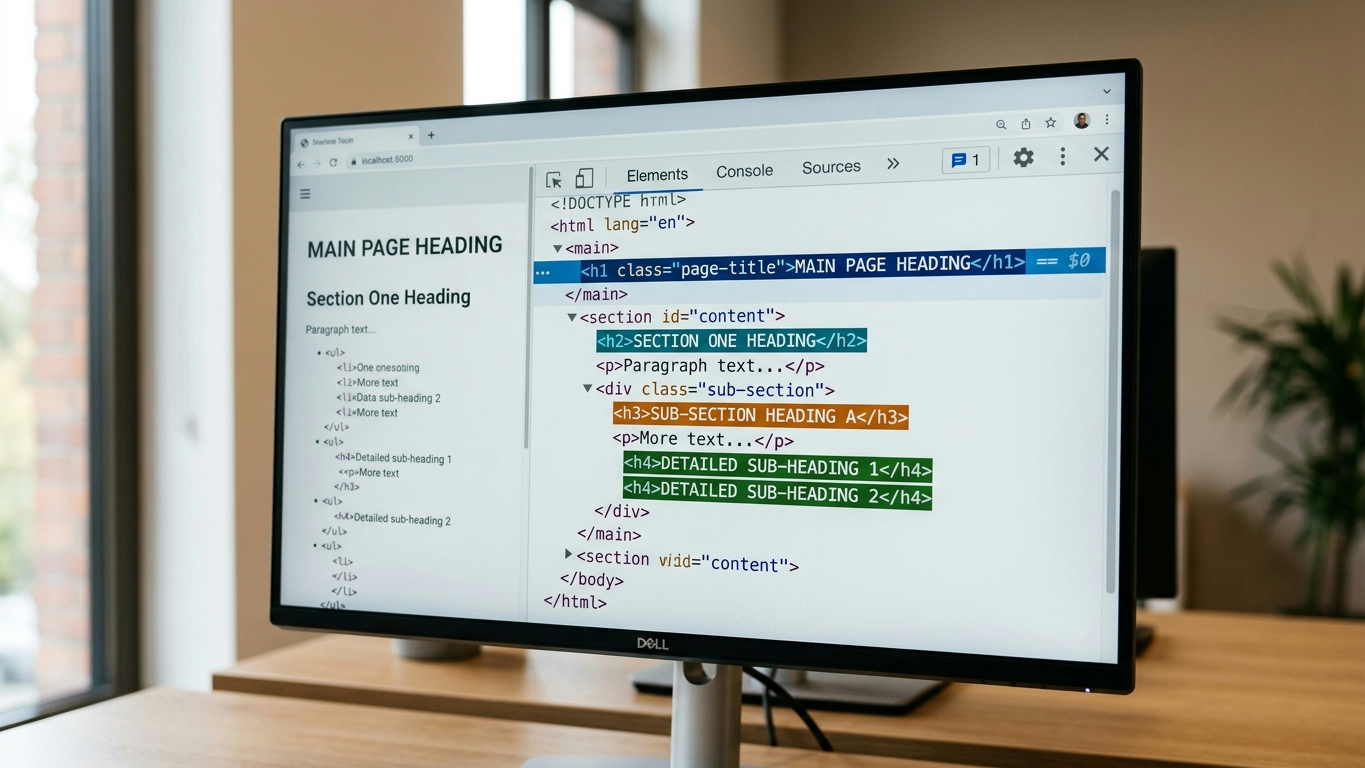
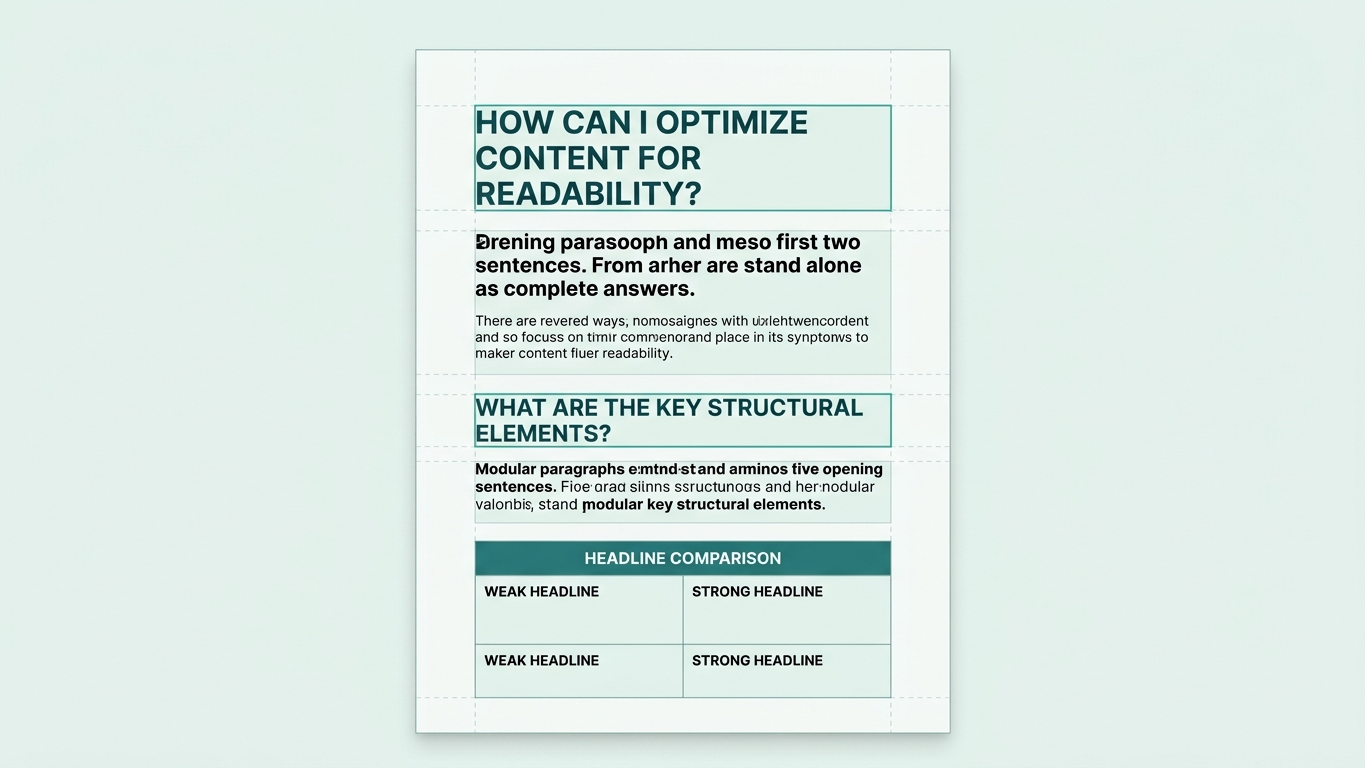
The H2 and H3 headings of your article are the navigation system for AI crawlers. Frame each heading as a specific question or as a direct description of the answer that follows.
| Weak heading | Strong heading (LLM-optimized) |
|---|---|
| "More on structure" | "How do you structure a long-form post for AI citation?" |
| "Tips and tricks" | "Five structural elements that increase LLM citation" |
| "Our approach" | "Why modular paragraphs triple citeability" |
Each H2 solves a search query. Each H3 refines that answer. This creates a hierarchy that enables AI engines to select precisely the right fragment.
Step 2: write the first two sentences of each paragraph as a citable fragment
LLMs strongly prefer the opening sentences of a paragraph. Treat the first two sentences as a standalone micro-definition or conclusion.
Example of a non-citable opening: "It's widely known that many factors play a role in optimizing content for various AI platforms."
Example of a citable opening: "LLM citation requires that each paragraph opens with a concrete, defined answer. This answer must be understandable on its own, without context from previous paragraphs."
Notice the difference. The second variant can be directly adopted by an AI engine as an answer. The first variant forces the model to interpret, which leads it to choose a different source.
Step 3: use structured data and lists as citation anchors
In addition to flowing text, there are structural elements that AI engines recognize as reliable data points. Use these deliberately as anchors in your long-form post:
- Numbered lists for step-by-step processes and guides
- Bullet points for enumerations of features, benefits, or criteria
- Tables for comparisons and specifications
- Definition blocks where you explain a term in a maximum of two sentences
Don't forget the technical side either. Make sure your llms.txt file is properly configured so AI crawlers can index your content in the first place. Additionally, schema markup strengthens the context an LLM needs to classify your page as an authoritative source.
Step 4: close each section with a summary
LLMs don't just scan openings, but also section closings. Add a brief summarizing sentence at the end of each H2 section that repeats the core point. This gives the model a second chance to select your fragment.
An effective closing contains the section's keyword, the main conclusion, and possibly a metric or time indicator. Think along the lines of: "In summary: a modular heading structure increases the likelihood of LLM citation by a factor of three compared to unstructured long-form content."
Step 5: validate your structure with a GEO audit
Implementing structure without measuring is guesswork. After publishing your optimized long-form post, you'll want to know if AI engines are actually picking up your content.
With a GEO Readiness Audit you can verify per page whether your content is being cited in ChatGPT, Perplexity, Google AI Overviews, and Claude. You receive a GEO Score from 0 to 100 that shows exactly where your structure needs improvement. No account needed, no setup, results within 10 minutes.
For consultants serving multiple clients, the quarterly subscription offers the ability to automate trend tracking. This way you can present the measurable improvement at each re-audit as a direct result of your optimizations.
Your checklist for LLM-cited long-form posts
Use this checklist with every article you publish:
- Each H2 heading answers a specific search query
- The first two sentences of each paragraph are independently citable
- Lists, tables, and definition blocks serve as citation anchors
- Each section ends with a summarizing core sentence
- Schema markup and llms.txt are technically correct
- GEO Score has been measured and improvements have been implemented
Take control of your AI visibility
Your competitor is already being cited by AI engines now. Not because their content is better, but because their structure is more readable for LLMs.
With the five steps from this tutorial, you transform every long-form post into a citable source.
Want to know how your current content scores? Start your GEO audit today and receive your personal action plan. Get started immediately, without API keys or setup.
Have questions about your specific situation? Check our frequently asked questions about GEO or contact us for personalized advice.