From keywords to query-intent mapping: how to make your content visible to AI
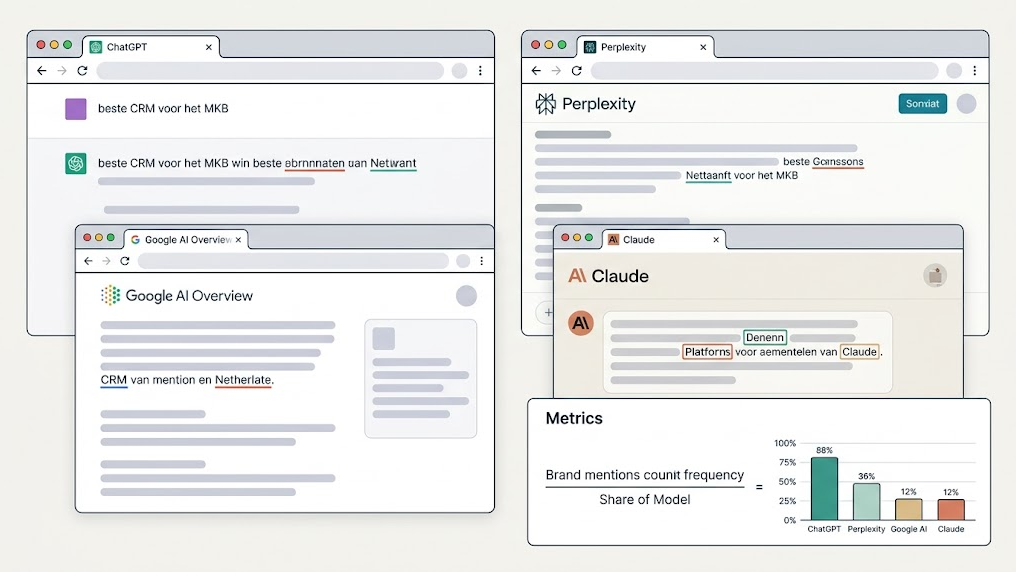
The rules of online visibility are changing fundamentally. Where you optimized for isolated search terms in Google for years, AI engines like ChatGPT, Perplexity, and Claude now determine which brands get recommended.
Does AI understand what my content actually answers? The question is no longer "do I rank for this keyword?", but how you ensure AI engines understand and cite your content.
In this tutorial, you'll learn step by step how to transition from traditional keyword thinking to query-intent mapping for Large Language Models (LLMs). So your content is not only discoverable, but also citable by AI.
Why keywords alone are no longer sufficient for AI visibility
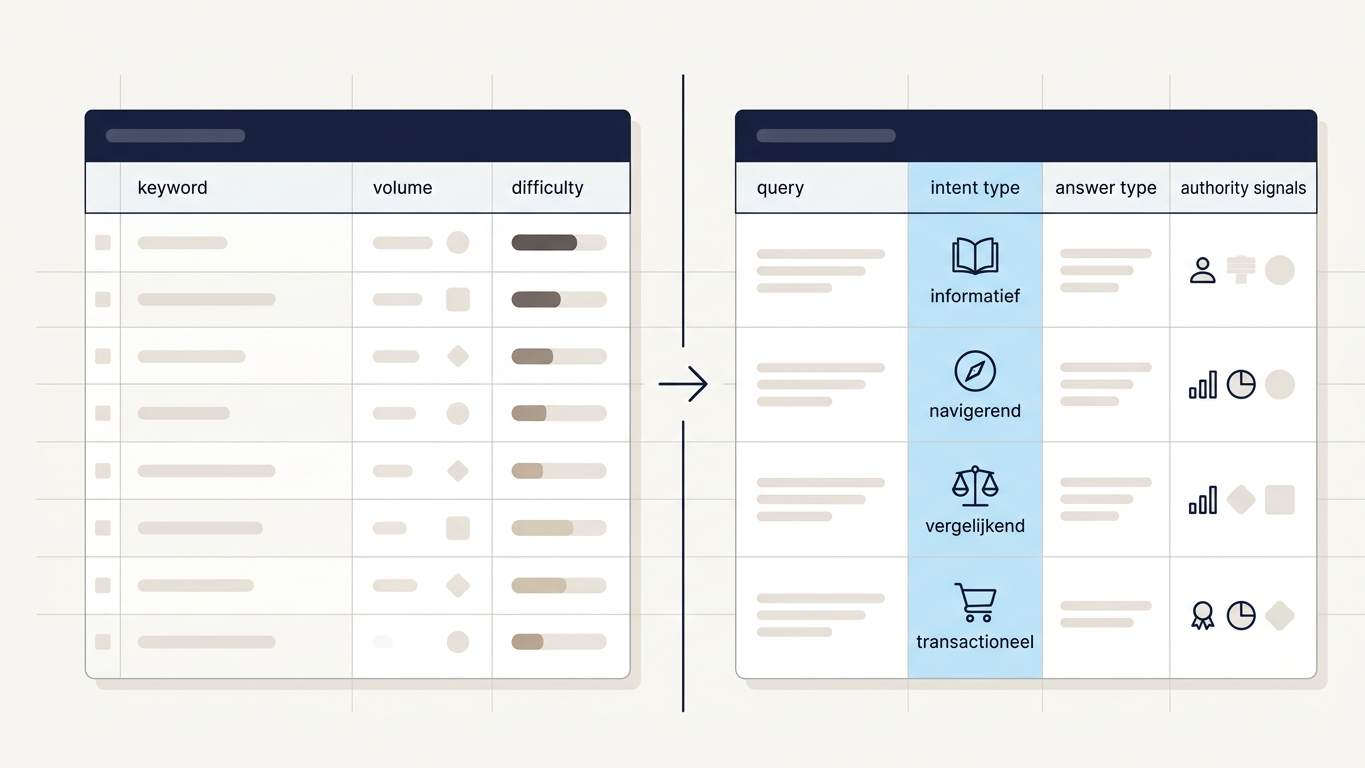
Traditional SEO revolves around search volumes, keyword density, and positions in search results. That model still works for classic search engines. But LLMs function fundamentally differently. They don't search for keywords, they interpret the intent behind a question and select the most relevant, trustworthy source to cite.
A concrete example: someone asks ChatGPT "What is the best approach to make my website visible in AI answers?" The model doesn't scan pages for the keyword "AI visibility". It looks for content that answers the complete question comprehensibly, structured, and with authority.
This means your GEO strategy must shift from isolated keywords to mapping complete question intent onto your content.
What exactly is query-intent mapping?
Query-intent mapping is the process where you map the possible questions of your target audience, classify the underlying intent, and align your content one-to-one with it. You no longer think in "keywords that generate traffic", but in "questions that AI needs to be able to answer with my content".
The four intent types that LLMs recognize:
- Informational: "What is GEO and how does it work?"
- Navigational: "Start GrowthScope audit"
- Comparative: "What is the difference between GEO and traditional SEO?"
- Transactional: "Order GEO audit for my website"
Each intent requires a different type of answer. AI engines select the source that best matches the intent, not a keyword.
Step 1: map your current content per page
Start with an inventory. Which pages do you have, and which questions do they actually answer? Many websites have content built around a keyword but don't answer any concrete question.
Create an overview with three columns:
| Page URL | Current target keyword | Question the page actually answers |
|---|---|---|
| /services/geo-audit | "GEO audit" | "How do I know if AI mentions my brand?" |
| /blog/llms-txt | "llms.txt" | "What is llms.txt and why does my site need it?" |
| /about-us | "about us" | No concrete question answered |
Pages without a clear answer to a specific question are invisible to LLMs. Identify these gaps first.
Step 2: generate the questions your target audience asks AI
Use the following sources to build a list of queries:
- AI engines themselves: Ask ChatGPT and Perplexity questions about your field and note how they rephrase the question.
- Customer conversations: What questions do prospects ask literally? Those exact formulations are gold.
- Competitor analysis: Which brands are cited by AI when answering industry-relevant questions? Analyze why their content gets selected.
Step 3: match each query to a specific page
Now you connect each identified query to exactly one page on your website. This is the heart of query-intent mapping.
The principle: one page, one primary question, one clear answer.
Concrete actions per page:
- Reformulate your H1 as the literal question the page answers.
- Provide the answer in the first two paragraphs, clear and straightforward.
- Add schema markup so AI can interpret the structure of your answer.
- Use FAQ sections for related sub-questions around the same intent.
This is what the mapping looks like in practice
| Query (intent) | Target page | Action |
|---|---|---|
| "What is GEO?" (informational) | /blog/what-is-geo | Adjust H1, definition in first paragraph |
| "GEO vs SEO difference" (comparative) | /blog/geo-vs-seo | Add comparison table |
| "Start AI audit" (transactional) | /audit | CTA prominent, process in 3 steps |
| "How does llms.txt work?" (informational) | /blog/llms-txt | Technical explanation with code snippet |
Step 4: measure whether AI actually cites your content
Mapping without measurement is guesswork. After implementing your changes, you must validate whether AI engines actually pick up your content. You can do spot checks manually by entering your queries in ChatGPT and Perplexity. But that doesn't scale.
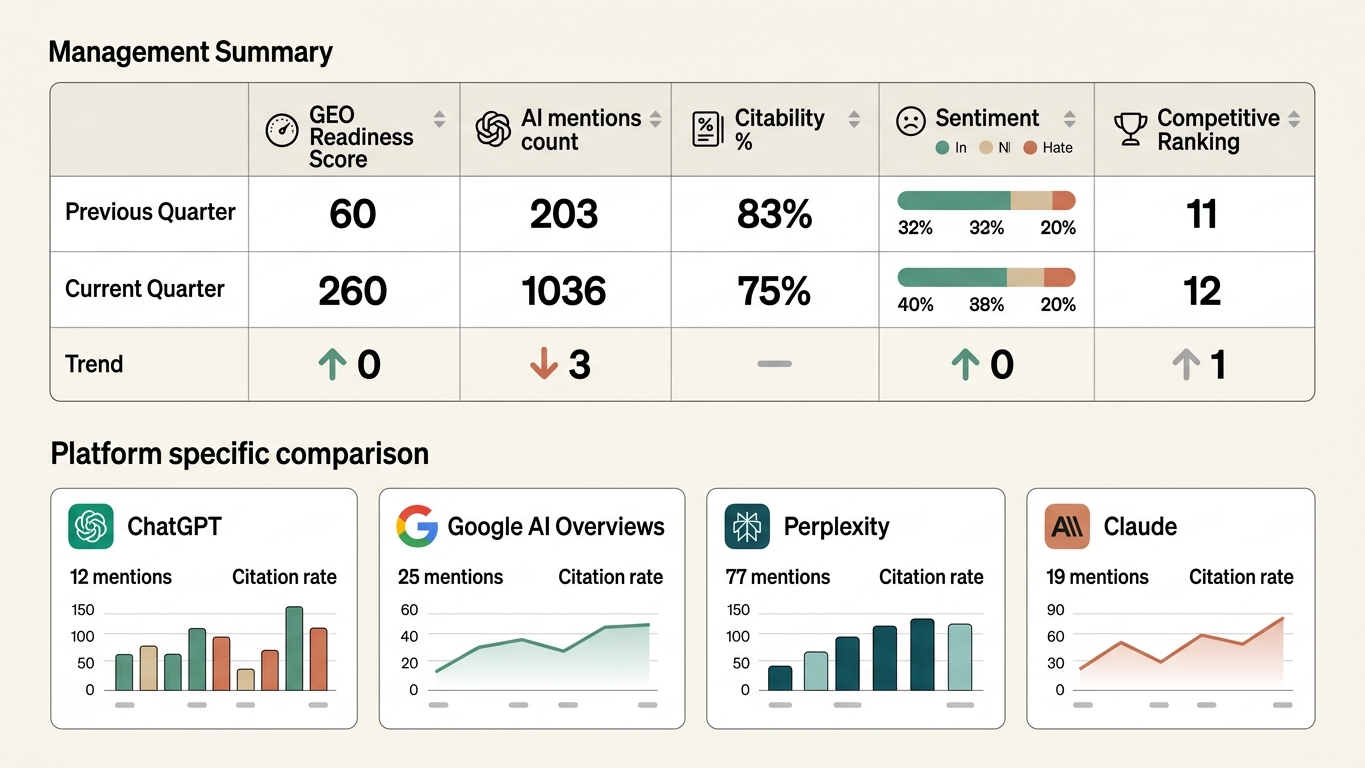
The GEO Readiness Score from GrowthScope quantifies this in a single number from 0 to 100. You see per platform and per query whether your content is cited, ignored, or even negatively rated. With the quarterly subscription, you automate this trend tracking, so you can demonstrate the impact of each optimization round directly.
The pitfall: writing content for Google and AI simultaneously
A common mistake is leaving existing SEO content unchanged and expecting AI engines to automatically use it. LLMs value different qualities than a traditional search engine:
- Citability: Short, factual paragraphs that can be quoted directly.
- Structure: Clear headings, lists, and tables that show information hierarchy.
- Authority: Concrete data, source citations, and expertise signals.
Your technical GEO setup, including llms.txt and robots.txt, also determines whether AI crawlers are allowed to index your content. Without that foundation, any content optimization is pointless.
Start your first query-intent mapping today
The shift from keywords to query-intent mapping is not a trend, it's the new standard. AI answers are a zero-sum game: if your competitor gets cited, you're invisible. The faster you align your content with the questions your target audience asks AI, the greater your advantage.
Discover within 10 minutes which AI engines mention your brand. Start your GEO audit and receive an action plan with directly applicable recommendations to strengthen your citability.