The 5 biggest GEO mistakes making SME entrepreneurs invisible to AI
Why GEO mistakes cost you revenue in the new search market
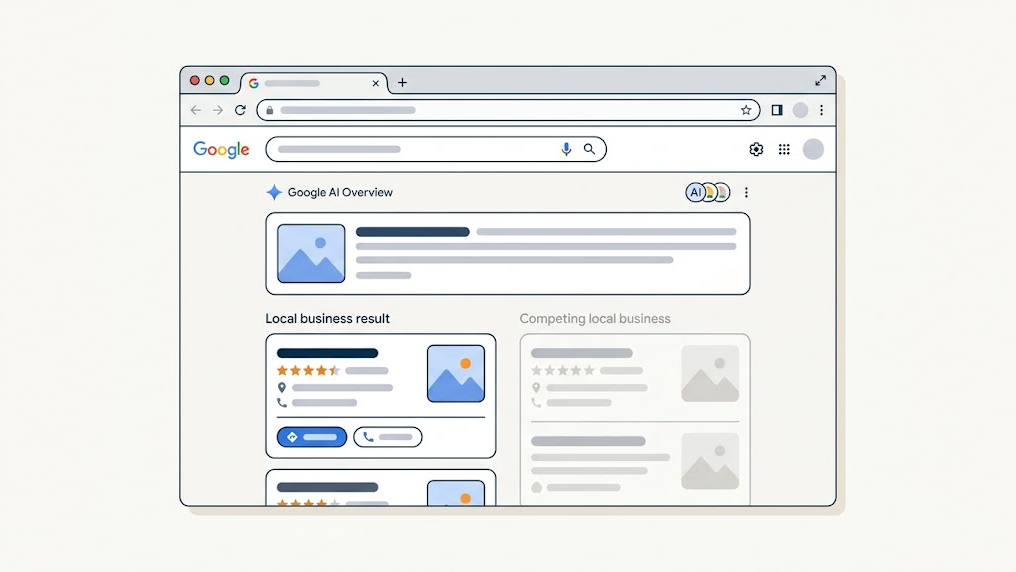
More and more potential customers no longer ask Google their purchasing questions, but instead ask ChatGPT, Perplexity or Google AI Overviews. If your business isn't mentioned in those AI answers, you simply don't exist for a growing group of buyers. The painful part? Your competitor might actually be recommended instead.
Most SME entrepreneurs make the same five mistakes that cause AI-engines to completely overlook them. These aren't minor cosmetic errors. They are structural blind spots that directly impact your revenue and market position.
Below you'll find the checklist with which you can identify these mistakes and tackle them within a day. No vague theory, but concrete action points you can tick off immediately.
Mistake 1: your content is not citable for AI
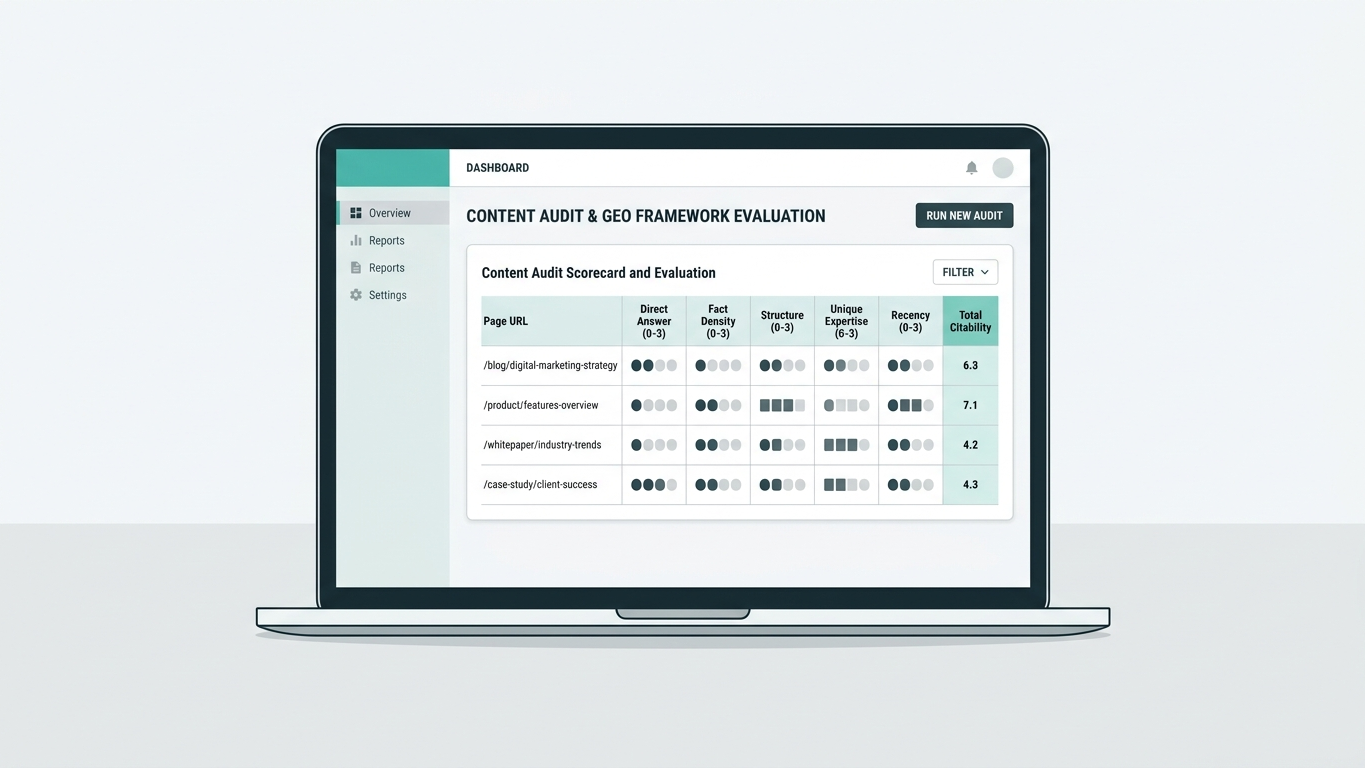
AI-engines generate answers by summarizing and citing sources. If your texts are woolly, unstructured or too commercial, an AI-engine can't do anything with them. Your content is simply ignored.
Checklist for citability:
- Does each page contain at least one clear, factual answer to a concrete question?
- Do you use short paragraphs of maximum 3 to 4 sentences?
- Are your key claims backed up with data, figures or examples?
- Do you avoid vague superlatives like "the best solution" without proof?
Citability is the extent to which AI can adopt your texts literally as a source. Without citability, you are invisible. A GEO audit measures exactly how citable your content is right now.
Mistake 2: your technical foundation blocks AI crawlers
Many entrepreneurs invest in great content, but forget that AI crawlers can't technically read their website. Your robots.txt might be blocking crawlers from OpenAI or Anthropic without you knowing it.
Checklist for technical accessibility:
- Does your robots.txt allow AI crawlers (GPTBot, ClaudeBot, PerplexityBot)?
- Does your website have an llms.txt file that AI-engines understand?
- Is your sitemap current and correctly submitted?
- Do your pages load fast enough for automated crawlers?
Think of llms.txt and robots.txt as the front door of your website for AI. If that door is locked, no crawler gets in, no matter how good your content is.
Mistake 3: you have not implemented schema markup
Schema markup is the translation of your website into a language AI understands. Without this structured data, an AI-engine has to figure out for itself what your business does, what products you sell and why you're trustworthy. An AI-engine won't do that. It picks a competitor who has already sorted it out.
Checklist for schema markup:
- Do you have Organization schema with your company name, address and contact details?
- Do you use Product or Service schema on relevant pages?
- Are your FAQ pages provided with FAQPage schema?
- Do you have Review schema for customer experiences and reviews?
Check your current schema implementation via a comprehensive GEO scan and receive a prioritized action plan per page.
Mistake 4: you do not compare yourself with competitors in AI answers
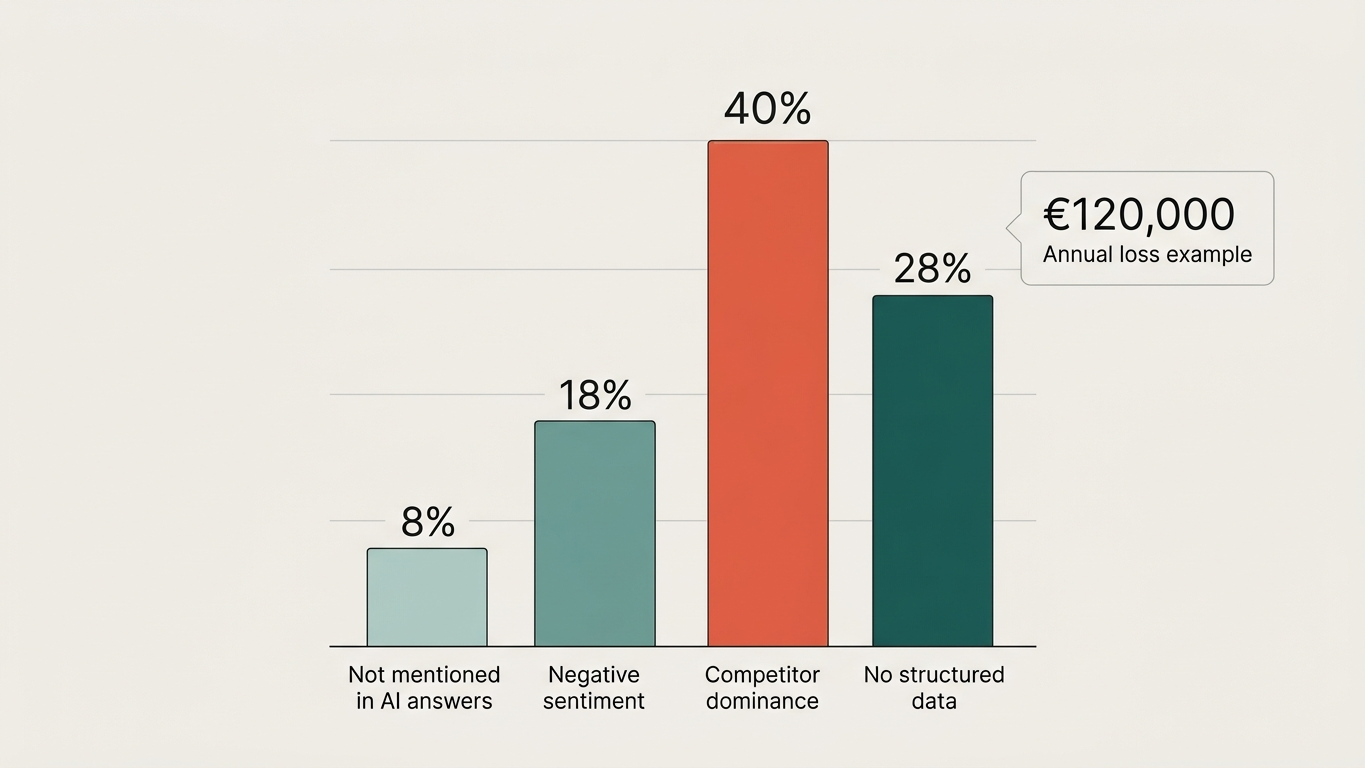
This is the mistake that costs the most money. AI answers are a zero-sum game: when a user asks "What is the best supplier for X?", a limited number of businesses are mentioned. If your competitor is there and you're not, you lose that customer without knowing it.
Checklist for competitor monitoring:
- Do you know which competitors are mentioned when a user asks your core question to ChatGPT?
- Do you have insight into how AI-engines report about your brand versus the competition?
- Do you have access to an industry benchmark score to measure your position objectively?
- Do you monitor this structurally, or did you check it once and then let it go?
Anyone who wants to know how GEO differs from traditional SEO and why competitor monitoring is essential will find a detailed explanation there.
Mistake 5: you treat GEO as a one-time project
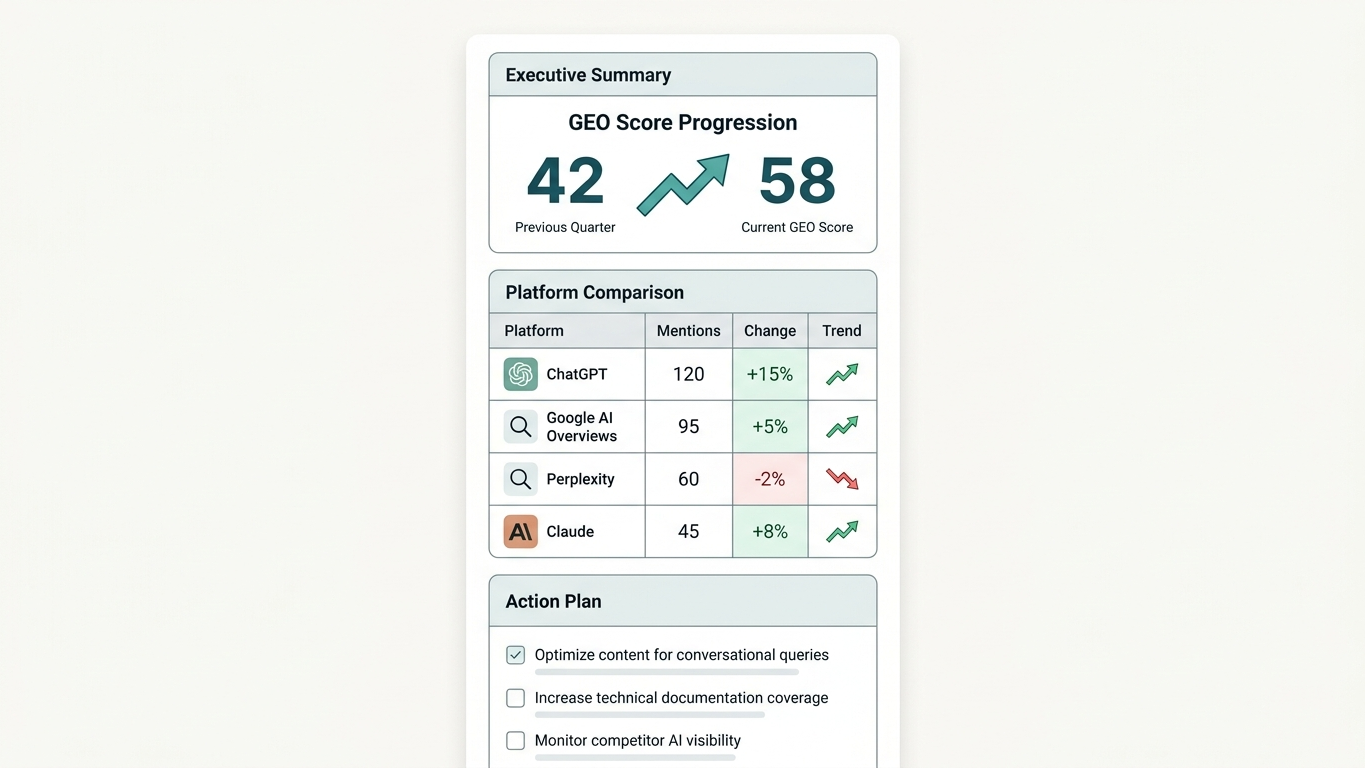
AI models are continuously updated. What delivers a good score today can be outdated next month. Without trend tracking, you lose your lead just as quickly as you built it.
Checklist for continuous GEO management:
- Do you have quarterly planning for repeating your GEO audit?
- Do you monitor changes in AI answers for your key search terms?
- Do you adjust your content based on new AI platform updates?
- Do you have a dedicated point of contact that monitors your GEO Score structurally?
| Approach | Risk | Recommended action |
|---|---|---|
| One-time audit | Score becomes outdated within 3 months | Minimum quarterly trend tracking |
| No monitoring | Competitor takes over your position | Competitor scan per quarter |
| SEO only | AI visibility remains untapped | GEO as supplement to SEO strategy |
Your next step: from checklist to action plan
You now know the five mistakes. The question is: how many of them are you making right now? A GEO Readiness Score from 0 to 100 gives you the answer in one number. No account needed, no API keys, no technical setup.
Here's how it works:
- Enter your domain at growthscope.io
- GrowthScope scans your website externally on all five error areas
- Receive your prioritized action plan within 10 to 15 minutes
The introductory price is valid until September 30, 2026. Establish your industry benchmark score now and claim your lead before your competitors do.
Do you have questions about your results or would you like to discuss your GEO strategy? Then contact the GrowthScope team directly.