Google AI Overviews are changing how your customers find information. Instead of ten blue links, they get a summarized answer at the top of search results. If your brand doesn't appear in that answer, you lose visibility to competitors who have made their content AI-ready. In this tutorial, you'll learn step by step how to optimize your website for Google AI Overviews.
Why Google AI Overviews threaten your organic reach
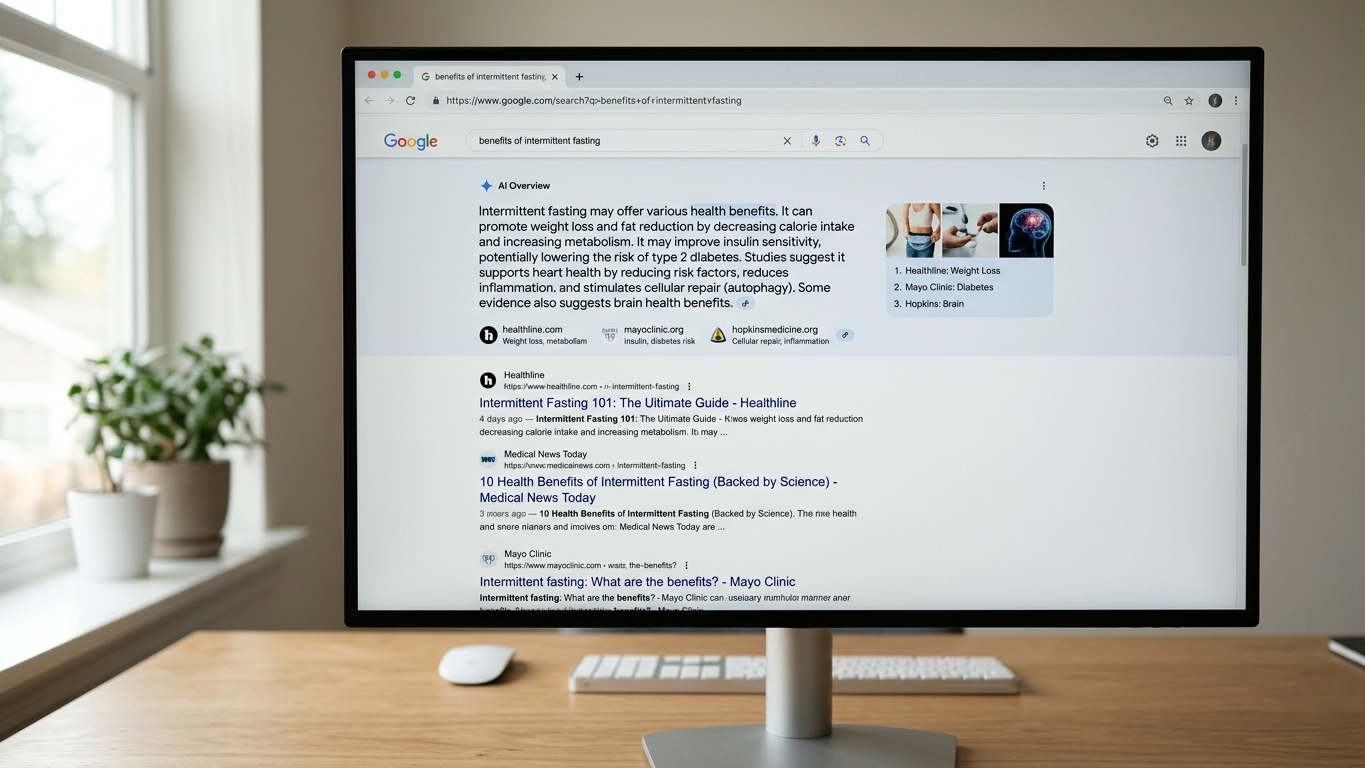
Google AI Overviews synthesize information from multiple sources into one coherent answer. This means users no longer need to click through. Research shows that click-through rates on organic results can drop by 40 to 60 percent when an AI Overview is displayed.
The question is no longer "Are we on page one?", but: "Are we cited in the AI answer?"
For you as a marketing manager, this is a direct threat to your KPIs. Without a targeted approach, your brand disappears from view, regardless of your current SEO position.
Step 1: make your content citable for AI
AI engines only cite content that is clear, structured and unambiguous. This requires a fundamentally different approach than traditional SEO texts written to convince human readers.
Write in question-answer structure
Google AI Overviews answer concrete questions. Structure your content around the questions your target audience asks. Use H2 headings as questions and provide the answer directly in the first two sentences of the paragraph.
Practical approach:
- Identify the top 10 questions in your industry via tools like "People Also Ask"
- Formulate each heading as a direct question
- Answer the question in a maximum of two sentences before adding context
- End each section with a concrete fact or figure
Use factual, verifiable statements
AI models prefer sources with objective, verifiable information. Avoid vague phrasings like "we are the best in our industry" and replace them with measurable claims with source attribution.
| Weak (not citable) | Strong (citable) |
|---|---|
| "We have years of experience" | "Active since 2003 with 20+ years of experience in production from Schijndel" |
| "Our quality is excellent" | "Produced by our own skilled craftsmen according to ISO-9001 standards" |
| "Many companies choose us" | "In 2024 we supplied 340 business customers in the Benelux" |
Step 2: optimize your technical AI accessibility
Even the best-written content is invisible if AI crawlers can't reach your website. Technical optimization is the foundation on which your GEO strategy rests.
Check your robots.txt and llms.txt
Many websites unintentionally block AI crawlers via their robots.txt. Check whether crawlers from Google, OpenAI and Anthropic have access to your key pages. Additionally, an llms.txt file provides AI models with a structured entry to your content.
Action items for your developer:
- Check that GPTBot and Google-Extended are not blocked in robots.txt
- Implement an llms.txt file in the root of your domain
- Make sure your sitemap.xml is up-to-date and error-free
Implement schema markup
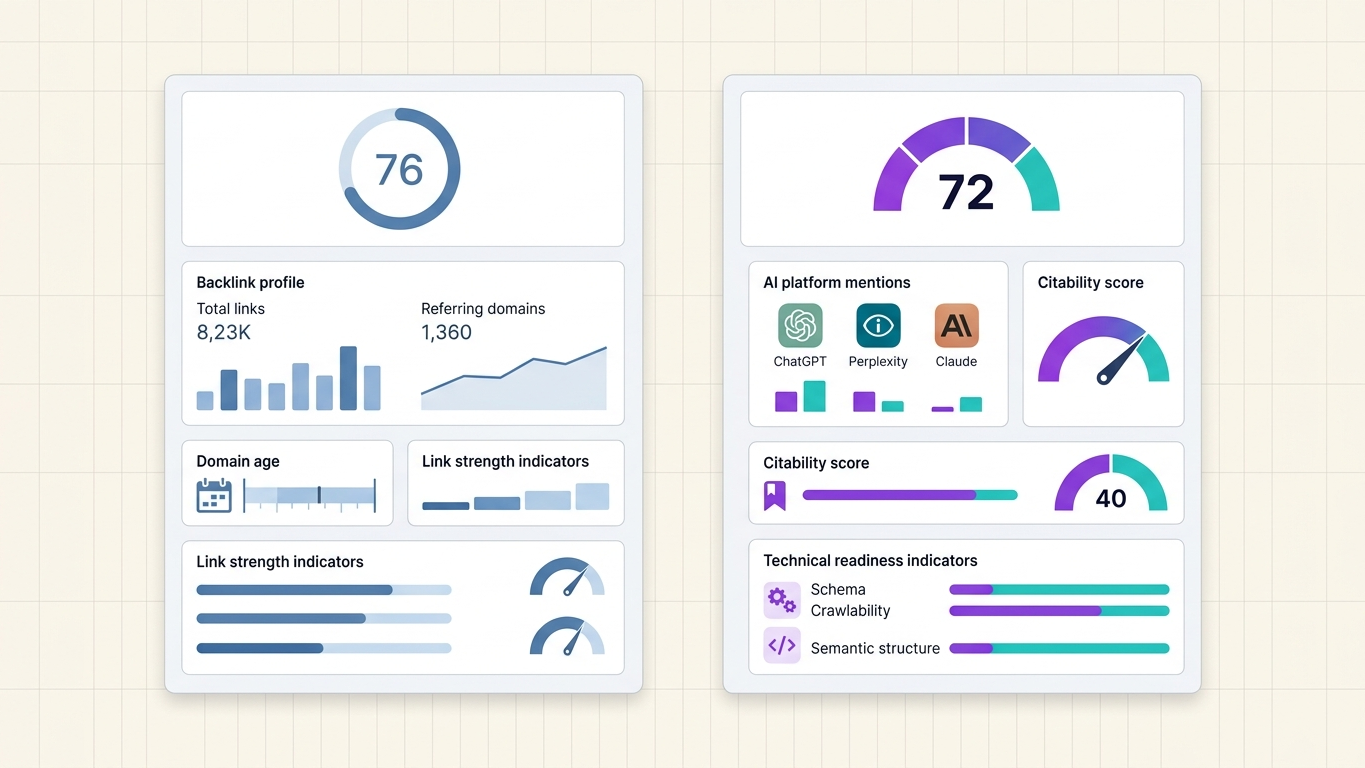
Schema markup translates your page content into a language AI understands. For Google AI Overviews, FAQ schema, HowTo schema and Organization schema are particularly important. This structured data increases the chance that your content will be selected as a source.
Step 3: measure your AI visibility with a GEO audit
Optimizing without measuring is gambling. You need a baseline measurement to know where you stand and which improvements will have the most impact.
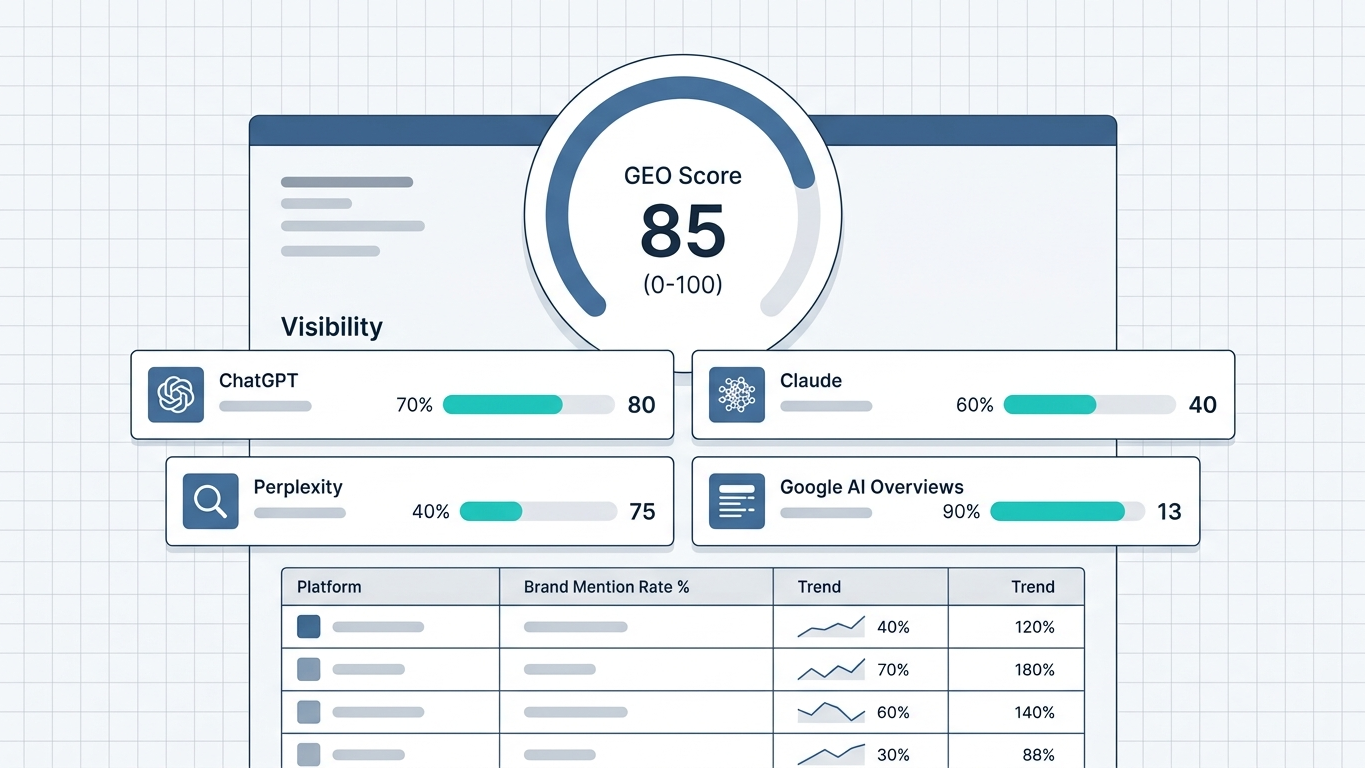
The GEO Readiness Score (0-100) gives you exactly that starting point.
A GEO audit analyzes your visibility on four platforms: ChatGPT, Perplexity, Google AI Overviews and Claude. You receive not only a score, but a concrete action plan with priorities.
Which scan suits your situation?
| Feature | Quick Scan | In-Depth Scan |
|---|---|---|
| Number of queries | 3 | 25 |
| Platforms | 4 | 4 |
| Management summary | Brief | Comprehensive |
| Competitor comparison | No | Yes |
| Expected impact scores | No | Yes |
| Price | €49 excl. VAT | €149 excl. VAT |
For evidence-based decision-making, GrowthScope recommends the In-Depth Scan. With 25 industry-relevant queries, it provides the statistical significance you need for your stakeholder reporting. The current introductory price is valid until September 30, 2026.
Step 4: make GEO a continuous process
Google AI Overviews are not a static system. The sources being cited change quarterly based on new data, competing content and model updates. One-time optimization is not enough.
Therefore, schedule quarterly trend tracking to monitor your position. This way you'll detect shifts before they impact your reach. With periodic measurements, you build a dataset to demonstrate how your GEO investments translate into measurable visibility.
No account needed. No setup. No API keys. Enter your domain and receive your action plan within 10 minutes.
Start your audit today
Summary: your checklist for Google AI Overviews
- Structure content in question-answer format with factual, verifiable statements
- Check robots.txt for AI crawler access and implement llms.txt
- Add schema markup (FAQ, HowTo, Organization)
- Measure your GEO Readiness Score as a baseline
- Schedule quarterly trend tracking for sustained competitive advantage
The shift to AI-driven search results is not futuristic. It's happening now. Every day your content isn't optimized for Google AI Overviews is a day your competitor is the answer your customer sees. Take control of your AI visibility today.