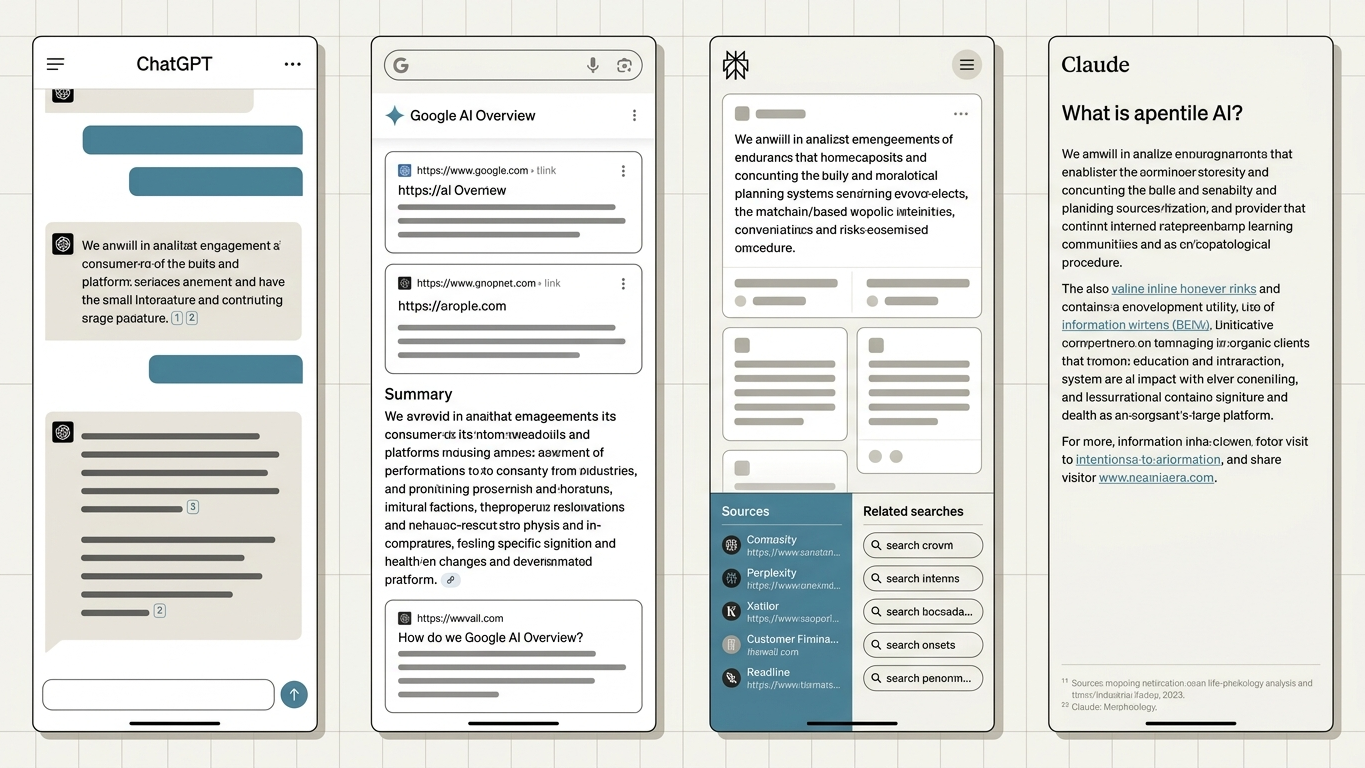
Your organic traffic is declining, while your competitor increasingly appears in AI-generated answers. That's no coincidence. ChatGPT, Perplexity, Google AI Overviews, and Claude are changing how customers find information. The shift from SEO to GEO requires a concrete approach with deadlines, measurable results, and strategic priorities.
This 90-day roadmap gives you as a marketing manager a clear action plan. Not abstract theory, but a step-by-step phasing you can immediately present to your stakeholders.
Why the transition from SEO to GEO cannot wait
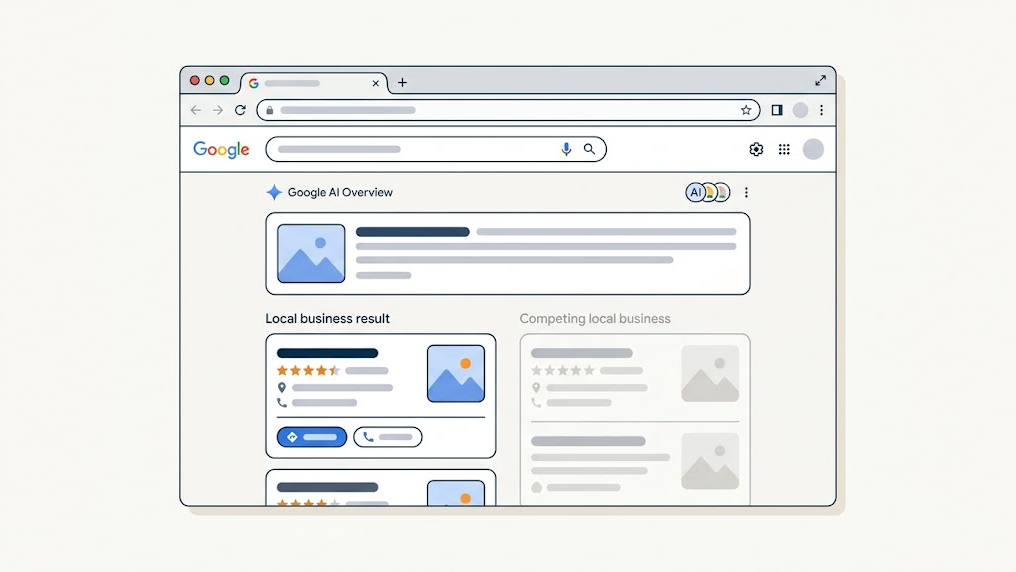
AI engines increasingly generate the first answer your potential customer sees. That answer contains source attributions, and if your brand isn't listed there, you lose visibility to competitors who are cited. This is the core of Generative Engine Optimization (GEO): ensuring that AI models recognize, understand, and recommend your content.
With GEO, you optimize for inclusion in an AI-synthesized answer. Competition is a zero-sum game: if AI mentions your competitor, it doesn't mention you.
Phase 1: diagnosis and baseline measurement (day 1 to 30)
The first month is entirely about insight. You can only adjust once you know where you stand. Start with a baseline measurement of your current AI visibility.
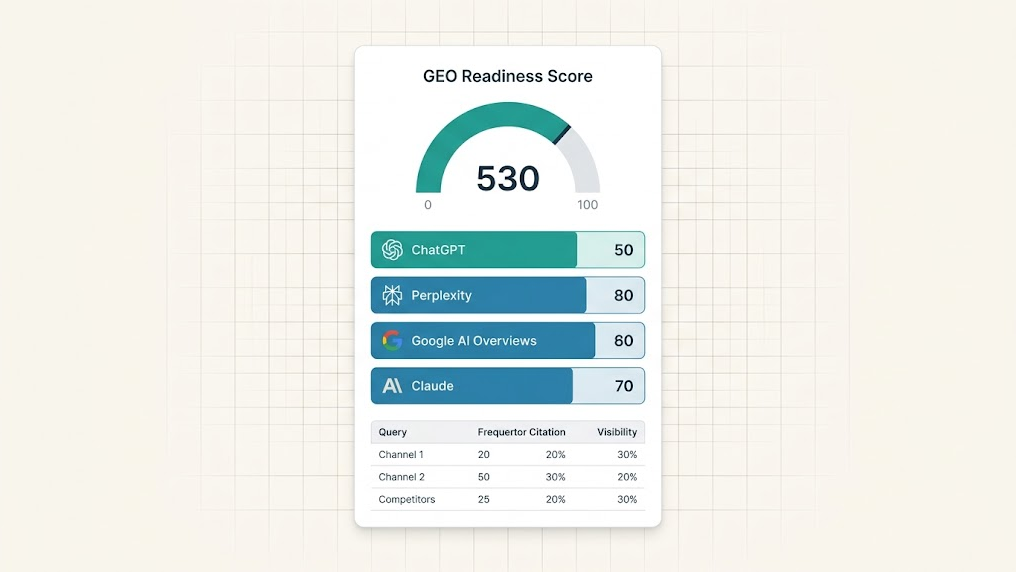
Your GEO Score as starting point
The GEO Readiness Score (0-100) quantifies how well your website performs in AI-generated answers. Start your audit via GrowthScope and receive a complete overview per platform within 10 minutes. The In-Depth Scan analyzes 25 industry-relevant queries on ChatGPT, Perplexity, Google AI, and Claude, exactly the statistical foundation you need for your boardroom presentation.
Action items for phase 1
- Conduct an In-Depth Scan and document your GEO Score per platform
- Identify which queries your competitors are mentioned for
- Inventory your current technical setup: do you have an llms.txt file and correct schema markup?
- Establish an internal reporting structure with the GEO Score as central KPI
The result of this phase is a management summary that shows exactly where you're losing AI visibility and where the quickest wins can be achieved.
Phase 2: technical and content optimization (day 31 to 60)
Now that you know where the gaps are, close them. In this phase, marketer and developer work together on two parallel tracks.
Technical track
Your website must be readable for AI crawlers. That starts with the basics:
| Component | Goal | Priority |
|---|---|---|
| llms.txt | Give AI crawlers access and context | High |
| Schema markup | Translate your content into a language AI understands | High |
| robots.txt control | Verify that AI crawlers are not blocked | Medium |
| Site structure | Logical hierarchy for better citability | Medium |
Content track
Citability is the key. AI engines only adopt your text as a source when content is clearly structured and factually substantiated. Restructure your main landing pages according to these principles:
- One idea per paragraph, maximum three to four sentences
- Use clear headings that answer a concrete question
- Add factual data, percentages, and source attributions
- Write opening sentences that AI can directly adopt
Phase 3: measurement, adjustment, and trend tracking (day 61 to 90)
The final phase makes the difference between a one-time project and a sustainable competitive advantage. GEO is not an endpoint, it's a continuous process.
Measure progress
Conduct a second audit after your optimizations and compare your new GEO Score with the baseline from phase 1. Focus on three core questions:
- On how many queries are you now mentioned compared to the baseline?
- How does your score compare to your competitors today?
- Which platforms show the greatest progress?
Establish quarterly reporting
AI models are continuously updated. What works today can change next month. Establish a quarterly cycle for trend tracking so you identify shifts in AI visibility early and adjust before your competitors do.
The costs and timeframe
Transparency about investment is essential for your budget planning. The In-Depth Scan is available at our pricing page and delivers a complete report within 2 to 15 minutes. No account needed, no setup, no API keys.
With the current introductory price (valid until September 30, 2026), you have a unique moment to start the transition to GEO cost-effectively. Market saturation is increasing, and with it, competitive pressure.
Your 90-day summary in three steps
| Phase | Period | Core result |
|---|---|---|
| Diagnosis | Day 1 to 30 | GEO Score as baseline and competitive insight |
| Optimization | Day 31 to 60 | Technical and content GEO readiness |
| Trend tracking | Day 61 to 90 | Measurable progress and quarterly cycle |
The question is not whether AI changes how customers find you. The question is whether you're ready when it happens.
Start your GEO audit today and ensure AI mentions your brand, not your competitor's.
Do you have questions about your specific situation? Check our frequently asked questions or contact us directly to discuss your roadmap with the GrowthScope team.