Your brand scores excellently in ChatGPT, but turns out to be invisible in Perplexity. How is that possible? The answer lies in the fundamentally different way each AI platform selects, weighs and cites sources. For marketing managers steering based on measurable AI visibility, this is no technical detail. It is a strategic blind spot that undermines your competitive position.
Your AI visibility is not a single number
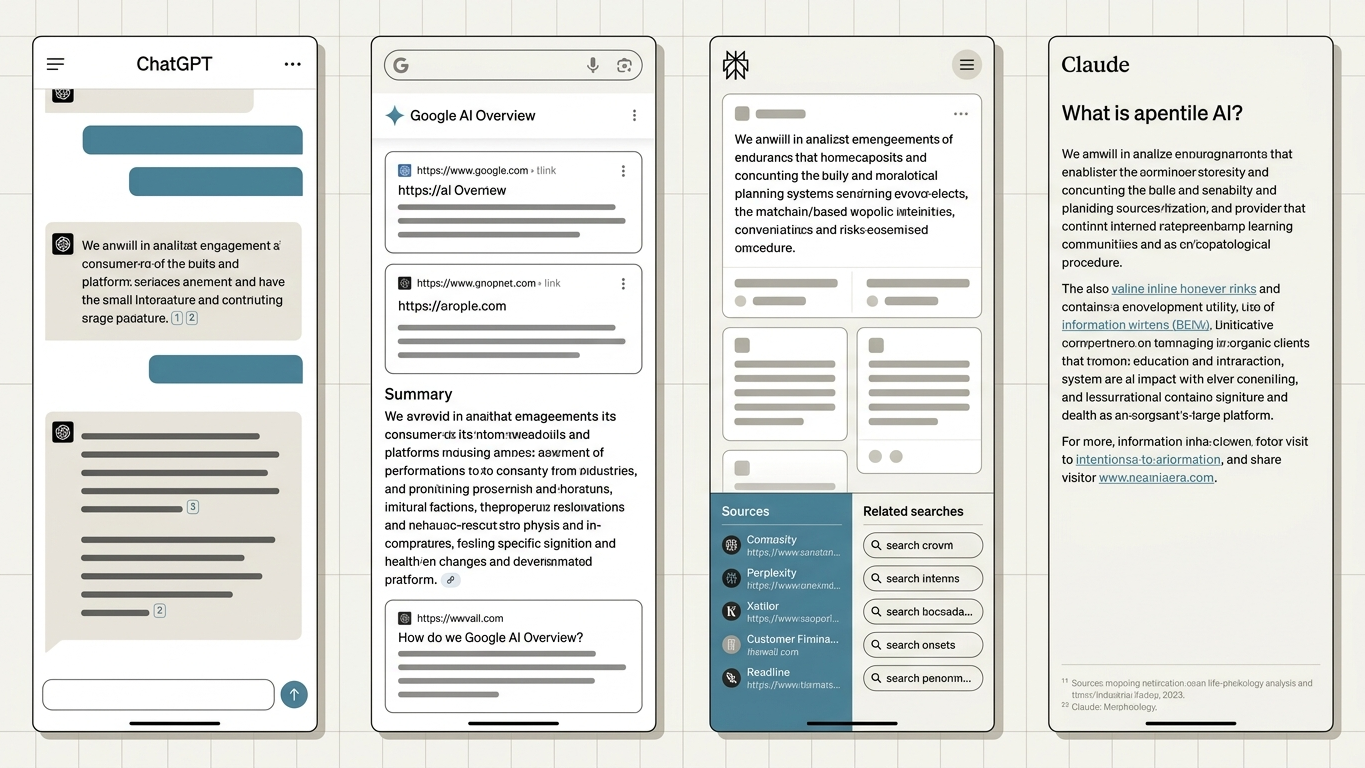
In reality, your brand doesn't have one position, but four completely different positions. ChatGPT, Google AI Overviews, Perplexity and Claude each use their own logic to determine which sources they cite.
Compare it with traditional SEO. There you optimized for one search engine with one algorithm. With GEO you optimize for multiple AI engines that each generate answers in a different way. Your content can be perfectly suited for one engine and completely ignored by another.
This makes platform-specific measurement not a luxury, but a necessity for substantiated marketing decisions.
How each AI platform selects sources
The differences between platforms are not random. They stem from fundamentally different architecture choices and data sources.
| Platform | Primary data source | Citation behavior | Update frequency |
|---|---|---|---|
| ChatGPT | Trained knowledge base and browsing | Cites sparingly, summarizes | Periodic with live browsing |
| Google AI Overviews | Google Search Index | Cites from top results | Realtime |
| Perplexity | Live web search with source attribution | Cites extensively with links | Realtime |
| Claude | Trained knowledge base | Rarely cites explicitly | Periodic |
Google AI Overviews relies heavily on the existing search index. Does your site already rank well in organic results? Then there's a good chance you'll also appear in AI Overviews. Perplexity, on the other hand, actively searches the web and values sources that are clearly structured and factually verifiable.
ChatGPT is largely based on its training data. If your brand isn't in there, you simply don't exist in that ecosystem. Claude uses a similar approach, but with a different training point in time and different source weights.
Why your competitor is mentioned on one platform
Suppose your competitor is consistently recommended by Perplexity while your brand is missing. That doesn't mean your content is worse. It means your content is less citable for that specific platform.
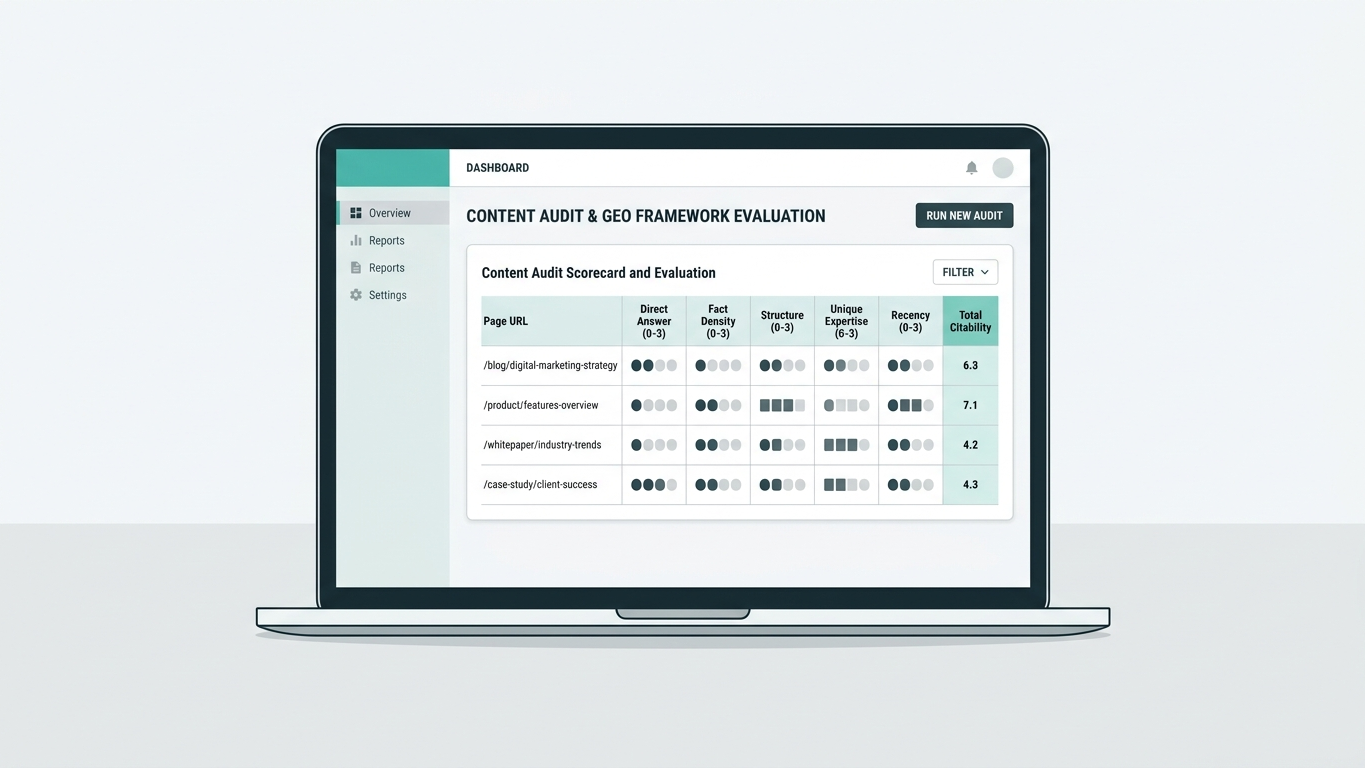
Citability is the degree to which AI can literally adopt your texts as a source. This depends on concrete factors that determine how translatable your content is to the answer format of a specific platform.
- Clear, factual statements that AI can verify
- Structured data via schema markup that AI understands
- Technical accessibility via a properly configured llms.txt file
- Consistent brand mentions in external sources
The strategic impact on your marketing decisions
For marketing managers reporting to stakeholders, this creates an urgent problem. An average AI score across all platforms is misleading. You need platform-specific insights to allocate budget effectively.
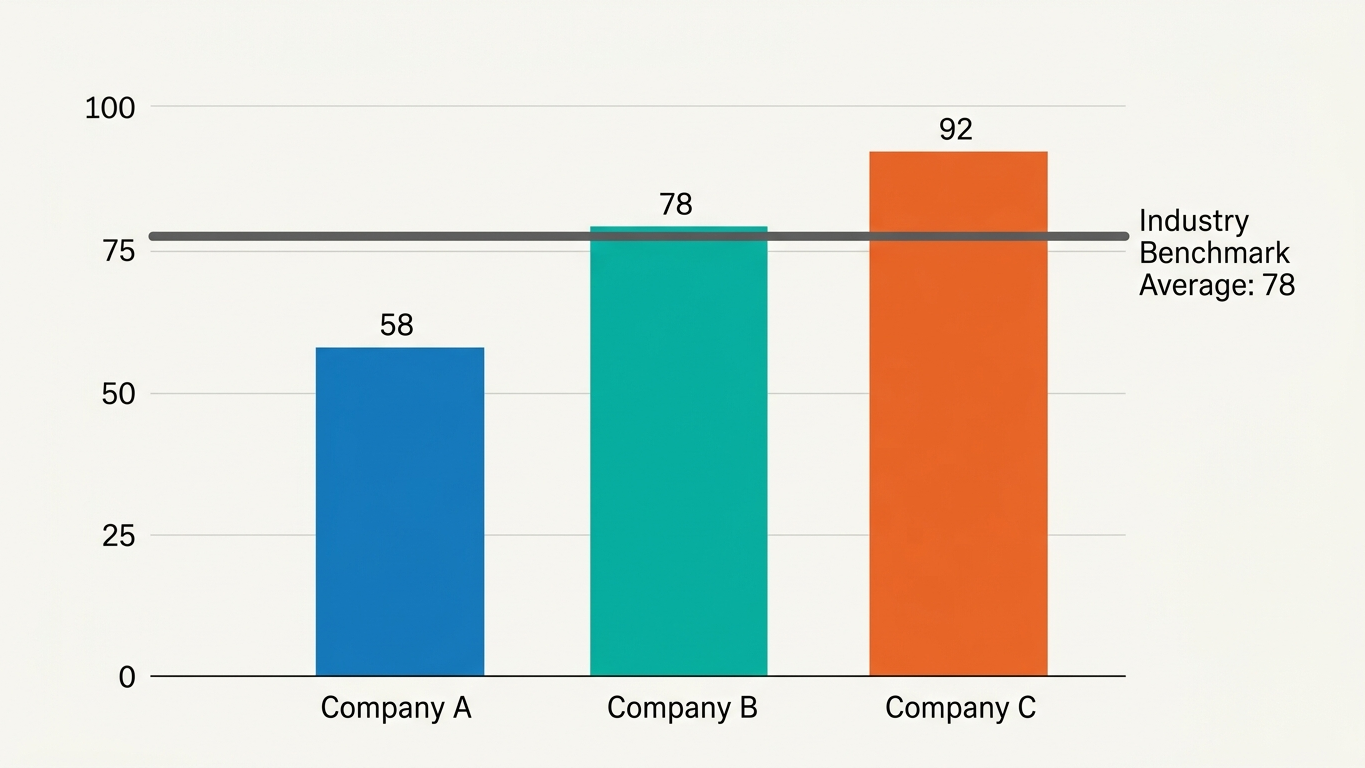
Consider the following scenario. Your target audience in the business market primarily uses Perplexity for research. Your GEO score on ChatGPT is 78, but on Perplexity only 23. The average score of 50 obscures the fact that you're invisible on precisely the platform that matters.
This is why the GEO Readiness Score per platform is not a "nice to have", but your primary steering instrument. Without that granularity, you're optimizing blind.
Three steps to use platform differences to your advantage
The solution begins with measuring, not guessing.
- Measure per platform. Start with an audit that maps your visibility on ChatGPT, Google AI Overviews, Perplexity and Claude separately. Only this way will you discover where the real gaps are.
- Prioritize based on your target audience. Not every platform is equally relevant for your market. Map which AI engines your customers actually use and focus your optimization there.
- Optimize per platform. Adapt your content strategy to the specific requirements of each platform. This might mean producing more factual, source-rich content for Perplexity, while working on broader brand authority in external publications for ChatGPT.
GrowthScope's Deep Scan tests your domain with 25 industry-relevant queries across four platforms. This gives you not just one score, but a complete picture of your position per engine, including expected impact scores and an executive summary that's directly usable for stakeholder reporting.
Why this is a continuous process
AI platforms are constantly evolving. Google AI Overviews is expanding to more search types. Perplexity is refining its source weighting. ChatGPT is increasingly getting real-time browsing capabilities. What works on one platform today can be obsolete tomorrow.
This makes trend tracking essential. A quarterly report shows how your scores shift per platform and whether your optimizations are actually delivering results. Without that longitudinal data, you'll miss the moment when a competitor takes over your position.
Start measuring platform-specific today
The conclusion is clear. Your AI visibility is not a single number. It's a portfolio of positions across multiple platforms that each deserve separate attention. Marketing managers who understand this and act on it build a measurable competitive advantage in the AI-driven search market.
Discover how your brand scores on each AI platform. Start your audit and receive your platform-specific GEO Score within 15 minutes with directly applicable recommendations.
Do you have questions about your results or would you like to discuss your GEO strategy? Contact our team directly.