Traditional content audits measure traffic, bounce rates and rankings. But in the GEO era, the core question has shifted: is your content actually cited by AI engines? This framework helps you assess every page for algorithmic citability, not just click potential.
As a consultant, you know clients want proof. Proof that their content works, even in ChatGPT, Perplexity and Google AI Overviews. This content audit framework gives you the structure to deliver that proof.
Why a classical content audit is no longer sufficient
Search behavior is fragmenting. Users ask questions to AI assistants and expect direct, summarized answers. If your content isn't structured enough to be picked up by that AI, you simply don't exist in that answer.
A traditional audit looks at technical SEO, word count and backlinks. A GEO-focused audit adds a crucial layer to that: is this page understandable, citable and discoverable for large language models? Without that layer, you're optimizing for a shrinking channel while ignoring the one that's growing.
The GEO content audit framework in five steps
This framework is designed to give a clear judgment per page. You can apply it directly to your clients' websites.
Step 1: Inventory and categorize your content
Start with a complete crawl of the website. Categorize each page by type and strategic purpose.
- Pillar content: Comprehensive, thematic pages that serve as authority anchors.
- Transaction pages: Pages focused on conversion, such as product pages or services.
- Supporting content: Blog posts, FAQs and knowledge base articles that answer specific questions.
Note the current performance for each page: organic traffic, positions and existing backlinks. This is your baseline.
Step 2: Assess citability per page
This is where the GEO-specific work begins.
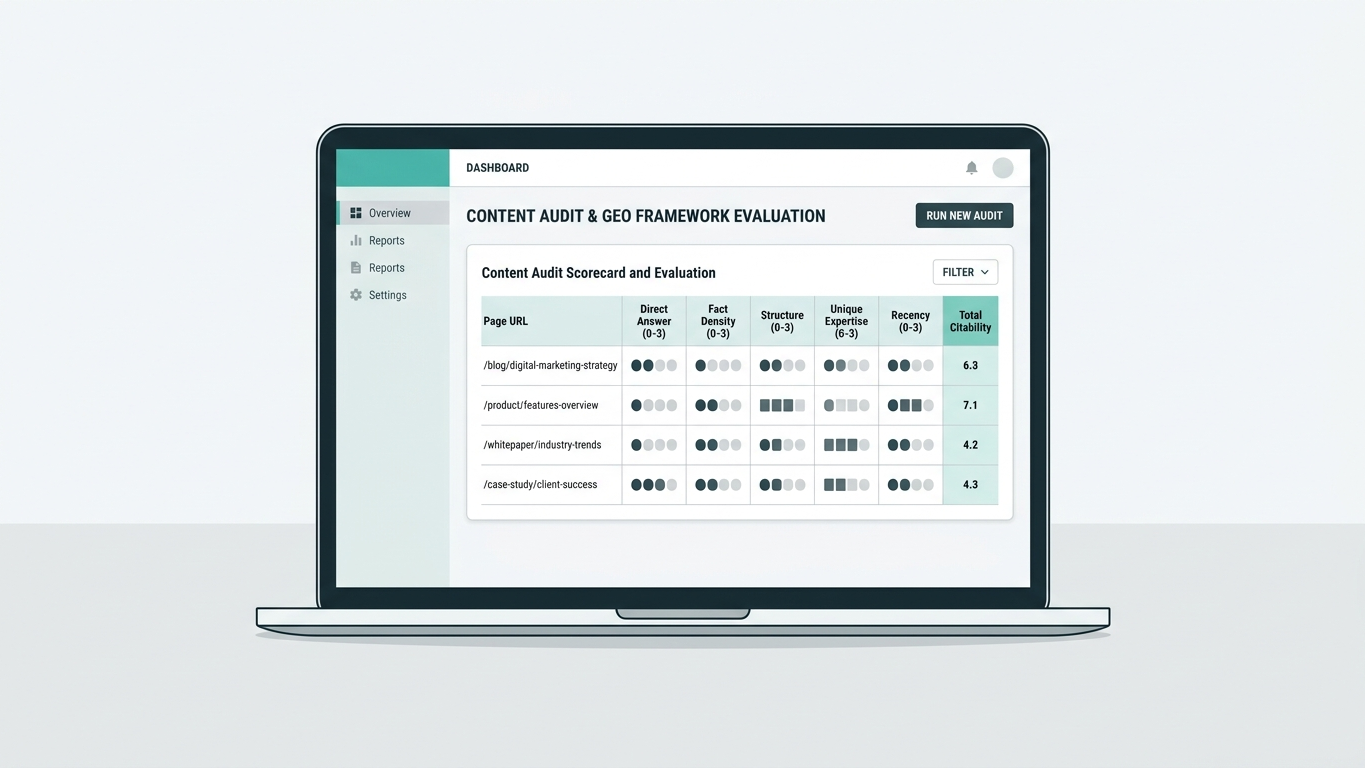
Citability is the extent to which AI can literally adopt your texts as a source.Assess each page on the following criteria:
| Criterion | Question | Score (0-3) |
|---|---|---|
| Direct answer | Does the page answer a specific question in the first two paragraphs? | |
| Fact density | Does the text contain concrete figures, names or definitions that AI can cite? | |
| Structure | Are there clear headings, lists and tables present? | |
| Unique expertise | Does the page offer insights that don't exist on ten other websites? | |
| Currency | Is the information recently updated and dated? |
A page with a total score below 8 (out of 15) is a priority for rewriting.
Step 3: Check the technical GEO foundation
Technical accessibility determines whether AI crawlers are allowed to and can read your content. Check per page:
- Schema markup: Is structured data present to help AI understand the context?
- robots.txt: Are AI crawlers (such as GPTBot and ClaudeBot) not unintentionally blocked?
- llms.txt: Is there an llms.txt file that tells AI models which content is relevant and how your organization should be described?
Without this technical foundation, your content optimization misses its target every time.
Step 4: Test AI visibility per platform
Now it gets concrete.
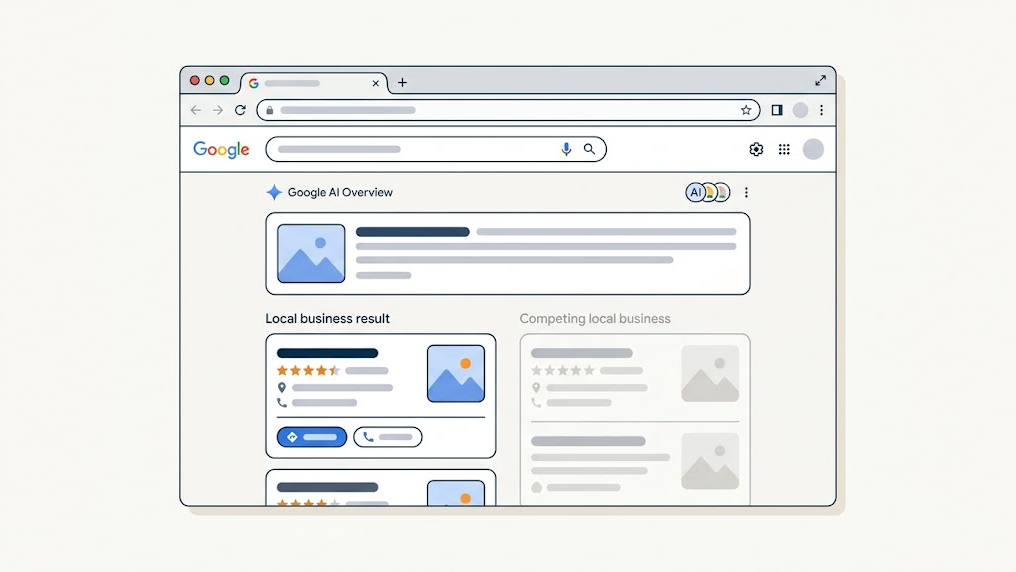
Test whether your content actually appears in AI answers by formulating three to five industry-relevant queries per page to ChatGPT, Perplexity, Google AI Overviews and Claude.
Note per query:
- Is the brand mentioned? (Yes/No)
- Is the specific page cited or linked? (Yes/No)
- What is the sentiment of the mention? (Positive/Neutral/Negative)
- Which competitor is mentioned instead?
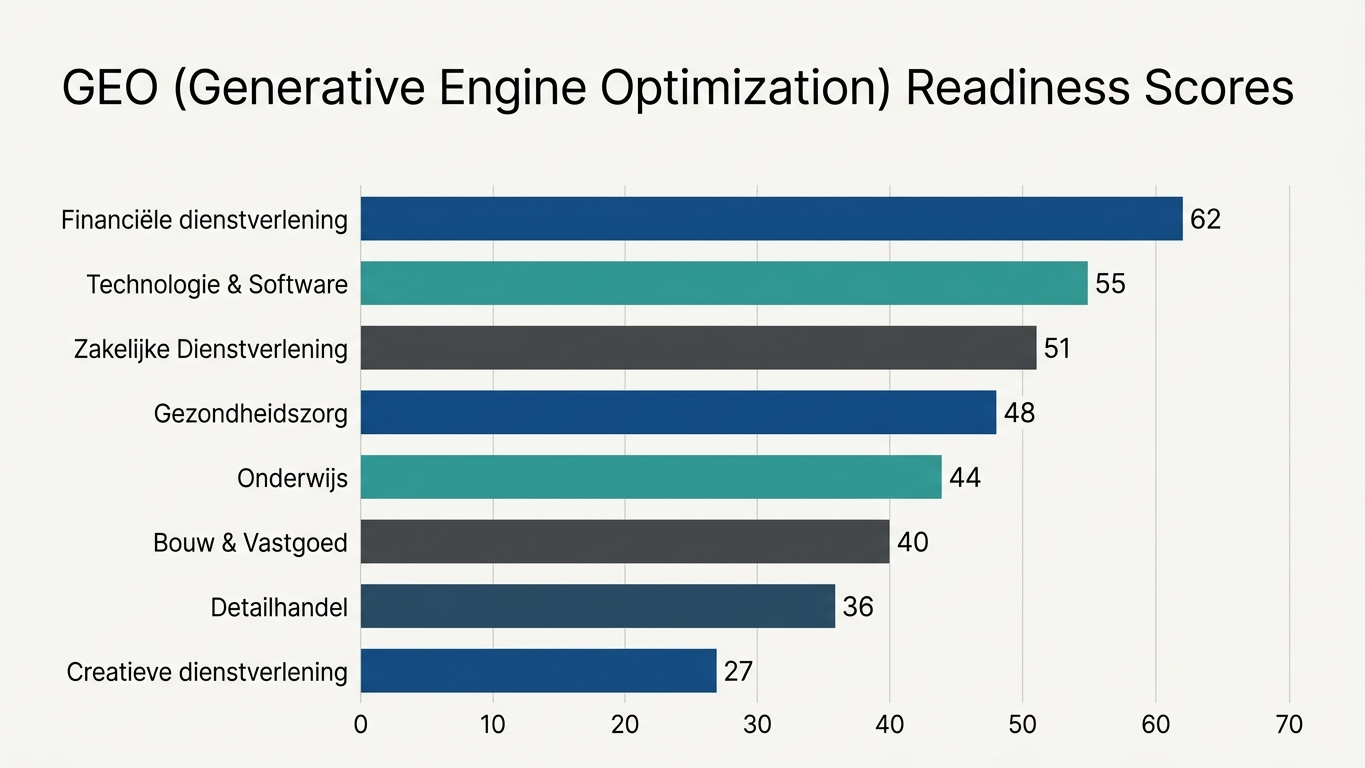
This manual process takes time. An automated GEO audit can simplify this step and deliver a GEO Readiness Score from 0 to 100 within 10 minutes, including per-page query mapping.
Step 5: Prioritize and plan optimization
Not every page deserves the same attention. Combine your citability score (step 2) with the AI visibility results (step 4) in a priority matrix.
| High citability | Low citability | |
|---|---|---|
| Visible in AI | Maintain and monitor | Resolve technical blockage |
| Not visible in AI | Promotion and link building | Full rewrite needed |
The bottom right corner is your urgency zone. Start there.
How to present this framework to clients
As a consultant, the framework is only valuable if your client understands the impact. Present the results in two layers.
For the decision maker: show the overall GEO Score and competitive position. "Your competitor scores 72 on AI visibility, you're at 41. This is why AI recommends them."
For the marketer or developer: deliver the page-specific action plan with directly applicable recommendations. Add schema markup, configure llms.txt, rewrite content for citability.
From one-time audit to continuous competitive advantage
AI models are constantly trained on new data. An audit that delivers a score of 68 today may be outdated in three months. That's why trend tracking is essential.
With a quarterly subscription, you automate the re-audit. With each measurement, you demonstrate the improvement of the GEO Score as a direct result of your consultation. This strengthens client retention and proves the value of your strategy in the long term.
Start your first GEO audit today and receive your GEO Readiness Score within minutes, without account, without setup, without API keys.