AI engines like ChatGPT, Perplexity, and Google AI Overviews don't cite randomly. They select sources that radiate structure, depth, and thematic authority. A loose collection of blog articles is no longer enough. You need a content pillar strategy that forces AI models to consider your brand as the reference.
Why a content pillar strategy determines your AI visibility
Generative AI engines work fundamentally differently than traditional search engines. They synthesize information from multiple sources and choose the source that appears most complete and reliable. A content pillar strategy organizes your knowledge around core themes, making AI models recognize your website as a cohesive authority.
Without this structure, AI sees your content as isolated fragments.
With a pillar strategy, you create a web of interconnected pages that together emit an irrefutable expertise signal.This is exactly what your GEO Readiness Score measures: the extent to which your content is ready for AI citation.
What is a content pillar exactly?
A content pillar is an extensive, in-depth piece of content that comprehensively covers a core theme. Around this pillar, you build cluster content: shorter articles that deepen subtopics and link back to the pillar.
| Element | Function | Example |
|---|---|---|
| Pillar page | Complete overview of a core theme | Everything about GEO |
| Cluster article | Deep dive into a subtopic | What is llms.txt? |
| Internal links | Connection between pillar and clusters | Contextual links in running text |
| Overview structure | Navigation for AI crawlers | Table of contents, schema markup |
The power lies in the coherence. AI models recognize that your pillar page is the anchor and that your cluster articles provide the depth that characterizes a citable source.
Step 1: Identify your core themes from an AI perspective
Don't start with your own product catalog, but with the questions your target audience asks AI. Which queries lead to answers in which your competitor is mentioned and you are not?
Here's how you do it:
- Formulate 5 to 10 core questions that your ideal customer would ask ChatGPT or Perplexity
- Test these queries manually and note which sources are cited
- Group the questions around 2 to 3 overarching themes
This process exposes blind spots. A GEO audit with industry-relevant queries automates this analysis and shows exactly where you are invisible.
Step 2: Build your pillar page as the ultimate reference
Your pillar page must be the most complete answer to the core theme. AI engines cite sources that provide the complete context in one go. Think of a page of 2,000 to 3,000 words that covers the subject from definition to implementation.
Essential characteristics of a citable pillar page:
- Clear definition in the first paragraph, so AI can quote your text directly
- Logical heading structure with H2s that answer individual search queries
- Concrete data and figures that support your claims
- Schema markup that translates content into a language AI understands
- A table of contents that makes the structure scannable for both humans and crawlers
Avoid vagueness. Write as if you're creating an encyclopedia entry that an AI model can use as a factual source.
Step 3: Create cluster articles that add depth
Each cluster article covers one subtopic and links back to the pillar. This reinforces the thematic signal that AI engines pick up. The more relevant cluster articles, the stronger your position.
A practical example for the theme "AI visibility":
- Pillar: The complete guide to Generative Engine Optimization
- Cluster 1: What is the difference between GEO and SEO?
- Cluster 2: Why does your website need an llms.txt file?
- Cluster 3: How do you rank higher in Google AI Overviews?
- Cluster 4: AI Sentiment: how does ChatGPT talk about your brand?
Each cluster article contains at least two internal links to the pillar and to related clusters. This way, you build a network that AI crawlers can easily follow.
Step 4: Optimize the technical layer for AI crawlers
Content alone is not enough. The technical infrastructure determines whether AI engines can even index your pillar structure. Check three critical elements:
- robots.txt: Allows AI crawlers to access your content
- llms.txt: Gives AI models a structured overview of your most important pages
- Schema markup: Translates headings, authors, and publication dates into machine-readable signals
This technical foundation, together with your content strategy, forms the two pillars of your GEO Readiness. A comprehensive audit scans both aspects and delivers an action plan you can implement immediately.
Measure your progress with the right metric
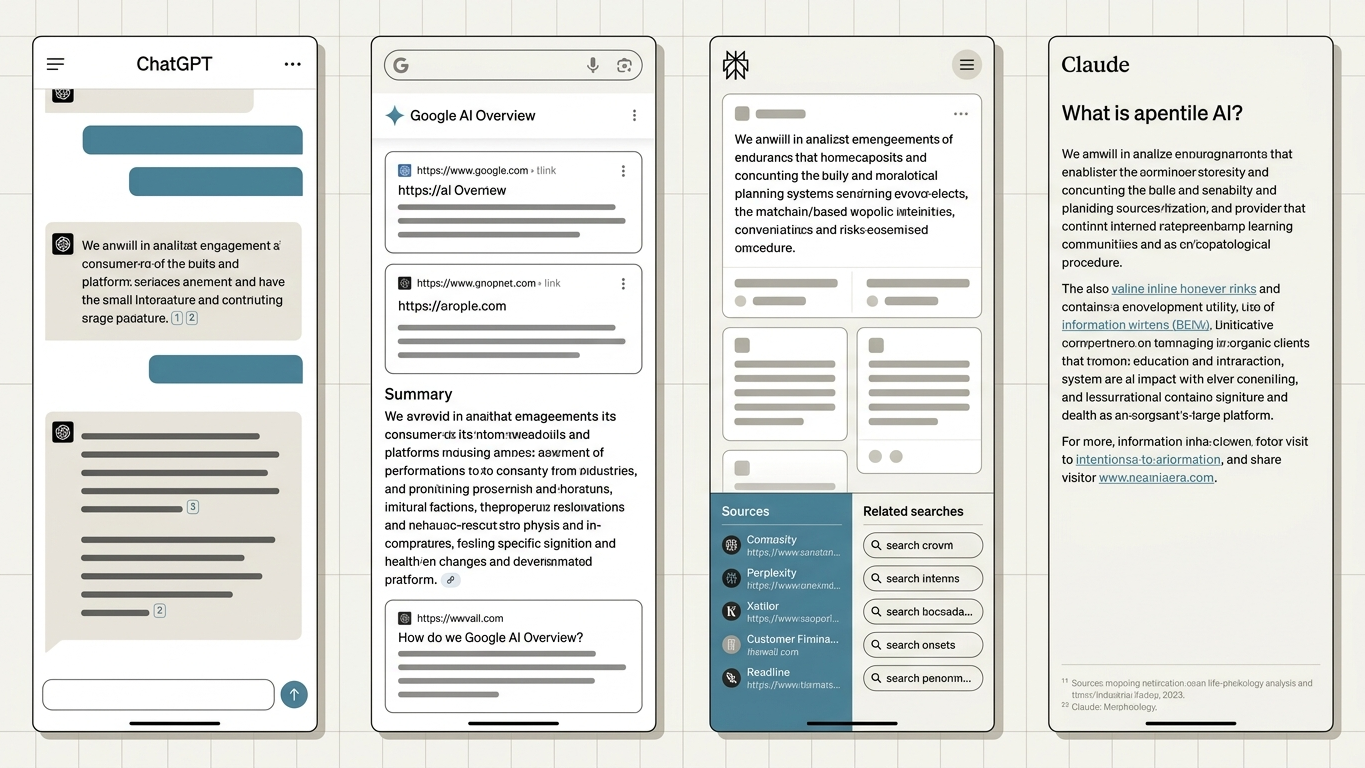
A content pillar strategy without a measurement point is a strategy without direction.The GEO Score (0 to 100) quantifies your AI visibility across four platforms: ChatGPT, Perplexity, Google AI Overviews, and Claude.
Monitor your score at three points:
- Baseline measurement before you publish your pillar structure
- After 4 weeks to measure the first indexing by AI models
- Every quarter via trend tracking to adjust for shifts in AI citation behavior
By comparing quarterly reports, you see exactly which pillar pages AI engines cite most and where your competitors are gaining or losing ground.
Start your content pillar strategy today
The shift toward AI-driven search results won't wait. Every day without structured content is a day when AI chooses your competitor as a reference. Start with one pillar, build three cluster articles, and measure the result.
Want to know where you stand first? Start your GEO audit and receive your GEO Score with immediately actionable recommendations within 10 minutes. No account needed, no setup, no API keys.
Get in touch if you have questions about your strategy. We're happy to think it through with you.