From vulnerable to dominant: your 30-day GEO action plan for AI visibility
Every day your competitor gets mentioned by ChatGPT, Perplexity or Google AI Overviews, you lose potential customers. The shift from traditional search to AI-driven answers is happening faster than expected. Yet within 30 days, you can take back control. This action plan takes you from a vulnerable position to a dominant AI presence, step by step.
Why your AI visibility requires action now
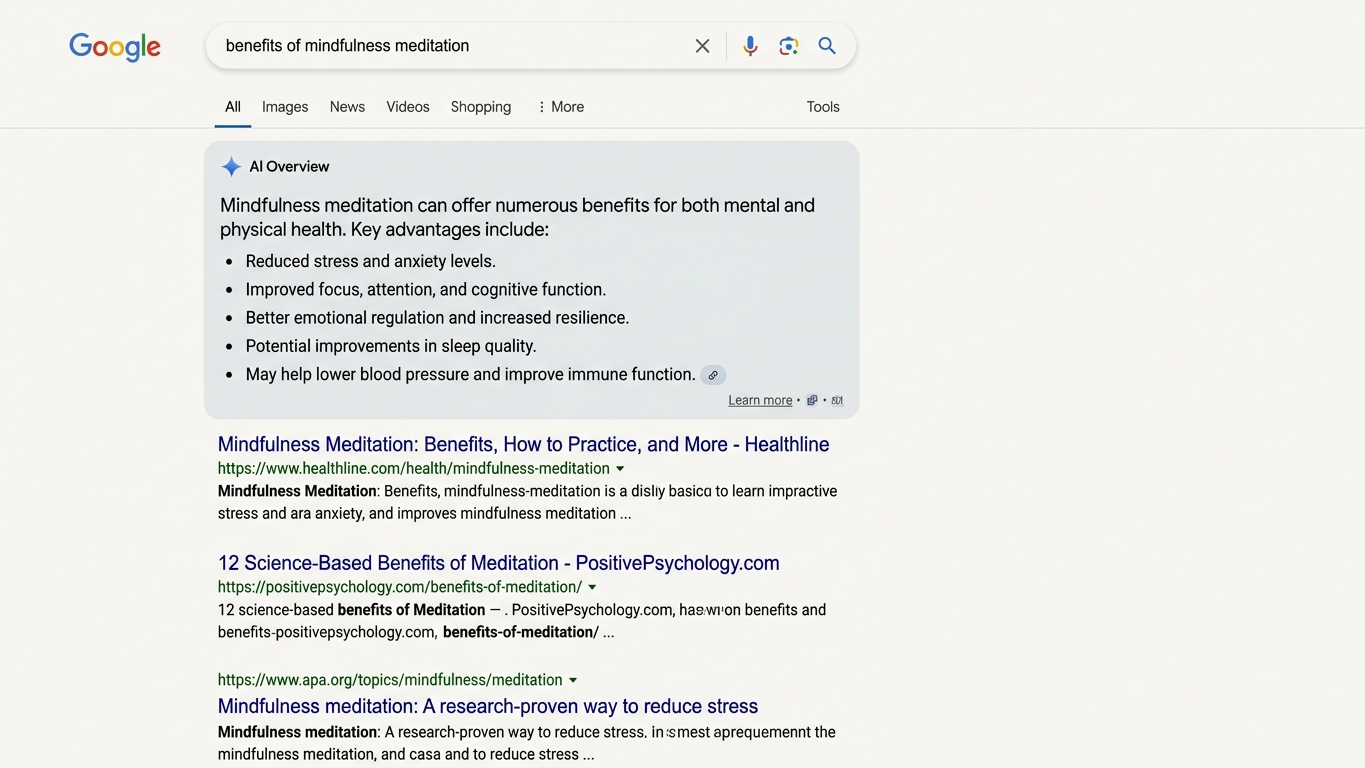
AI engines operate as a zero-sum game. There is no page two of search results anymore. ChatGPT mentions one or two brands in an answer, and the rest simply doesn't exist. That means every day without Generative Engine Optimization (GEO) is a day when your competitor claims market share.
GEO is not rocket science. It is a methodical process of measuring, optimizing and adjusting.
Week 1: measuring where you stand
Without a baseline measurement, you optimize in the dark. The first week is entirely about gaining insight.
Day 1 to 3: determining your GEO Readiness Score
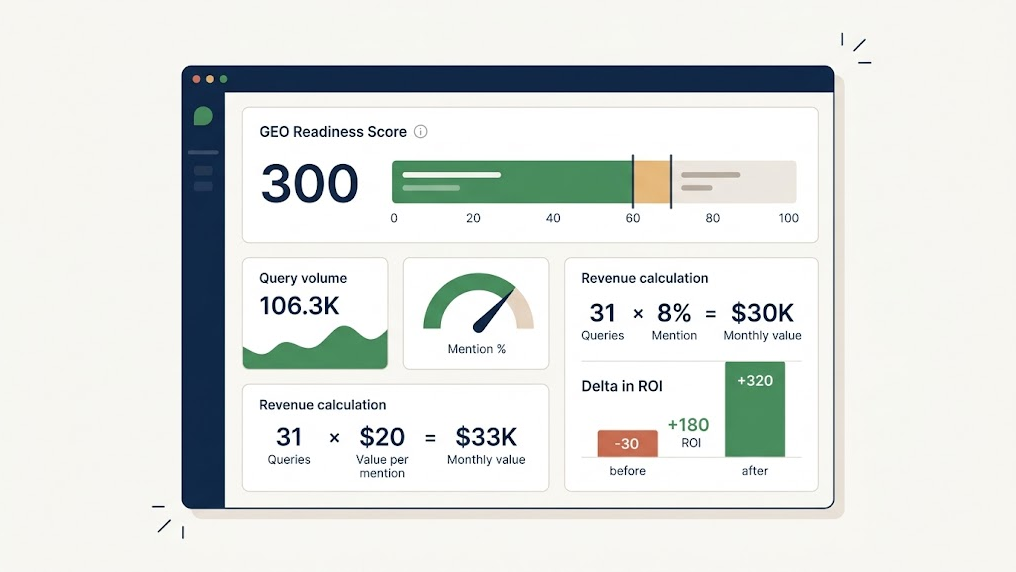
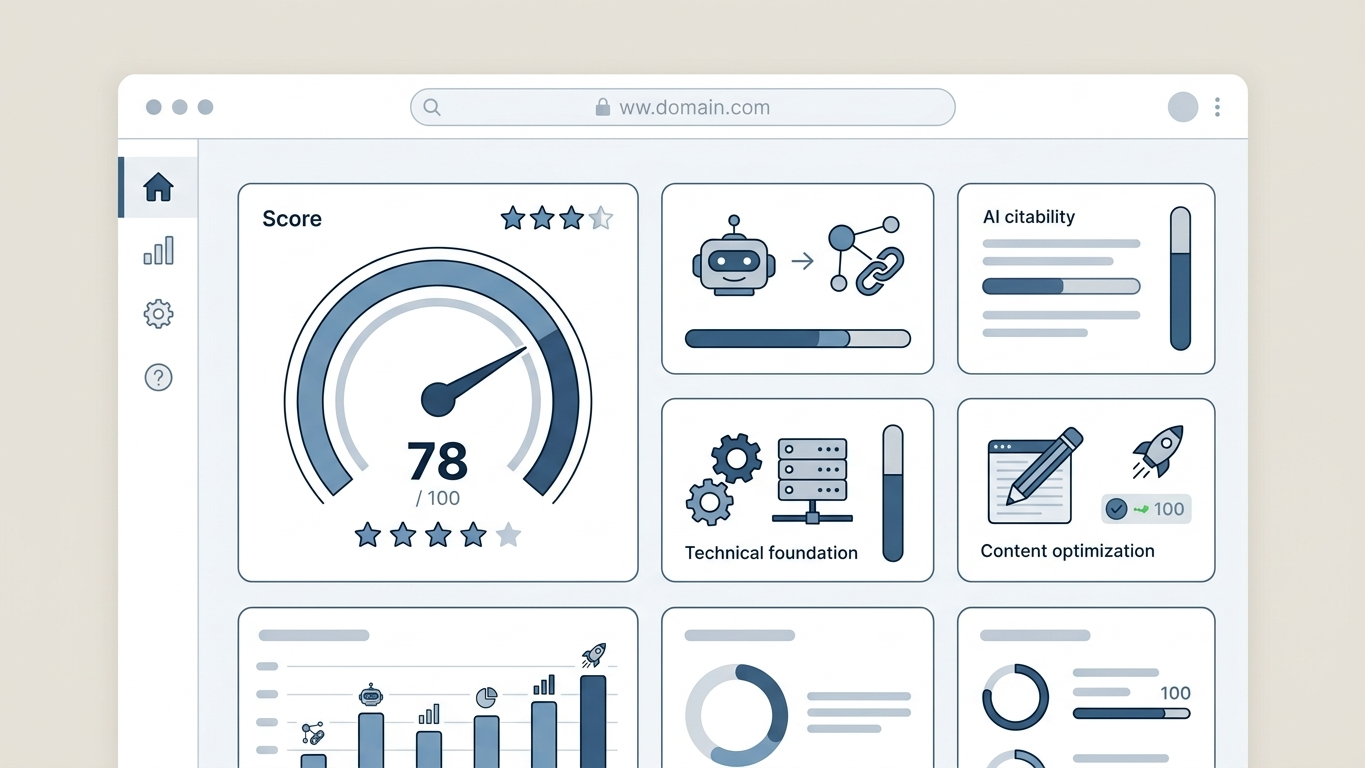
Start with a GEO audit via GrowthScope. Enter your domain and receive a complete report within 10 minutes. No account needed, no API keys, no setup. Your GEO Readiness Score (0-100) immediately shows how well AI engines can find and cite your content.
Day 4 to 7: analyzing competitors and setting priorities
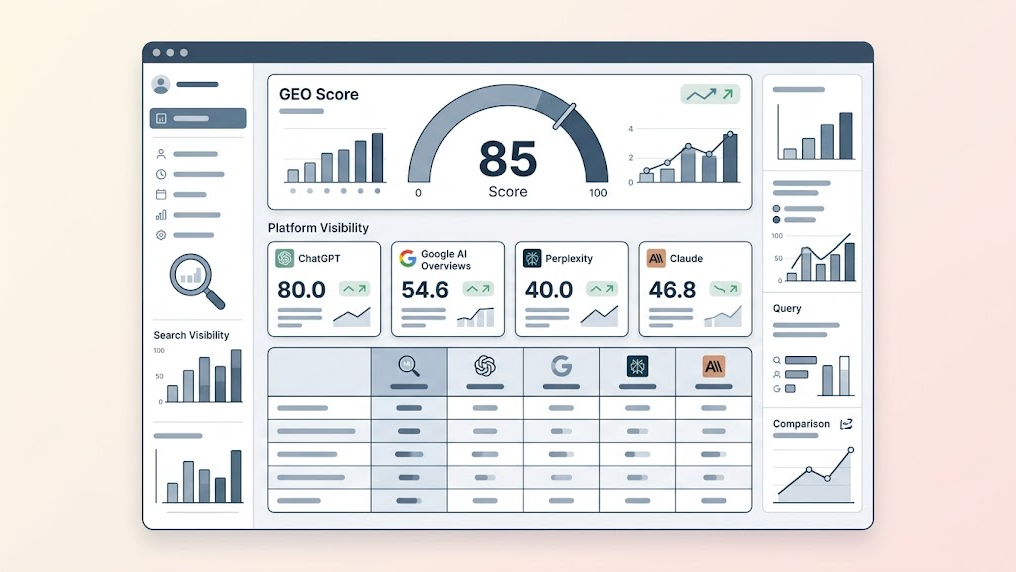
See how your competitors score on the same AI platforms. The Competitive Scan makes visible through a comparison graph and gap analysis where you're losing revenue. Prioritize the queries where the difference is greatest, because that's where the fastest wins are.
| Activity | Result | Time investment |
|---|---|---|
| Perform GEO audit | GEO Readiness Score and action plan | 10 minutes |
| Analyze competitive report | Insight into AI gaps versus competitors | 30 minutes |
| Establish top-5 priorities | Focused optimization plan | 1 hour |
Week 2: getting your technical foundation in order
The technical foundation determines whether AI crawlers can even read your website. Without this foundation, content optimization is pointless.
Day 8 to 10: configuring llms.txt and robots.txt
Your llms.txt file is the gateway for AI engines. It tells AI crawlers which pages they can index and cite. At the same time, check your robots.txt to prevent accidentally blocking AI bots.
Day 11 to 14: implementing schema markup
Schema markup translates your website into a language AI understands. Add at least the following types:
- Organization: your business name, logo and contact details
- Product or Service: your core offering with specifications
- FAQ: frequently asked questions with clear answers
- Review: customer ratings that build trust
A developer can implement this markup within two days. The impact on your citability is immediately measurable.
Week 3: optimizing content for citability
AI engines only cite content that is clear, structured and factual. Your existing pages probably already contain valuable information, but how you present it determines whether AI picks up that information.
Day 15 to 18: rewriting core pages
Take your five most important pages and rewrite them according to the citability principle. That means:
- Start each paragraph with the core message
- Use short, factual sentences that AI can literally adopt
- Add concrete figures, specifications and results
- Structure with clear headings that answer a specific question
Day 19 to 21: creating new content based on AI queries
Your audit report shows which industry-relevant questions AI engines ask. Write targeted content that directly answers these questions. Think of articles that start with the answer and then provide the backing. Check out the GrowthScope blog for examples of GEO-optimized content.
Week 4: measuring, adjusting and anchoring
The final week is crucial. This is where you turn a one-time sprint into a structural competitive advantage.
Day 22 to 25: performing second measurement
Run a GEO audit again and compare your new score with the baseline measurement. Focus on three key questions:
- Has your GEO Readiness Score increased?
- Are you now mentioned on platforms where you were previously invisible?
- How has your position relative to competitors changed?
Day 26 to 30: activating trend tracking and anchoring processes
GEO is not a one-time action. AI models are continuously updated and your competitors aren't standing still. Activate quarterly reports to monitor your Industry Benchmark Score and signal shifts early.
Establish internally who is responsible for GEO maintenance. Make it part of your marketing calendar, just like SEO and social media.
Your 30-day timeline at a glance
| Week | Focus | Core result |
|---|---|---|
| Week 1 | Measure and analyze | GEO Score and competitive insight |
| Week 2 | Technical foundation | llms.txt, robots.txt and schema markup live |
| Week 3 | Optimize content | 5 core pages citable, new content published |
| Week 4 | Measure and anchor | Second measurement, trend tracking activated |
The first step is the simplest
You don't have to do everything at once. You only need to do one thing today: enter your domain and request your GEO Readiness Score. Within 10 minutes you'll know exactly where you stand and what the first priority is.
Don't wait until your competitor makes the gap unbridgeable.
Start your GEO audit today and take the first step from vulnerable to dominant.
Do you have questions about your GEO strategy? Contact the GrowthScope team directly here.