The impact of Google AI Overviews on your organic traffic
Google AI Overviews change the rules for organic traffic
Your organic traffic is declining and you can't explain it. The cause increasingly lies not with your SEO strategy, but with a fundamental shift in how Google answers search queries. Google AI Overviews, the AI-generated summaries at the top of search results, absorb clicks that previously went to your website.
This is not a future scenario. Google AI Overviews now appear in a growing percentage of all searches. The direct consequence: users get their answer without clicking through to your content.
The question is not whether this affects your traffic, but how much you're already losing.
What exactly are Google AI Overviews?
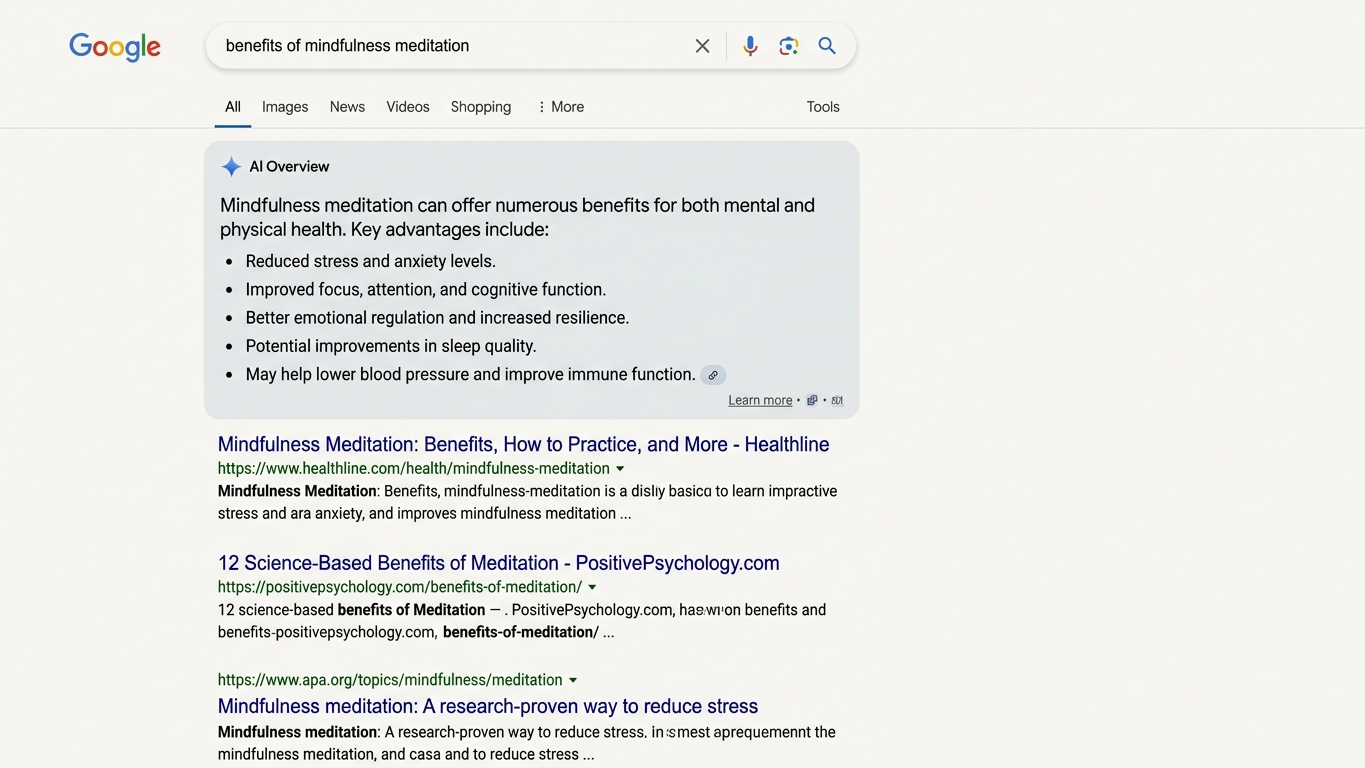
Google AI Overviews are artificially intelligent-generated answers that appear at the top of search results. They synthesize information from multiple sources into a coherent answer. The user no longer needs to click through to individual websites.
The difference from the old 'featured snippets' is significant. While a featured snippet cited one source, an AI Overview combines multiple sources. Your competitor might be mentioned instead of you, without you knowing it.
To properly understand how Generative Engine Optimization differs from traditional SEO, it is essential to understand what happens in those AI summaries.
The measurable impact on your organic traffic
Research and market analyses show a clear pattern. The impact of Google AI Overviews on organic traffic is not hypothetical, but quantifiable.
| Effect | Average impact |
|---|---|
| CTR decline on informational searches | 15-25% lower than before AI Overviews |
| Position 1 loses relative value | Up to 30% fewer clicks despite top ranking |
| "Zero-click searches" increase | 60%+ of searches don't lead to a website visit |
| Visibility of brand mentions in AI | Not measurable without GEO analysis |
You can rank in position 1 and still lose traffic, because the AI Overview provides the answer before the user sees your link.
Which sectors are hit hardest?
Not every industry experiences the same impact. Information-driven sectors face the greatest risk.
- Financial services: Complex questions about mortgages, insurance, and investments are increasingly answered directly.
- Healthcare: Medical information questions almost always generate an AI Overview.
- B2B services: Comparison questions and "what is" searches are completely intercepted.
- E-commerce: Product specifications and reviews increasingly appear in AI summaries.
The common denominator: the more informative your content, the greater the chance that Google will absorb that information without sending traffic to your website.
Why traditional SEO is no longer enough
Your SEO strategy is built on a model that is changing. Traditional optimization focuses on rankings and clicks. But if the answer is already in the search results, a high ranking is no longer a guarantee for traffic.
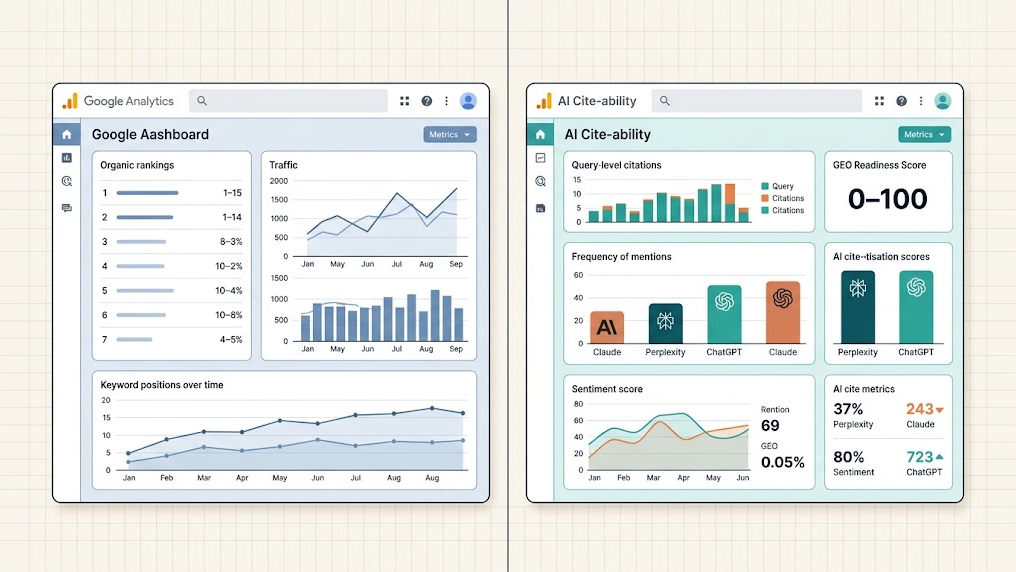
This doesn't mean SEO becomes irrelevant. It means you need an additional layer: GEO, or Generative Engine Optimization. While SEO optimizes your position in search results, GEO ensures that your brand and content are cited in AI-generated answers.
In the traditional search world, you competed for clicks. In the AI world, you compete for mentions.
Three steps to take control of your AI visibility
The first step is to measure. Without insight into your current AI visibility, you're flying blind.
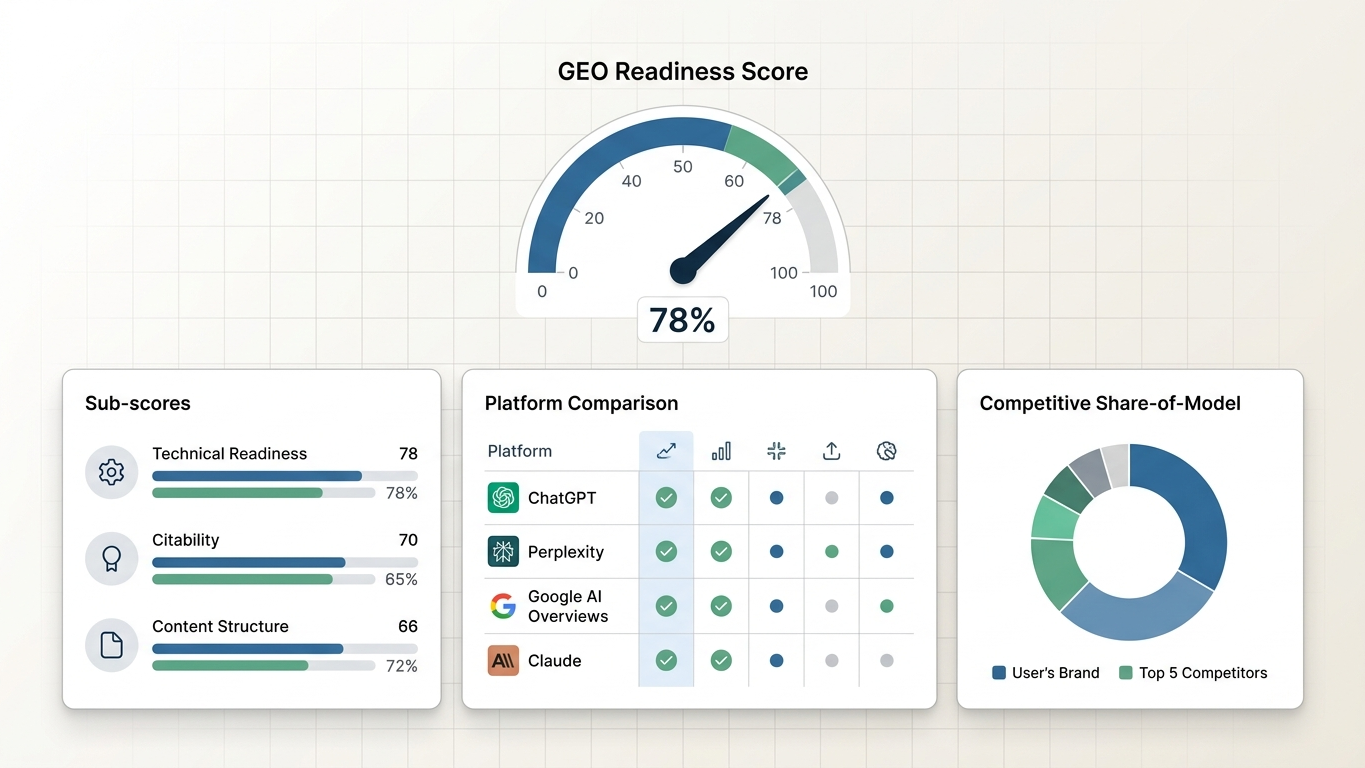
- Analyze your current position: Discover whether AI engines like ChatGPT, Perplexity, Google AI Overviews, and Claude already mention your brand. A GEO audit gives you that data within 10 minutes, without an account or setup.
- Optimize your technical foundation: Ensure that AI crawlers can read and index your content. Think of llms.txt, schema markup, and clear content structure.
- Monitor continuously: AI answers change constantly. What isn't cited today might appear tomorrow, and vice versa. Quarterly reports via trend tracking prevent you from being surprised.
The role of citability in AI answers
Google AI Overviews don't cite randomly. The algorithms select sources based on structure, reliability, and relevance. Your content must be citable, meaning: structured in such a way that AI can recognize, understand, and adopt your text as a source.
Citability is related to concrete factors:
- Clear answers to specific questions
- Consistent use of schema markup
- A logical hierarchy in headings and paragraphs
- Transparent source attribution and author information
Without these elements, your content becomes invisible to AI, regardless of how high you rank in traditional search results.
What does it cost to do nothing?
Every month without insight into your AI visibility is a month in which competitors strengthen their position in AI answers. AI answers are a zero-sum game: if your competitor is cited, you won't be.
The introductory price for a Deep Scan provides you with the analysis you need to make informed decisions. With 25 industry-relevant queries across four AI platforms, you get the statistical basis for a clear action plan.
The management summary and expected impact scores enable you to allocate marketing budgets effectively. Explore the possibilities and discover which AI engines your competitors are mentioned in.
Conclusion: from reactive to proactive
The impact of Google AI Overviews on organic traffic is not a temporary dip. It's a structural shift that requires a new layer in your digital strategy. Don't wait until your stakeholders ask why organic traffic is declining without explanation.
Measure your GEO Score, understand your citability, and take control of your AI visibility. Start your audit today and ensure that AI reports about your brand positively and prominently.
Do you have questions about your specific situation? Contact the GrowthScope team.