Measuring AI search traffic: why Google Analytics falls short in your competitive analysis
Your marketing dashboard doesn't tell the whole story
You invest months in content, send reports to stakeholders, and rely on Google Analytics as your single source of truth. But what if the fastest-growing search channel is completely missing from your dashboard? AI search traffic from ChatGPT, Perplexity, Claude, and Google AI Overviews rarely appears as a recognizable source in your Analytics reports.
For marketing managers accountable for organic reach, this is a blind spot with strategic consequences. Your competitor may be recommended daily by AI engines while your brand doesn't appear in those answers at all. That shift is invisible in your current toolset, making it even more dangerous.
Why Google Analytics doesn't correctly track AI search traffic
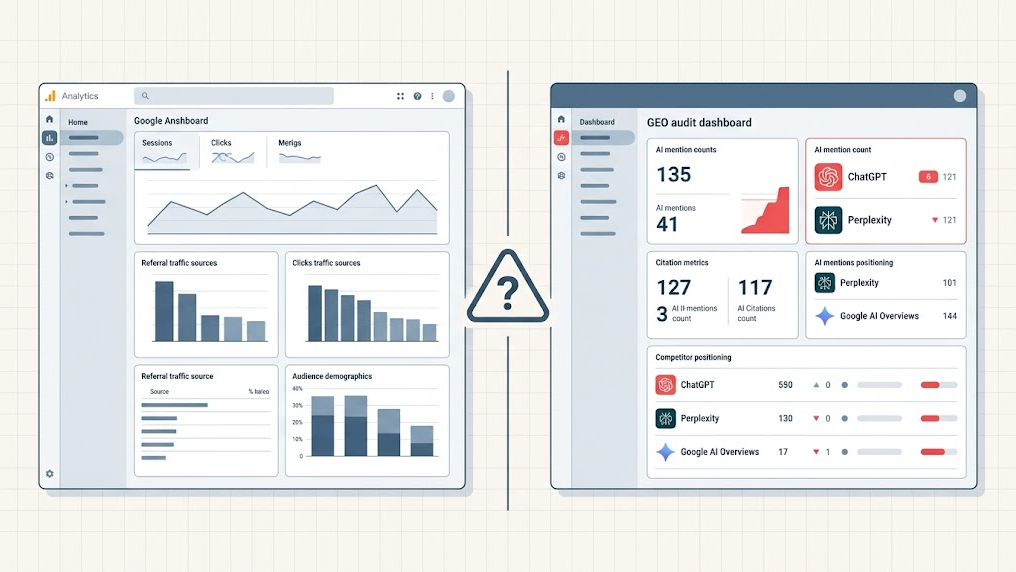
Google Analytics was built for a world of clicks, sessions, and pageviews. The problem: AI engines generate answers without users clicking through to your website. When ChatGPT mentions your competitor as the best solution, your Analytics registers exactly zero traffic, zero conversions, and zero signals.
Even when an AI engine does include a link, it's often categorized as "direct" or "referral" traffic without clear source attribution. You see a visitor, but not the context. Did this person reach you through Perplexity? Or through a Google AI Overview? That information is structurally missing.
This means concretely that your current reports underestimate your actual "Share of Voice" in AI. And with that, you miss the foundation for informed budget decisions.
The shift from clicks to mentions
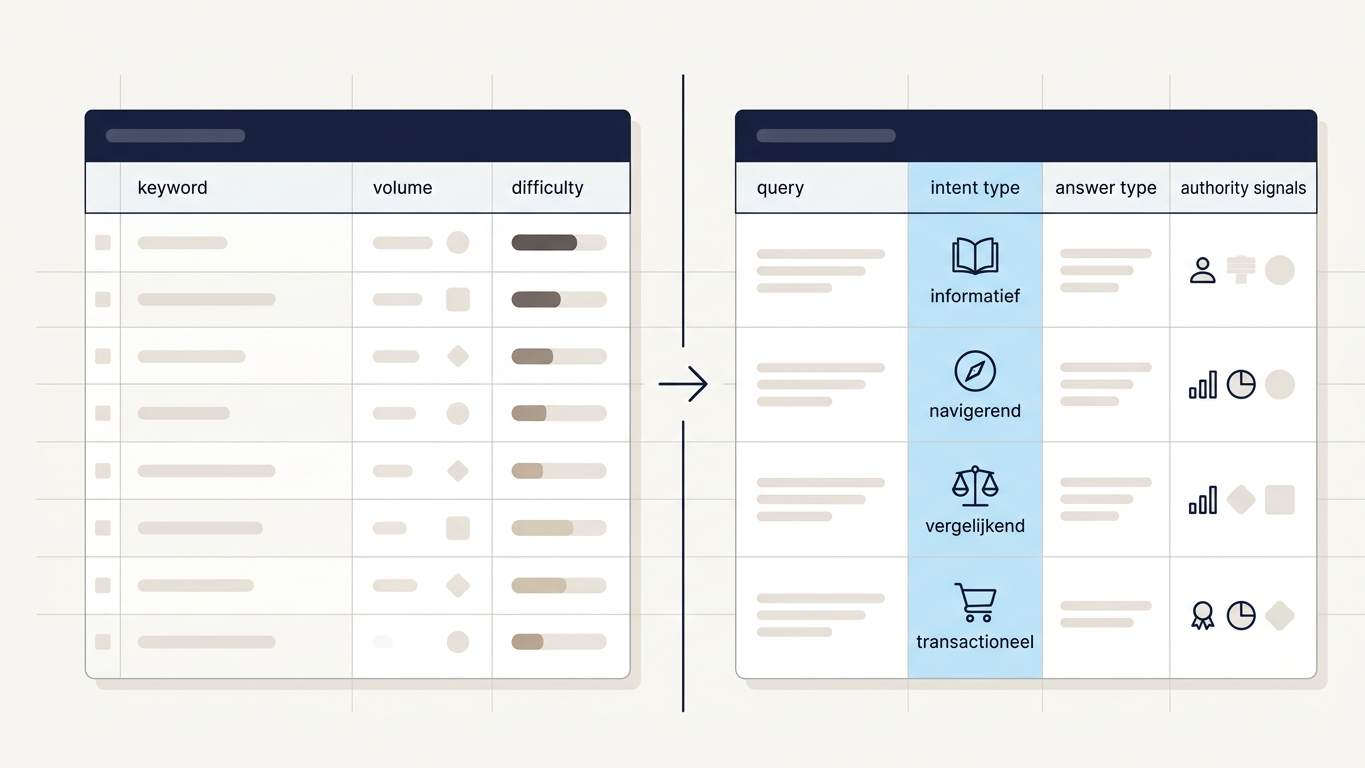
Traditional SEO revolves around rankings and click-through rates. Generative Engine Optimization (GEO) revolves around something fundamentally different: is your brand cited in the AI's answer?
Increasingly, search queries end without a click. The user gets a complete answer from AI, including brand recommendations, then leaves the interface. For your organization, this means:
- Your brand awareness is formed outside your own channels
- Your competitive position shifts without you measuring it
- Your content investments may deliver invisible results
The marketing manager who relies only on Google Analytics optimizes for a shrinking portion of the search landscape. The question is no longer "how much traffic do we get?", but "how often does AI mention us as a trusted source?"
What you should measure: the GEO Readiness Score
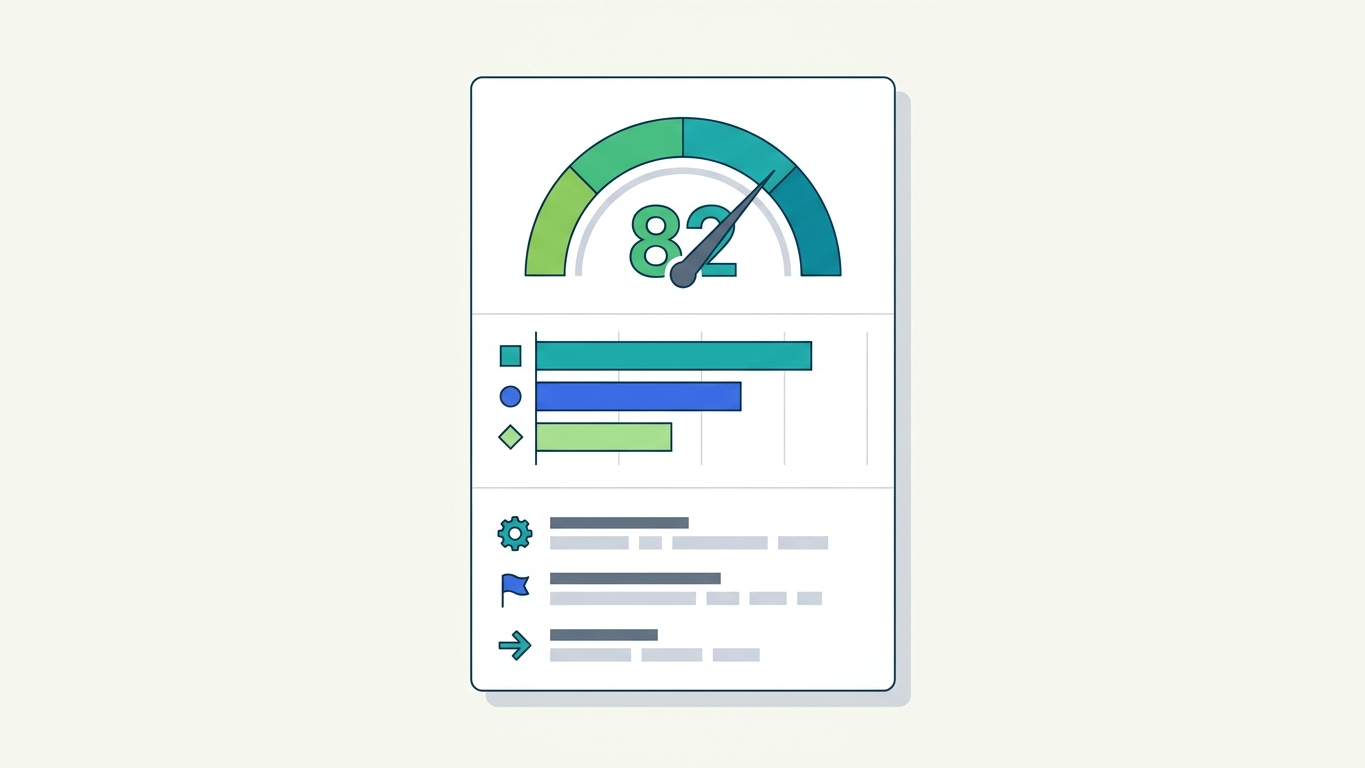
To gain control over AI visibility, you need a completely different metric. The GEO Readiness Score quantifies how well your website performs within AI answers on a scale of 0 to 100. This is the boardroom metric Google Analytics cannot deliver.
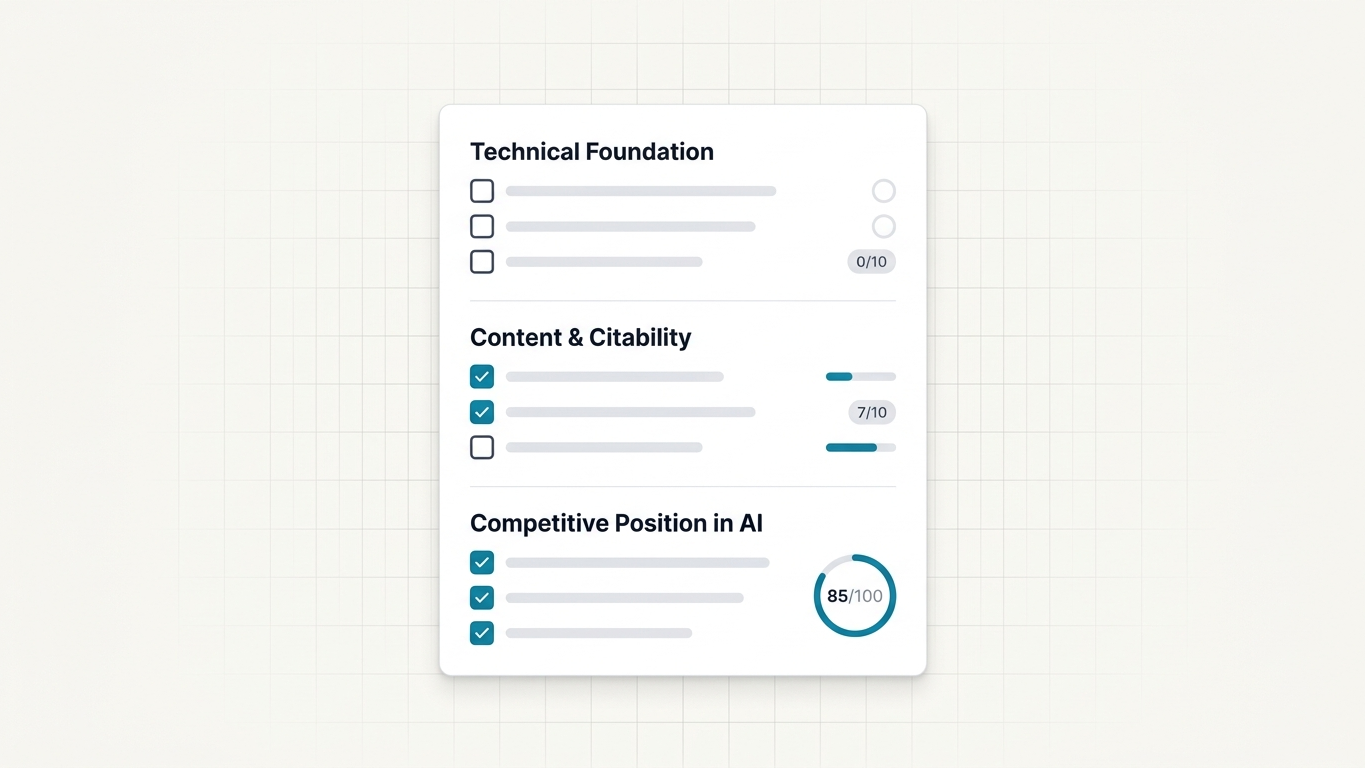
A GEO-audit specifically measures:
| Measurement Point | Google Analytics | GEO-audit |
|---|---|---|
| Website traffic from search engines | Yes | No (different purpose) |
| Brand mentions in AI answers | No | Yes, per platform |
| Citability of your content | No | Yes, with action plan |
| Competitive position in AI | No | Yes, side-by-side |
| Technical AI accessibility | No | Yes (llms.txt, schema) |
The Deep Scan analyzes 25 industry-relevant queries across four platforms: ChatGPT, Perplexity, Google AI Overviews, and Claude. This way you don't just see whether you're found, but also how AI reports on your brand compared to your competitors.
Technical blind spots your Analytics doesn't show
Behind the scenes, technical factors determine whether AI crawlers can even index your content. Your llms.txt file and robots.txt determine which AI engines get access to your website. Schema markup translates your pages into structured data that AI understands.
When this technical foundation is missing, your content can be strong, but AI engines simply won't see it. Google Analytics measures what happens on your site, but tells you nothing about what's being said about you outside your site. That external visibility is exactly where the battle for AI presence is fought.
From one-time measurement to continuous competitive advantage
A single scan gives you your starting position. But AI models are constantly updated, and the answers they give today could be completely different next month. That's why GEO isn't a one-time action but an ongoing process of trend tracking.
With quarterly reports, you monitor:
- Shifts in your GEO Score per platform
- Changes in AI sentiment analysis around your brand
- Competitors taking over your position in AI answers
For marketing managers wanting to convince stakeholders, this provides the quantifiable progress needed. You no longer report only on organic traffic, but on your complete AI visibility position.
Start today measuring what actually matters
Google Analytics remains valuable for your website analysis, but it's unsuitable as your only compass for AI strategy.
The marketing manager who acts now builds measurable competitive advantage before the market saturates.
With the current introductory price (valid through September 30, 2026), there's a unique window to start cost-effectively. Explore the possibilities and receive your GEO Readiness Score, including an executive summary and immediately actionable plan.
No account needed. No API keys. Results within 15 minutes.
Start your audit