How to convince customers that SEO alone is no longer enough
Why traditional SEO no longer offers the complete picture
The way people find information is changing fundamentally. Your customers don't just search on Google, but increasingly ask direct questions to ChatGPT, Perplexity and Claude. Traditional SEO measures rankings and traffic, but says nothing about how AI engines talk about a brand.
As a consultant, it's your job to make this gap visible before your competitor does.
The problem is concrete: a website can score perfectly on technical SEO and still be completely invisible in AI answers. That means missed opportunities in a growing channel where purchasing decisions increasingly start. The solution lies in Generative Engine Optimization (GEO), the discipline that makes AI visibility measurable and controllable.
Opening the conversation: start with proof
Convincing customers doesn't start with theory, but with data. The most powerful opening in a customer conversation is a direct demonstration. Ask your customer to pose an industry-relevant question to ChatGPT or Perplexity and look at the answer together. Is their brand mentioned? Or only your competitor's?
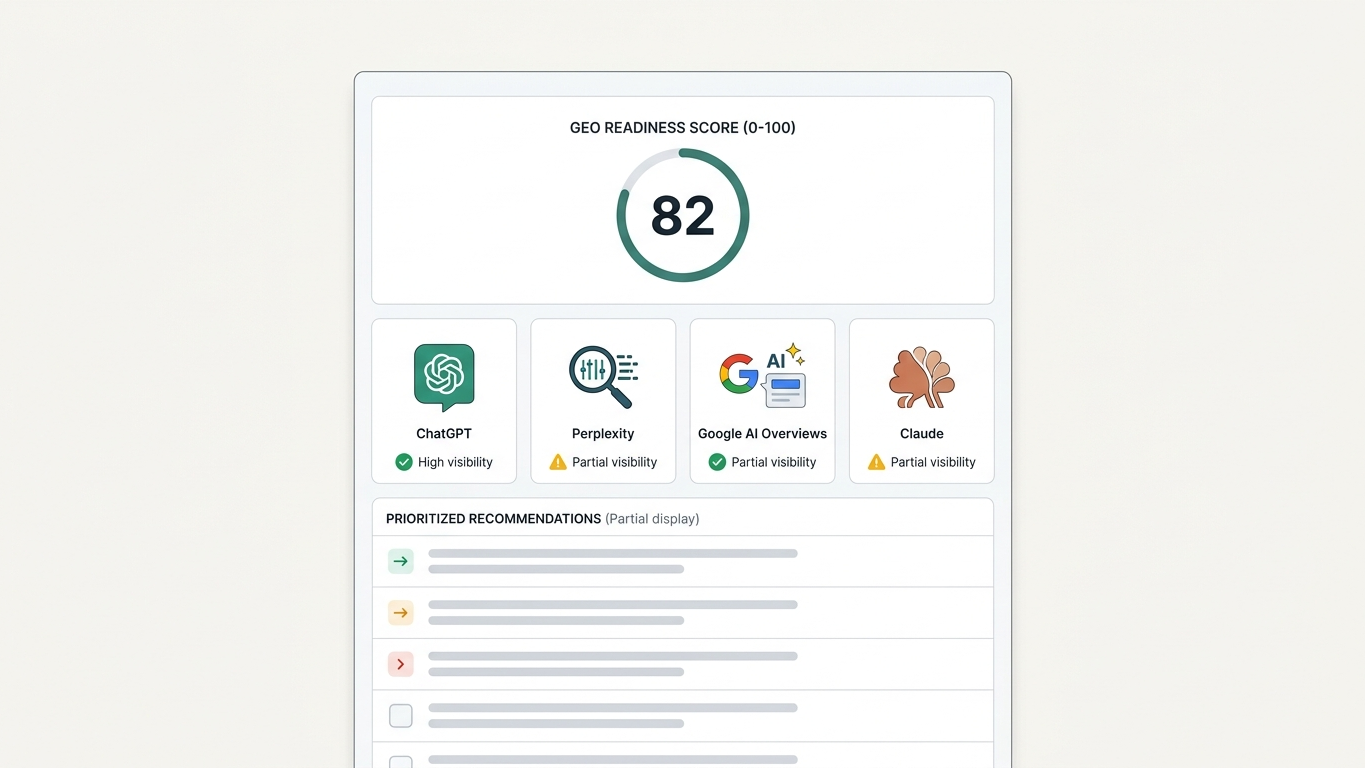
This moment of insight is irreplaceable. It makes the abstract world of AI visibility tangible in less than two minutes. Then you back this up with a GEO audit via GrowthScope, which generates a GEO Readiness Score from 0 to 100. That score becomes your business anchor in every subsequent piece of advice.
Three arguments every customer understands
Not every customer is technically savvy. So use arguments that align with their business reality. The following three approaches work in almost every customer conversation.
1. Search behavior is shifting measurably
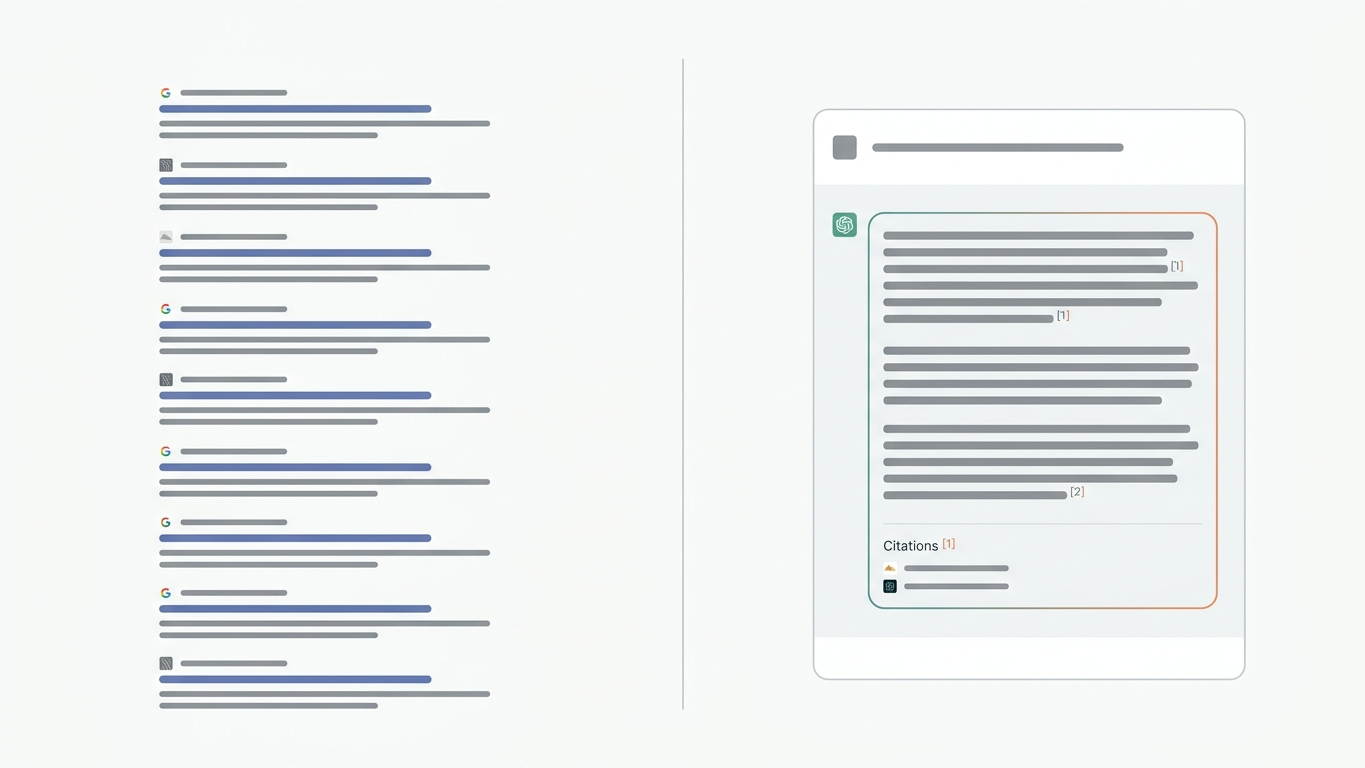
More and more users are asking complex questions to AI instead of typing in search terms. Where Google shows ten blue links, an AI engine gives exactly one answer. If your customer isn't in that answer, the brand doesn't exist for that user. This isn't a prediction, this is current reality.
2. AI answers are a zero-sum game
In a list of ten search results, there's room for ten brands. In an AI answer, there's often room for one or two.
Whoever invests in citability now builds an advantage that will be hard to catch up with later.
3. Traditional tools measure the wrong thing
Google Search Console and ranking tools measure positions in classic search engines. They tell you nothing about how ChatGPT, Google AI Overviews or Claude report on a brand. Without additional GEO measurement, your customer operates blind in the fastest-growing information channel.
How to translate GEO to customer value
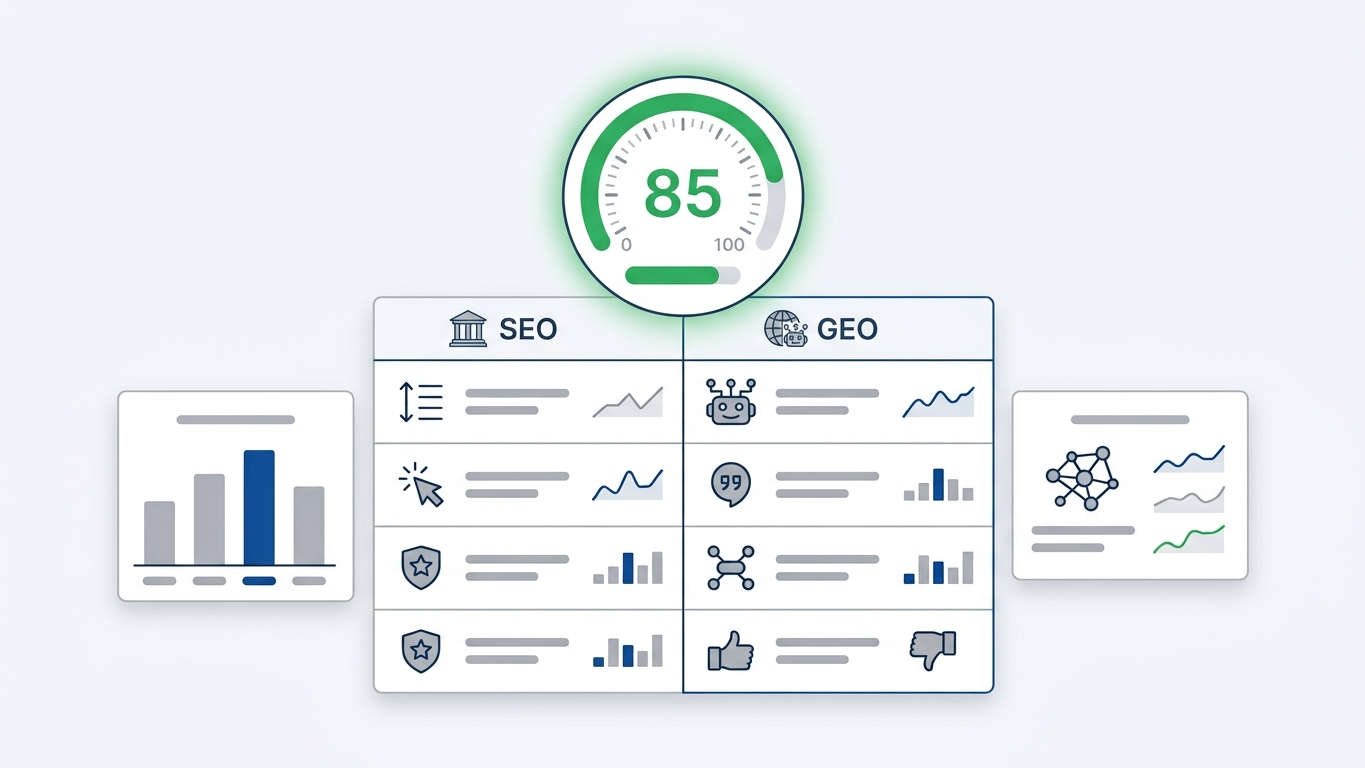
The biggest pitfall is presenting GEO as a replacement for SEO. It's not. GEO is an extension that strengthens SEO efforts and makes them future-proof. Use the following comparison to make this clear:
| Aspect | SEO only | SEO + GEO |
|---|---|---|
| Google rankings | ✓ Optimized | ✓ Optimized |
| AI visibility (ChatGPT, Claude, Perplexity) | ✗ Not measured | ✓ Actively monitored |
| Content citability | ✗ Unknown | ✓ Mapped per page |
| Competitive position in AI answers | ✗ Blind spot | ✓ Comparison report |
| Technical AI accessibility (llms.txt, schema) | ✗ Not checked | ✓ Audited and optimized |
This table makes it clear at a glance that SEO alone is a half strategy. The combination forms the complete picture.
Explaining the technical foundation without jargon
Some customers want to know what happens under the hood. Keep it to three concrete elements:
- llms.txt: a file that tells AI crawlers which content they're allowed to index. Similar to robots.txt, but specifically for AI. Read more about what llms.txt is and why every modern website needs it.
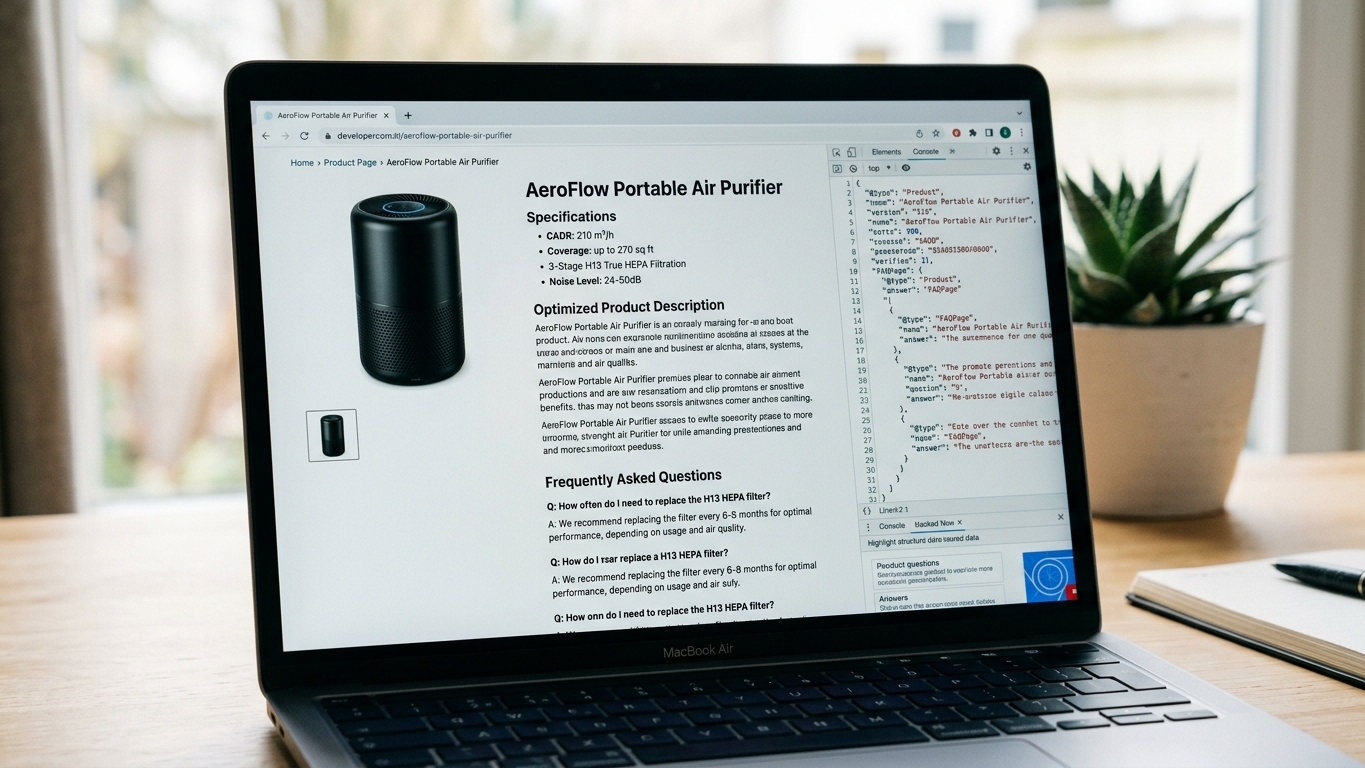
- Schema markup: structured data that translates your content into a language AI understands. Without schema, the AI misses the context of your pages.
- Citability: texts that are clear, factual and well-structured are more often picked up as a source by AI engines.
These three pillars form the technical foundation of GEO. They are concrete, implementable and directly measurable through an audit.
Making your advisory model future-proof
GEO is not a one-time action. AI models are constantly updated, and your customer's position in AI answers can shift per quarter. That's precisely why trend tracking is essential. With a quarterly report, you show the improvement of the GEO Score at each re-audit as a direct result of your consulting.
This not only strengthens customer retention, but proves the long-term value of your strategy. You shift from ad-hoc SEO projects to an ongoing advisory model with measurable results.
Get started right away: your first step
The most convincing pitch is a result. Start a GEO audit for your customer today and present the GEO Readiness Score in your next report. No account needed, no setup, no API keys. Within 10 minutes you have the proof that the conversation about AI visibility can't wait any longer.
Questions about how to integrate GEO into your service package? Check the frequently asked questions about GEO or contact the GrowthScope team directly.