What if Your Customer Asks ChatGPT First? A Practical Guide for AI Visibility
Your Customer No Longer Searches on Google, But Asks ChatGPT
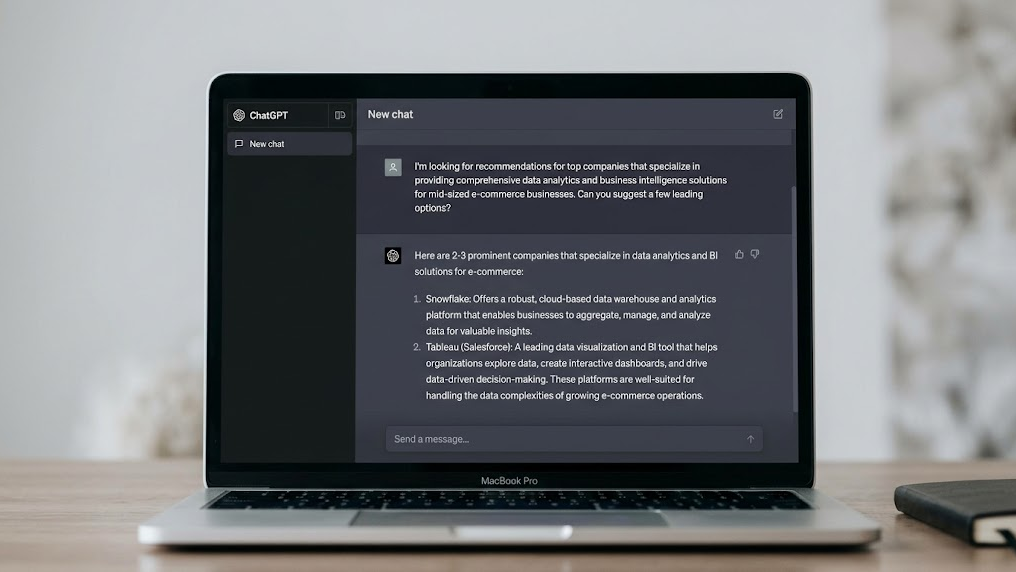
Imagine this situation: a potential customer is looking for a solution to the exact problem you solve. But instead of opening Google, they type their question into ChatGPT. The AI response mentions three companies. Yours is not among them. This scenario plays out thousands of times every day already.
The shift is fundamental. Consumers and business buyers increasingly trust AI-driven answers instead of traditional search results.
And where Google gave you ten blue links to stand out, ChatGPT gives only one or two recommendations. This is a zero-sum game: your competitor gets mentioned, or you do. There is no page two.
The question is not whether this affects your market. The question is: are you prepared?
Why Traditional SEO Is No Longer Enough
For years, you invested in search engine optimization. Keywords, backlinks, technical speed. Those efforts remain valuable for Google. But AI engines work fundamentally differently. They crawl the web, interpret your content, and then decide whether your brand deserves to be cited in an answer.
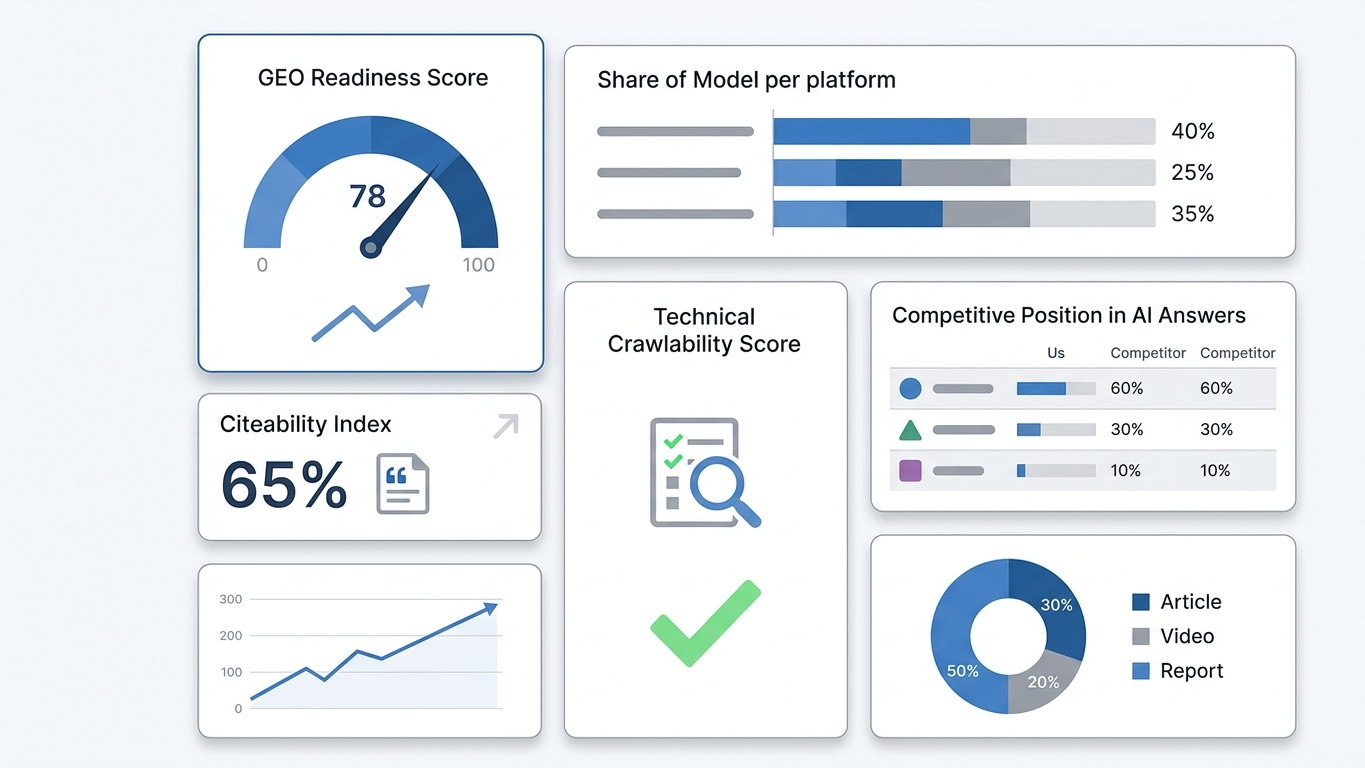
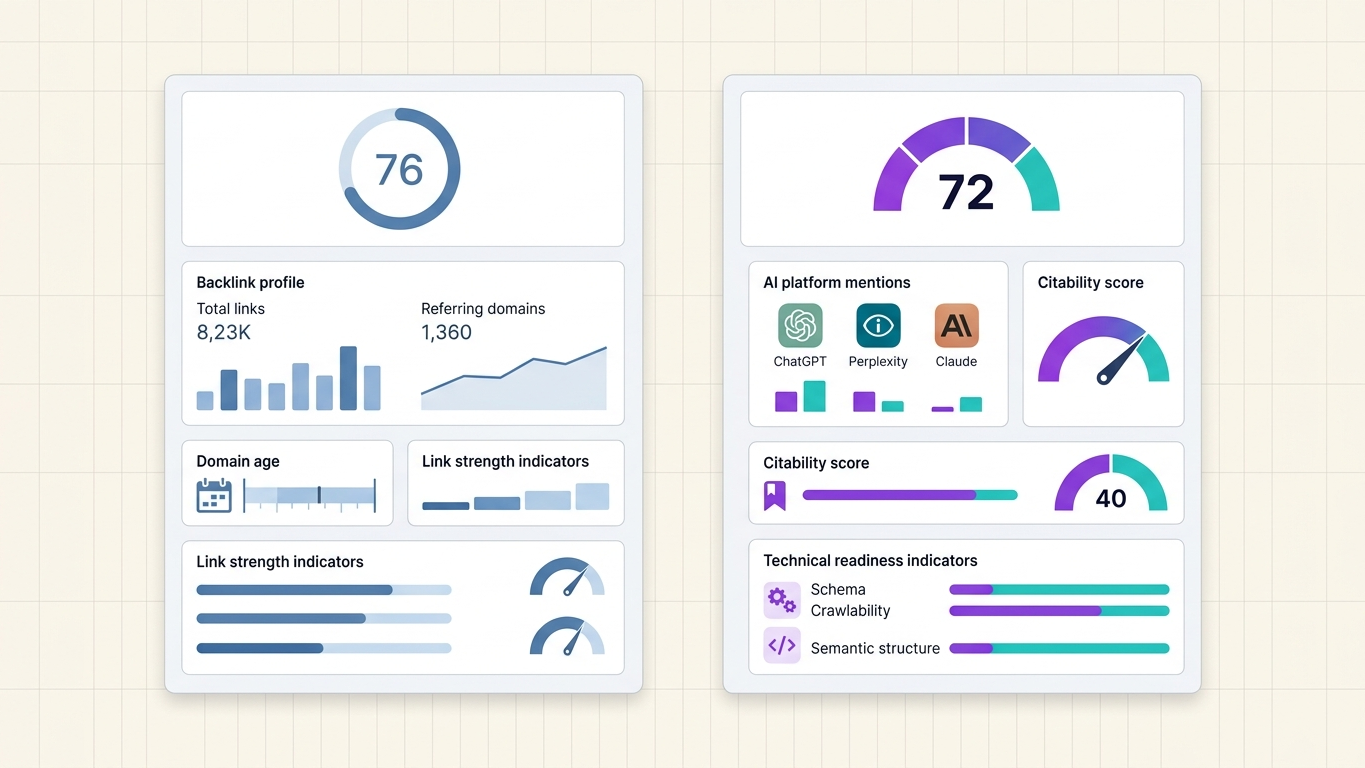
This process is called Generative Engine Optimization (GEO). Where SEO is about rankings, GEO is about citability: the extent to which AI finds your texts understandable and trustworthy enough to literally adopt as a source. Without a GEO strategy, you are invisible in the answers of ChatGPT, Perplexity, Google AI Overviews, and Claude.
The difference is tangible. A competitor who does invest in structured content, schema markup, and a clear llms.txt file, is recognized by AI as a trusted source. Your website is not.
How AI Determines Which Brand Is Recommended
To get a grip on the problem, you need to understand how AI engines select their sources. The process differs by platform, but the core principles are similar:
- Structure over style. AI interprets structured data (schema markup, clear headings, FAQ sections) faster and more reliably than creative but unstructured texts.
- Authority through consistency. Brands that provide the same information consistently across multiple places score higher on trustworthiness.
- Access determines everything. If your robots.txt or a missing llms.txt blocks AI crawlers, you simply don't exist for these systems.
- Citability of formulations. AI chooses texts that are concrete, factual, and directly applicable. Vague marketing language is ignored.
This means your website must technically, content-wise, and structurally meet the requirements that AI engines impose. Not tomorrow. Today.
Measure Your AI Visibility in Three Steps
The first step toward control is insight. You can discover today how AI engines report on your brand, without an account, without API keys, without technical setup.
| Step | What You Do | What You Get |
|---|---|---|
| 1. Input | Enter your domain name on GrowthScope | Direct analysis of your AI presence |
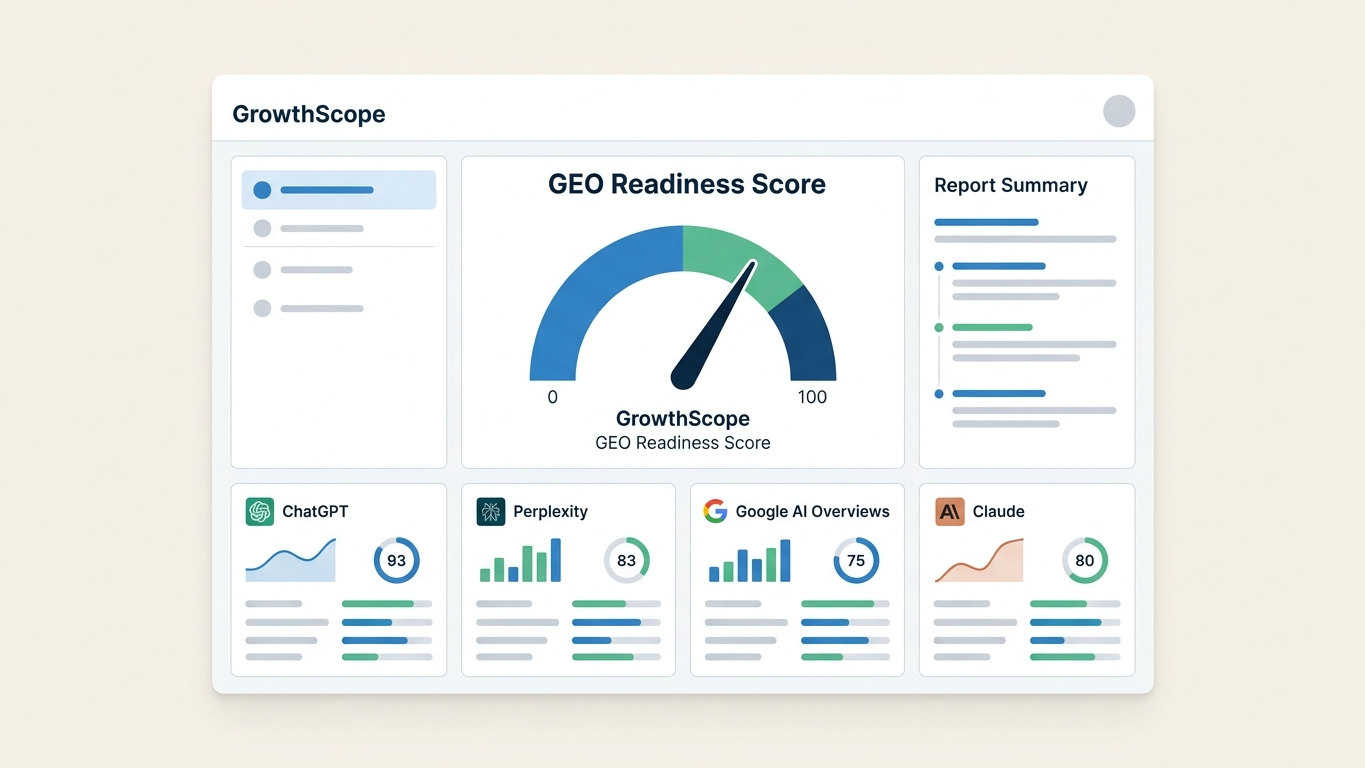
| 2. Analysis | GrowthScope scans your website externally | GEO Readiness Score from 0 to 100 |
| 3. Action | Receive your prioritized action plan | Directly applicable recommendations per platform |
With the GrowthScope audit, you receive within 10 to 15 minutes a complete picture of your visibility on ChatGPT, Perplexity, Google AI Overviews, and Claude. You see exactly where you stand and where your competitors are leaving you behind.
Five Actions You Can Take Today
You don't have to wait for a complete GEO journey to take steps. Start with these five direct improvements:
- Check your robots.txt. Are you unintentionally blocking AI crawlers? This is the most common cause of AI invisibility.
- Add an llms.txt file. This file tells AI engines exactly which content they may use and how your organization wants to be positioned.
- Structure your FAQ sections. Formulate questions and answers that AI can literally adopt. Think in complete, factual sentences.
- Implement schema markup. Translate your products, services, and company information into structured data that AI engines understand directly.
- Analyze your competitors. Discover which industry peers are mentioned in AI answers and why. The Competitor Scan makes this comparison clear with a gap analysis.
Each of these actions increases your citability. Together, they form the foundation of a solid GEO strategy.
The Cost of Waiting
Every day you don't invest in AI visibility, your competitor builds a lead that becomes harder to catch up on.
AI engines learn patterns. Brands that are consistently cited now strengthen their position as a trusted source with every answer given.
The introductory price for a complete audit is available until September 30, 2026. This is the time to establish your Industry Benchmark score and conduct a baseline measurement before the market fills up.
Don't wait until a customer tells you that ChatGPT recommended your competitor. Contact us today or start your audit directly on GrowthScope.io.
GEO Is Not a Project, But a Continuous Process
AI models are constantly updated. What works today may score differently next month. That's why a one-time audit is a strong starting point, but not an endpoint. With quarterly trend tracking, you maintain control over shifts in AI answers and adjust in time.
Your customer is already asking ChatGPT. The only question remaining: does the AI find your answer?