Competitive gap analysis for AI search engines: how to take the lead
Why a competitive gap analysis for AI search engines is essential
Imagine this: a potential customer asks ChatGPT for a recommendation in your industry. The answer lists three names. Yours is missing. That's not a hypothetical scenario. It's the daily reality for companies that don't actively monitor their AI visibility.
A competitive gap analysis for AI search engines shows you exactly where you're losing revenue to competitors. Not in classic Google search results, but in the answers from ChatGPT, Perplexity, Google AI Overviews and Claude. If you don't map this gap, you're operating blind in the fastest-growing search market right now.
AI answers are a zero-sum game. If your competitor gets mentioned, you often don't.
What is a competitive gap analysis in the context of GEO?
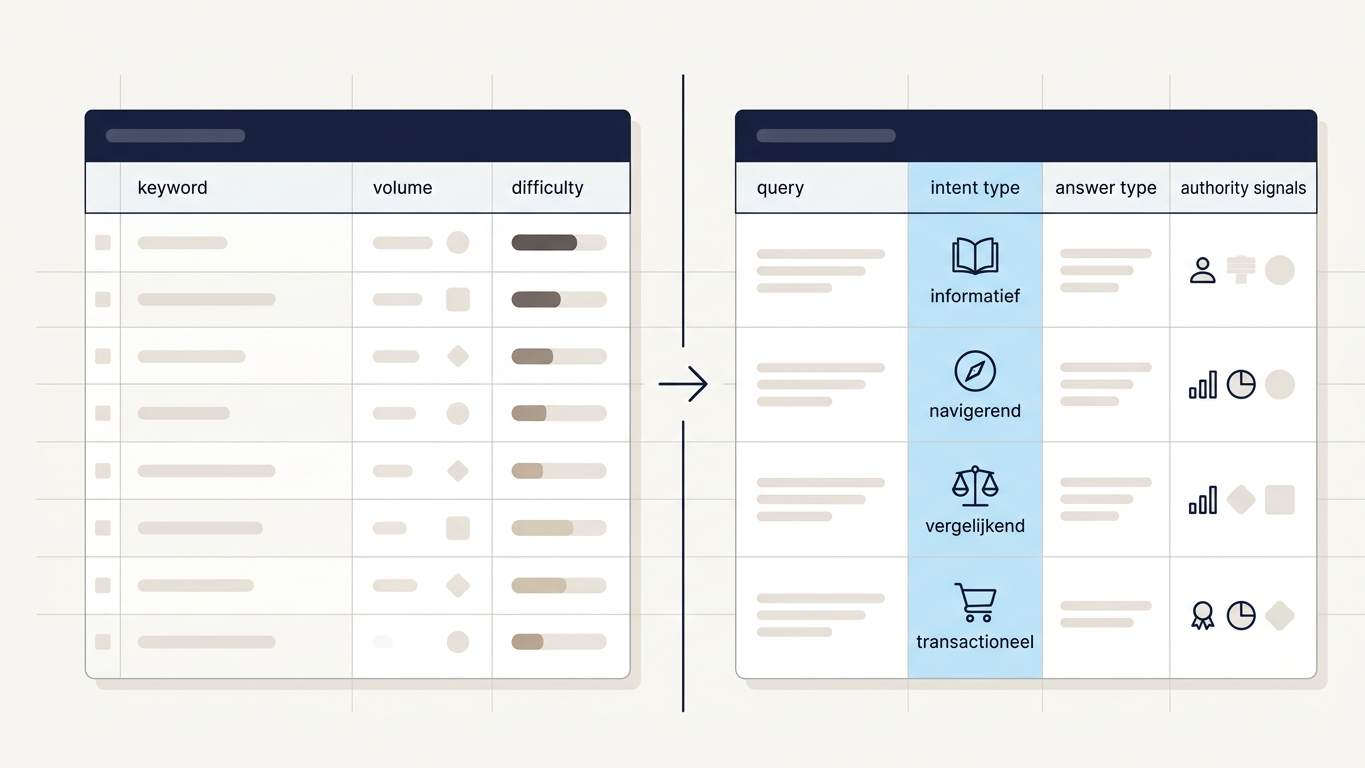
With traditional SEO, you compare positions in search results. With Generative Engine Optimization (GEO) it's about something fundamentally different: is your brand cited, recommended, or even mentioned in AI-generated answers?
A competitive gap analysis for GEO maps three things:
- Visibility differences per platform: Which AI engines does your competitor perform better on?
- Content gaps: Which industry-relevant questions does your competitor answer better than you?
- Technical lag: Does your competitor have a better technical GEO setup, for example through the use of llms.txt or schema markup?
The result is a prioritized action plan. No vague advice, but concrete steps you can implement immediately.
Step 1: determine your current GEO position
Before analyzing competitors, you need to know your own starting point. Without a baseline, any comparison is meaningless.
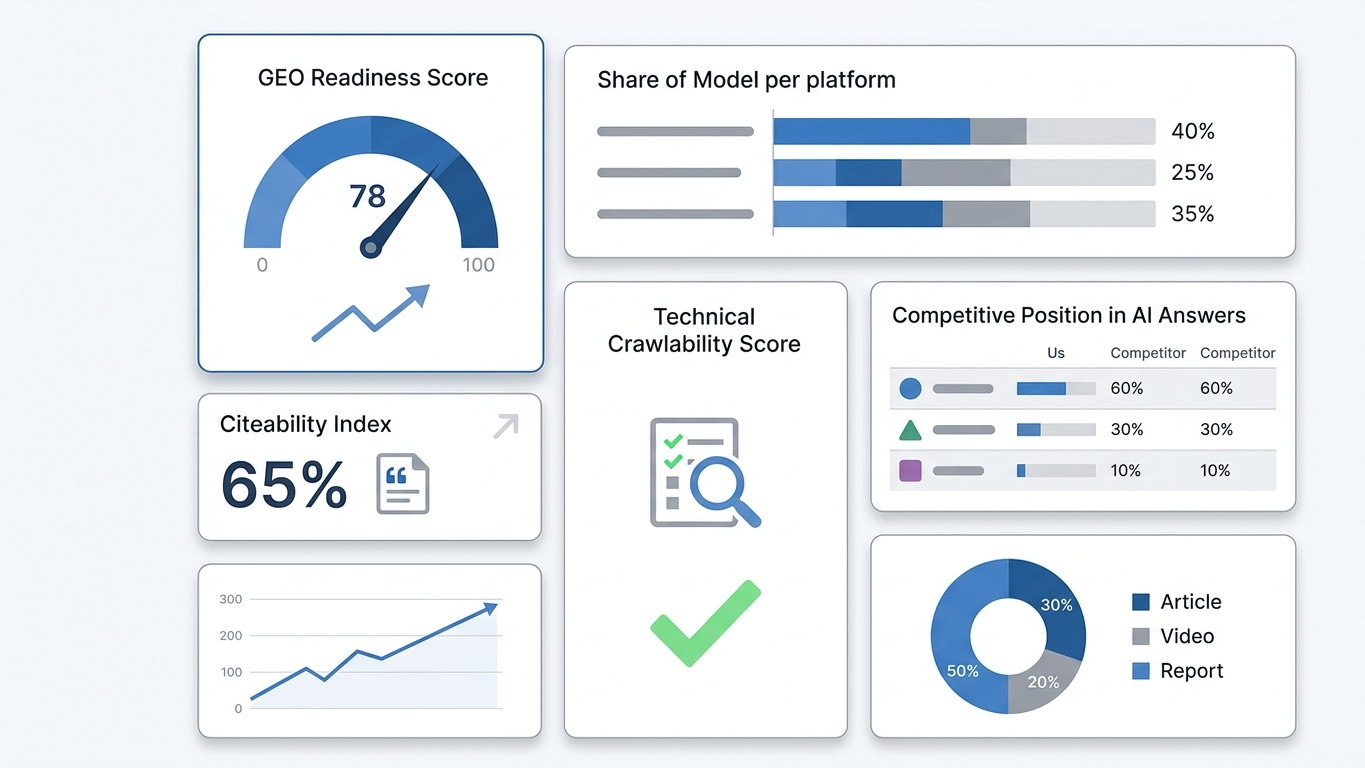
Start with an audit of your own domain. GrowthScope generates a GEO Readiness Score from 0 to 100 within 10 minutes. This score quantifies how well AI engines can find, understand and cite your content. You don't need an account, API keys or technical setup.
Specifically note:
- Your visibility score per platform (ChatGPT, Perplexity, Google AI Overviews, Claude)
- The citability of your content: can AI adopt your texts literally as a source?
- Your technical GEO setup: are robots.txt, llms.txt and schema markup correctly configured?
This forms your benchmark for everything that follows.
Step 2: map your competitors
Select three to five direct competitors. Don't just choose the obvious names, but also parties that appear in AI answers for your most important search queries.
An effective competitor selection includes:
- Direct competitors in your industry
- Competitors you encounter in Google AI Overviews
- New entrants that AI engines cite remarkably often
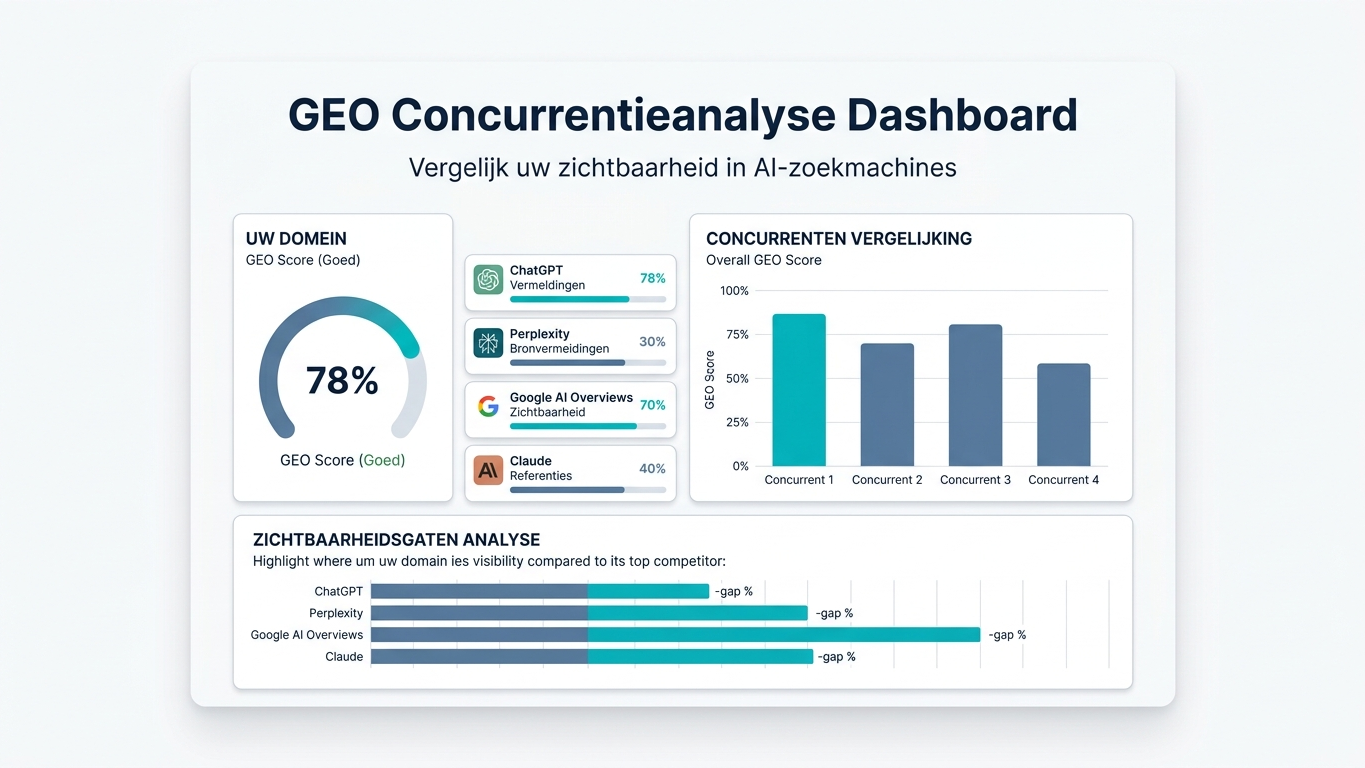
With the GrowthScope Competitor Scan you analyze up to 25 industry-relevant queries and compare your scores directly with those of competitors. The comparison chart makes it clear at a glance where the gaps are.
Step 3: analyze the content gap
This is the heart of your gap analysis. Here you discover why AI engines prefer your competitor to you.
Compare the following dimensions per query:
| Dimension | Your situation | Competitor |
|---|---|---|
| Is the brand mentioned? | Yes / No | Yes / No |
| Is the brand recommended? | Yes / No | Yes / No |
| Tone of the mention | Neutral / Positive | Neutral / Positive |
| Source attribution present? | Yes / No | Yes / No |
Often the difference lies in the structure and clarity of the content. AI engines cite texts that are clearly formulated, factually substantiated and logically structured. Your competitor doesn't need better products. Only better cited content.
Step 4: identify technical gaps
Besides content, technology plays a decisive role. If AI crawlers can't or aren't allowed to index your content, you're invisible. Regardless of how good your texts are.
Check these technical elements:
- robots.txt: Are you accidentally blocking AI crawlers like GPTBot or ClaudeBot?
- llms.txt: Do you provide AI engines with a structured summary of your offering?
- Schema markup: Do you translate your website into a language AI understands?
Your competitor could be technically ahead without you knowing it. The technical GEO analysis in your audit makes this immediately clear.
Step 5: create your action plan and prioritize
A gap analysis without an action plan is a report that gathers dust. Translate every gap you find into a concrete action with clear priority.
Sort your actions by impact:
- High: You're not mentioned anywhere your competitor appears. Adapt your content immediately.
- Medium: You're mentioned, but not recommended. Improve citability and structure.
- Low: Technical fine-tuning such as adding schema markup to secondary pages.
The GrowthScope report delivers this action plan ready-made. Within 15 minutes you'll know exactly where to start, which pages deserve priority and how to build your GEO strategy.
From one-time analysis to continuous competitive advantage
A gap analysis is not a one-time exercise. AI models are constantly updated. Your competitor optimizes along with them. What's an advantage today can be a disadvantage next month.
That's why GrowthScope offers quarterly trend tracking. You regularly receive an updated Industry Benchmark Score and see whether your improvements actually lead to more AI mentions. This way you stay in control of a market that's constantly moving.
Don't wait until your competitor's lead becomes insurmountable.
Start your competitive gap analysis today and discover within 15 minutes where your greatest opportunities lie.