PR and GEO: why press communications now works fundamentally differently
Writing press releases for AI engines instead of just journalists
Your press releases no longer reach journalists alone. Generative AI engines such as ChatGPT, Perplexity and Google AI Overviews scan, synthesize and cite news sources to formulate direct answers. This means your PR strategy today serves two audiences: the human reader and the language model.
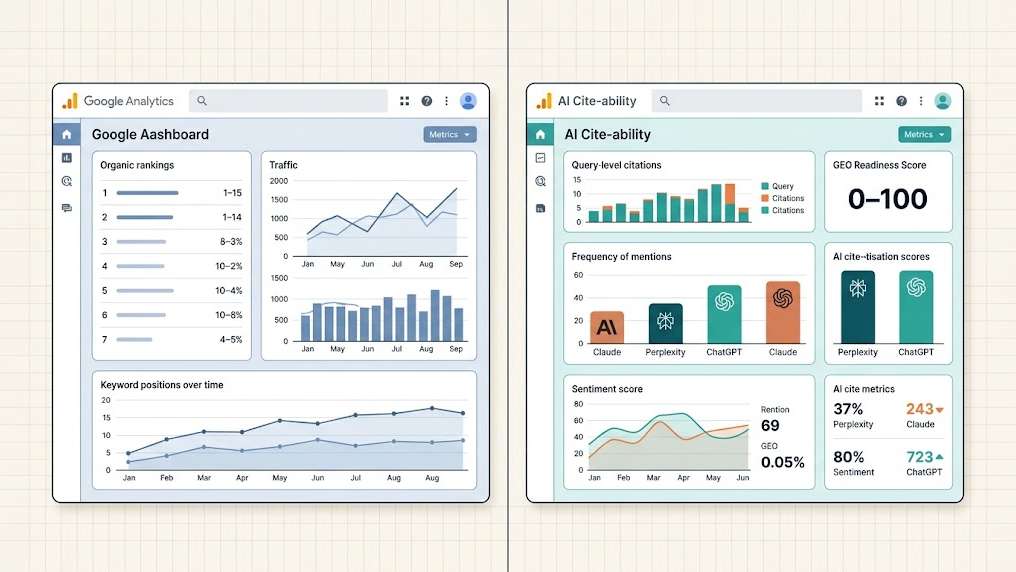
For marketing managers focused on brand visibility, this is a fundamental shift. Where you previously measured KPIs in media reach and backlinks, your Share of Model now counts: how often and in what context AI mentions your brand in response to industry questions.
Without adjustments to your press communications, you lose ground to competitors who do optimize their content for generative engine optimization.
Why traditional PR is no longer enough
Classical PR revolves around relationships with editorial teams, timing and news value. These elements remain relevant, but they are no longer sufficient. AI engines continuously crawl the web and select sources based on structure, citability and authority.
A press release written exclusively for a journalist often lacks the characteristics an AI engine needs to select it as a source. Think of:
- Unclear entity references (who exactly does what?)
- Lack of structured data and schema markup
- Vague wording that is not directly citable
The result is that your competitor gets mentioned in an AI answer and you don't. In a market where more and more decision makers start their research with an AI prompt instead of a search engine, that's a direct loss of visibility.
Three principles for GEO-proof press communications
The transition from traditional PR to AI-visible press communications requires concrete adjustments. Below are three principles you can apply immediately.
1. Write citable key sentences
AI engines prefer clear, factual statements. Replace vague quotes with sharp, unambiguous sentences that a language model can directly adopt.
| Traditional | GEO-optimized |
|---|---|
| We are very proud of this step forward in our sustainability journey. | Company X reduces CO2 emissions by 40% in 2025 by switching to circular packaging. |
| Our innovative approach sets us apart. | Company X is the first Dutch supplier to deploy AI-driven quality control in production. |
The second column contains concrete facts, entities and figures. That's exactly what AI engines look for as a source for a trustworthy answer.
2. Structure for machines, not just for people
A press release must be flawlessly understood by both a journalist and an AI crawler. This starts with technical hygiene on your news page.
- Use schema markup (Article, NewsArticle) on your press releases
- Ensure your llms.txt file gives AI crawlers access to your news section
- Include the full company name, location and industry in every publication so entity recognition works optimally
Without this technical foundation, your content can be as strong as it gets, but an AI engine simply won't find your press release or won't classify it as a trusted source.
3. Distribute on sources AI trusts
Not every publication venue carries equal weight in the eyes of a language model. AI engines prefer sources with high domain authority and consistent publication history. Your distribution strategy needs to account for this.
Publish on your own domain with correct technical formatting. Additionally, distribute via established news platforms and industry publications. Avoid exclusive publication on social media, as that content is often not indexed by AI engines as a primary source.
Your GEO Score as PR metric
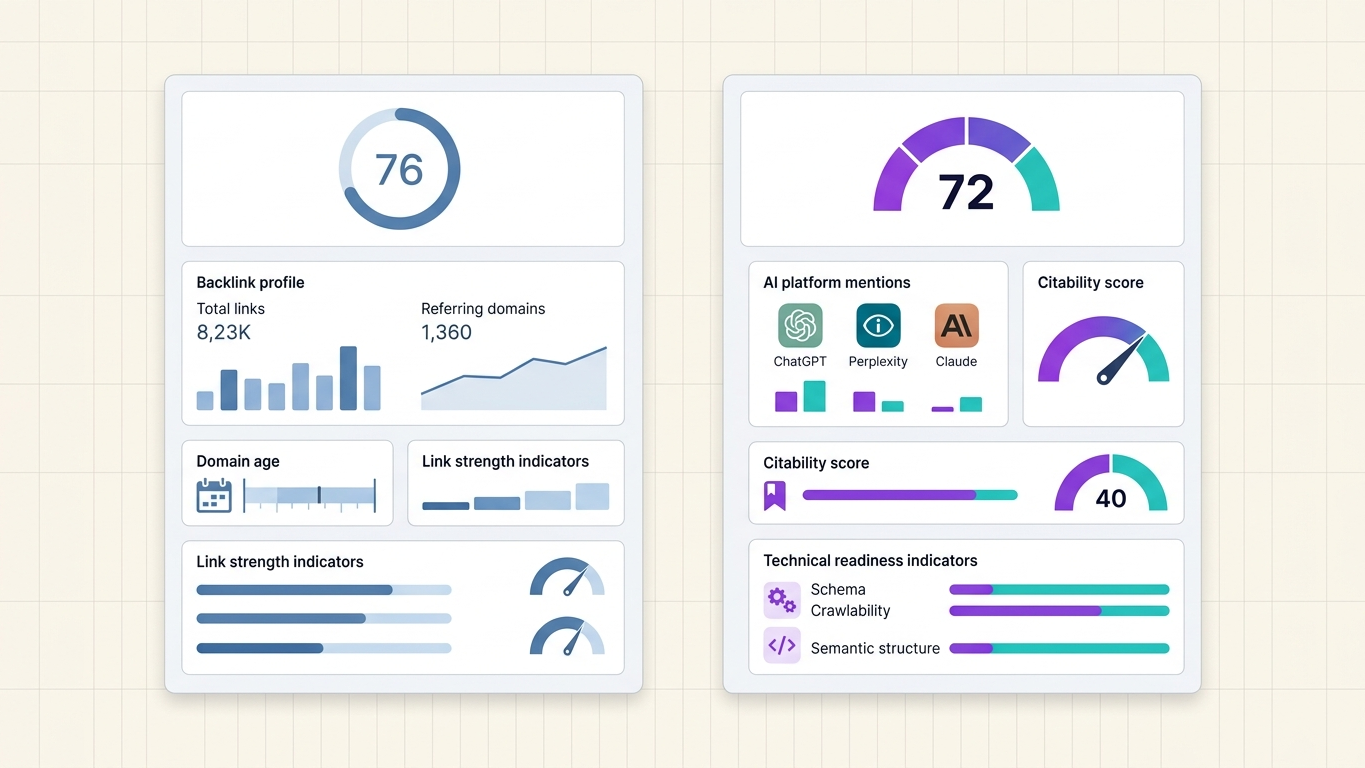
As a marketing manager, you report to stakeholders on brand performance. The GEO Readiness Score provides you with a quantifiable metric that aligns with board-level reporting. With a score of 0 to 100, you immediately see how visible your brand is within AI answers to industry questions.
The In-Depth Scan tests your domain on 25 industry-relevant queries across four platforms: ChatGPT, Claude, Perplexity and Google AI Overviews.
This reveals not only whether you are mentioned, but also how. With Sentiment Analysis, you see whether AI engines report positively, neutrally or negatively about your brand. This makes GEO measurable and proves your PR efforts are effective.
Competitive advantage through trend tracking
GEO is not a one-time action. The way AI engines select sources constantly changes. A competitor who is invisible today could take over your position tomorrow through better content structure or stronger brand entities.
This is why quarterly trend tracking is essential for your strategy. By regularly measuring how your AI visibility develops relative to competitors, you steer proactively instead of recovering reactively.
Start with GEO-proof PR today
The shift from traditional PR to AI-visible communications is not a future scenario. It's happening now. Every day your press releases are not optimized for AI engines is a day your competitor gets cited instead.
Start with these three steps:
- Audit your current visibility: discover via a GEO audit which AI engines mention your brand and which don't
- Adjust your press communications: make content citable, structured and technically accessible for AI crawlers
- Measure and adjust: use quarterly reports to continuously improve your GEO Score
Don't wait until your competitor dominates the AI answers.