Optimize product descriptions for AI recommendations: make your webshop the preferred source
Why AI recommends your competitor instead of your webshop
Imagine this: a potential customer asks ChatGPT for the best product in your industry. The answer contains three recommendations. None of them are from you. This scenario plays out daily for thousands of webshops. The reason? Product descriptions not written for how AI engines process and cite information.
Traditional SEO focused on Google's search results. But AI engines like ChatGPT, Perplexity, and Google AI Overviews work fundamentally differently. They don't scan your text for keywords alone. They assess whether your content is clear, structured, and citable enough to be included as a trusted source in an answer. This is called Generative Engine Optimization (GEO).
With targeted adjustments to your product descriptions, you can improve your AI visibility today.
Step 1: write product descriptions that AI can cite
The most important quality of an AI-friendly product description is citability. That means an AI engine can directly incorporate your text as an answer to a customer question. Vague marketing language works against you here.
Avoid vague language
Compare these two descriptions:
| Traditional | GEO-optimized |
|---|---|
| Our beautiful product offers unprecedented comfort and quality for the discerning consumer. | The ErgoMax office chair has adjustable lumbar support, supports up to 150 kg, and is available in three sizes (S, M, L). |
The second variant contains concrete facts that an AI engine can directly incorporate. Specifications, dimensions, capacities, and unique features form the building blocks of citable text.
Use the question-answer structure
AI engines answer questions. Therefore, structure your product description as a series of implicit questions and direct answers:
- What is it? Start with a clear definition in one sentence.
- Who is it for? Name the target audience explicitly.
- What makes it unique? Provide a maximum of three distinguishing features.
- What are the specifications? Close with measurable product data.
This structure helps AI engines select exactly the right snippet when answering a customer question.
Step 2: structure your data so AI crawlers understand it
Well-written text is only half the work. AI engines must also be able to process your content technically. This is where schema markup and structured data come in.
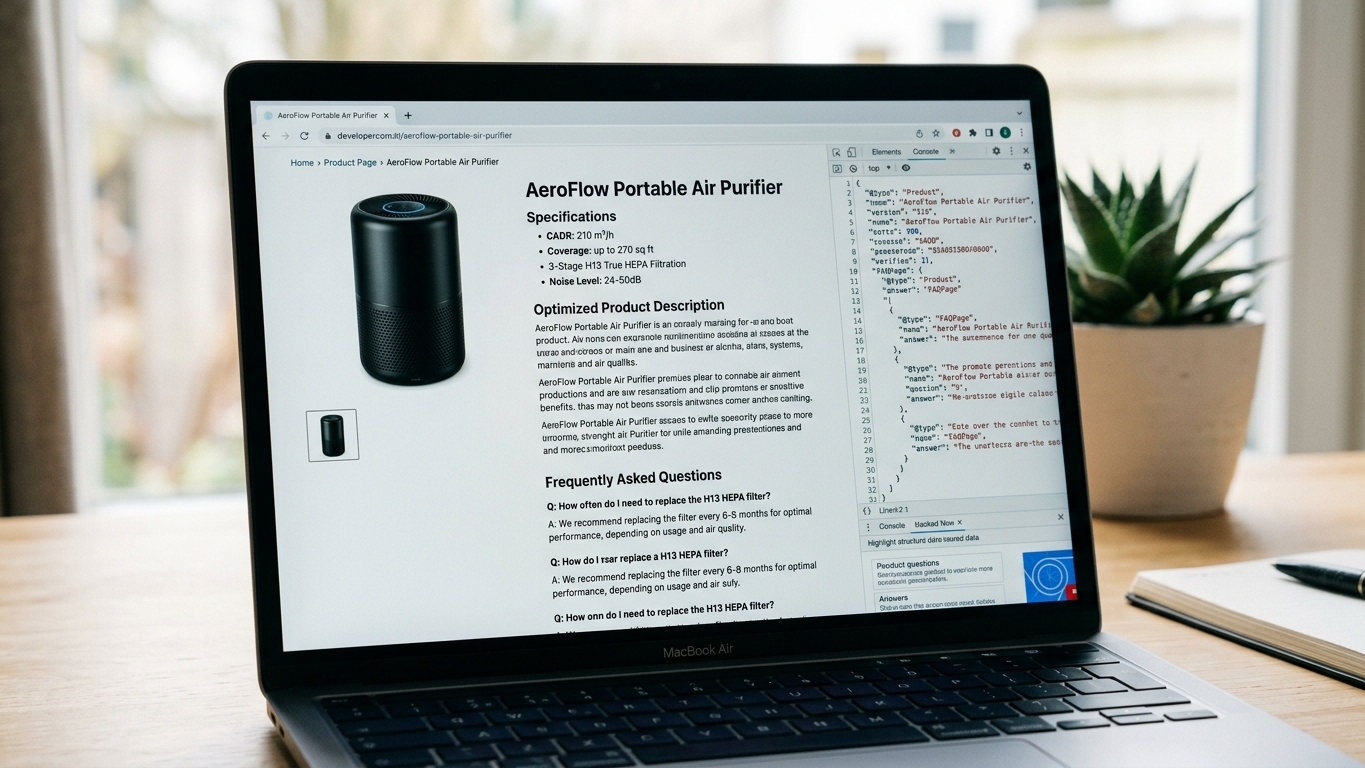
Implement Product schema markup
Schema markup translates your product page into a language AI understands. These fields are essential for each product page:
name: the exact product namedescription: your optimized descriptionpriceandpriceCurrency: current pricing informationbrand: your brand nameaggregateRating: customer reviewsavailability: stock status
Without this structured data, AI lacks the context to recognize your product as a relevant answer.
Check your technical accessibility
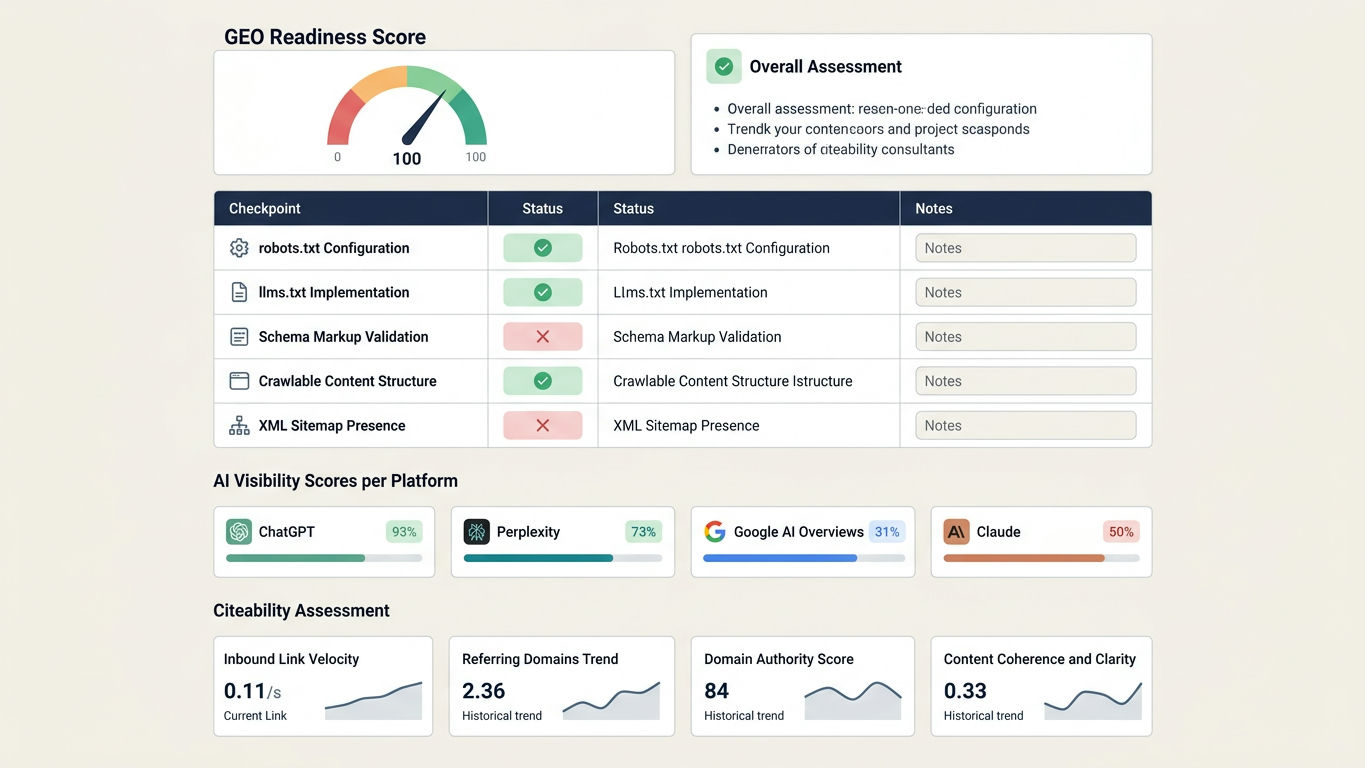
Beyond schema markup, your llms.txt file also determines whether AI crawlers are allowed to index your product pages. Check that your robots.txt doesn't unintentionally block AI bots. Many webshops inadvertently block their entire product catalog from AI engines.
Step 3: add contextual authority to each product page
AI engines judge not only what you write, but also how trustworthy your source is. Contextual authority is the degree to which your product page signals expertise and reliability.
Strengthen your E-E-A-T signals
Add the following elements to your product descriptions:
- Experience-based claims: "Tested by our team with 20+ years of industry experience" carries more weight than generic superlatives.
- Comparisons with alternatives: An honest comparison with competing products demonstrates expertise and builds trust.
- Customer reviews with context: Reviews mentioning specific use cases provide AI with additional citable content.
- Production details: Information about where and how the product is made by skilled professionals increases credibility.
Link product pages to supporting content
A single product page never stands alone. Link to related buying guides, manuals, and comparison articles. This web of content helps AI engines identify your brand as the most complete source.
Step 4: measure your AI visibility and adjust
Optimizing without measuring is guessing. After implementing the adjustments above, you need to determine whether AI engines actually mention your products more often.
Use a GEO audit as a baseline
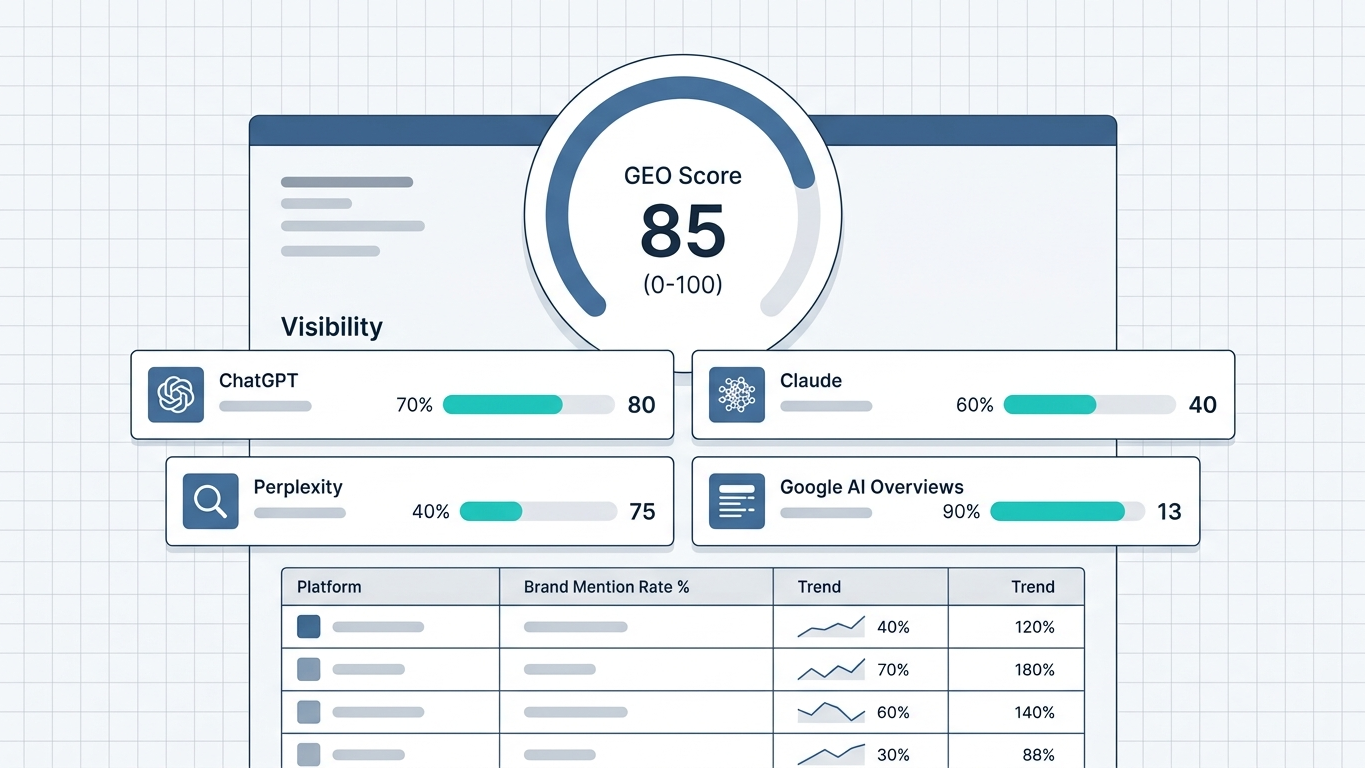
A GEO Readiness Score gives you an objective starting point. This score from 0 to 100 shows exactly how well your webshop scores on citability, technical accessibility, and authority. Within 10 minutes, you discover which product pages are already visible in ChatGPT, Perplexity, Google AI Overviews, and Claude, and which are not.
Compare your position with competitors
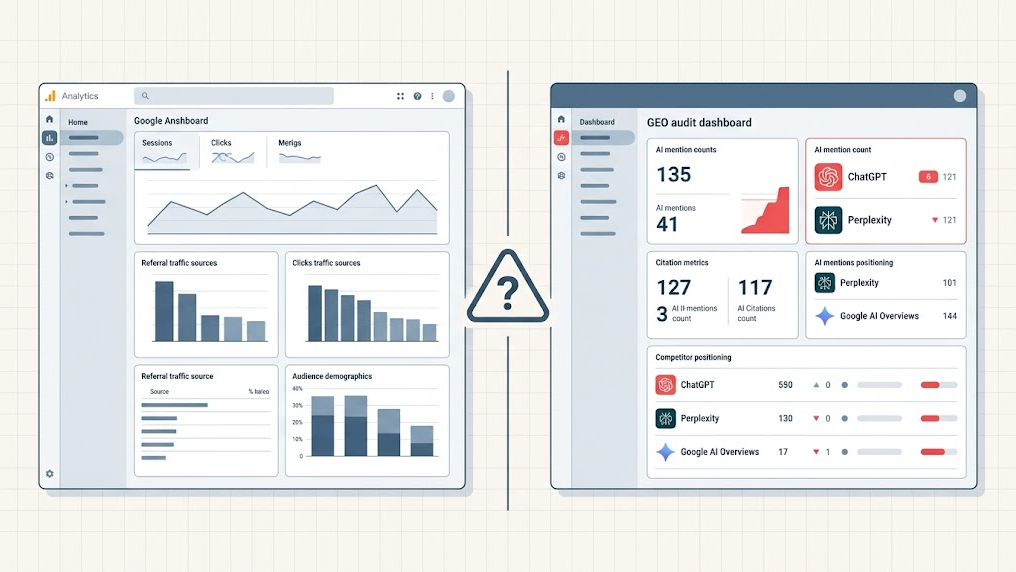
AI answers are a zero-sum game. If your competitor gets recommended, you won't. With a competitor comparison, you immediately see where you're losing revenue and which product categories offer the greatest potential.
Checklist: make your product description GEO-proof in 5 minutes
Use this checklist for each product page:
- First sentence contains a clear product definition with brand name
- At least three concrete specifications (dimensions, weight, capacity)
- Target audience explicitly named
- Schema markup implemented with all essential fields
- At least one customer review with specific use case
- Internal link to related buying guide or comparison
- llms.txt and robots.txt allow AI crawlers
Start optimizing today
The shift from traditional search engines to AI-driven answers isn't future music. It's happening now. Every day your product descriptions aren't optimized for AI engines is a day your competitor gets the recommendation.
Know which AI mentions your brand. And make sure it's the right message.
Start with a GEO audit to measure your current AI visibility. No account needed, no setup, no API keys. You receive a prioritized action plan with immediately applicable improvements for your product pages within 10 minutes.
Start your audit →